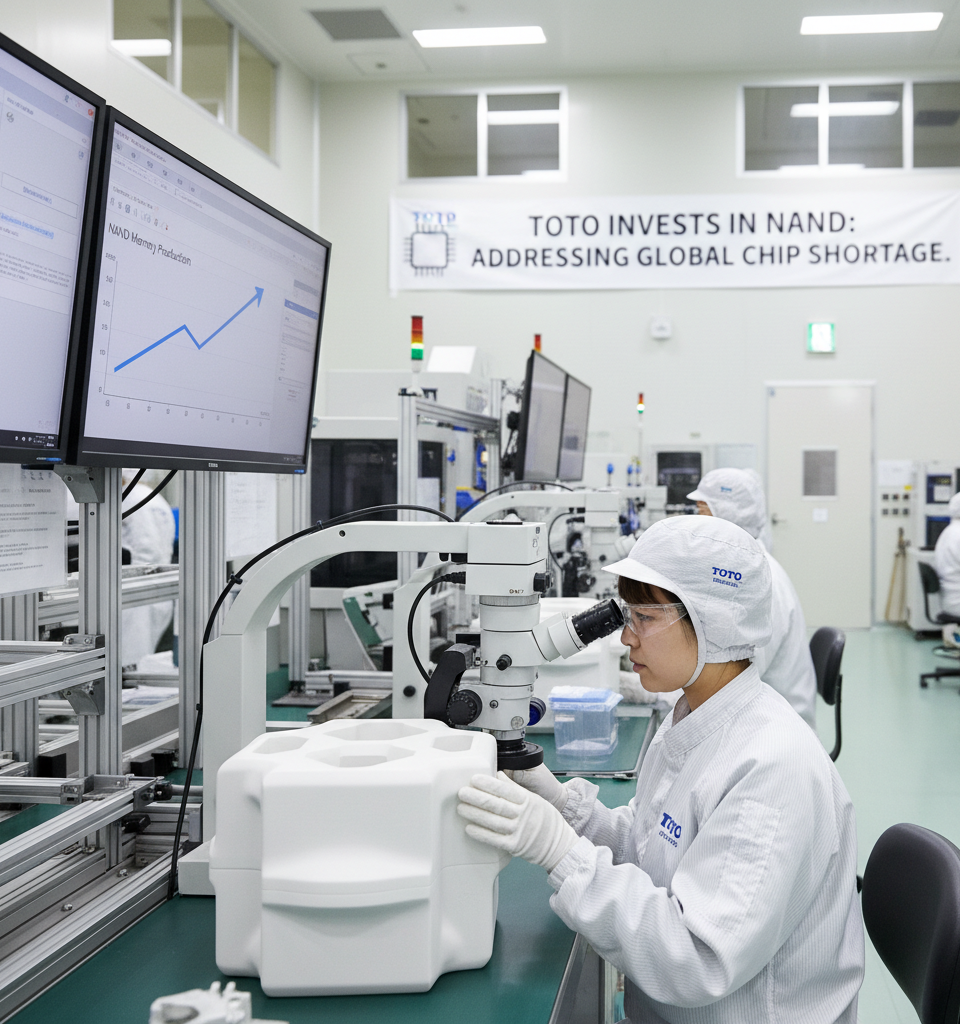
Japanese industrial giant Toto Ltd., a company synonymous with high-tech toilets and sophisticated sanitary ware, has announced a substantial new investment aimed at bolstering its technical ceramics division. This strategic allocation of resources is specifically targeted at increasing the production of specialized ceramics essential for the fabrication of NAND memory chips, a critical component across numerous digital devices. The decision, revealed in recent corporate filings and investor briefings, underscores a proactive approach by Toto to leverage its material science expertise to alleviate persistent shortages plaguing the global semiconductor industry.
This unexpected yet calculated expansion by Toto into the intricate world of semiconductor manufacturing highlights the severity of the ongoing chip crisis. The dependence on high-purity, ultra-durable ceramic components within advanced manufacturing processes, particularly in the etching and deposition stages of memory chip production, has often been overlooked in public discourse surrounding silicon shortages. Toto's long-standing leadership in material science, honed over a century in developing robust and precise ceramic products for diverse applications, positions it uniquely to address this niche but crucial supply chain vulnerability.
Historical Context and Market Dynamics
The global semiconductor industry has been grappling with unprecedented demand coupled with significant supply chain disruptions since early 2020. While much attention has focused on silicon foundries and packaging facilities, the availability of specialized materials and components, such as high-performance ceramics, is equally vital. Toto's technical ceramics, known for their exceptional purity, heat resistance, and structural integrity, are utilized in complex semiconductor manufacturing equipment, including plasma etching tools. These tools are indispensable for creating the intricate, multi-layered structures found in advanced NAND memory, which stores data in everything from smartphones to data centers.
The investment details, though not fully disclosed, are understood to be in the tens of billions of yen, channeled into expanding existing ceramic production facilities and advancing research and development in new materials. This commitment reflects a long-term strategy to diversify revenue streams beyond its core sanitary business and capitalize on the booming demand for digital infrastructure. The company’s announcement comes at a time when major memory manufacturers like Samsung, SK Hynix, and Micron are aggressively expanding production capacities, further increasing the demand for these specialized ceramic parts.
Industry Impact and Expert Analysis
This strategic move by Toto is expected to have a tangible impact on the tight supply of NAND memory components, potentially easing some of the pressure on the broader semiconductor ecosystem. Analysts from industry research firms such as Gartner and IDC have repeatedly pointed to material shortages as a significant impediment to scaling up chip production. "The bottlenecks aren't always where you expect them," notes Dr. Kenji Tanaka, a senior semiconductor analyst at TechInsights. "Companies like Toto, with deep material science know-how, are becoming increasingly critical. Their investment in expanding ceramic output for fabs is a much-needed development that could help smooth out production lines within the next 12 to 18 months."
The increased availability of these ceramic components could lead to more stable production cycles for memory manufacturers, potentially reducing lead times and, in the longer term, stabilizing prices for NAND flash. This ripple effect could benefit a vast array of industries, from consumer electronics and automotive to cloud computing, all of which rely heavily on memory chips. The move also highlights a broader trend of non-traditional tech companies finding strategic niches within the semiconductor supply chain.
Future Outlook and Implications
Looking ahead, Toto’s expanded commitment to technical ceramics signals a nascent but important trend of upstream material suppliers gaining greater prominence in the global technology landscape. The company’s deep-rooted expertise in precision manufacturing and material science positions it favorably to become an even more critical, though perhaps unsung, player in the digital economy. Further investments are anticipated as semiconductor technology continues its rapid evolution, demanding even more sophisticated and resilient materials.
The success of Toto’s increased ceramic production will be closely watched by the semiconductor industry. Should this investment prove effective in significantly alleviating material shortages, it could inspire other specialized manufacturers to similarly leverage their unique capabilities to address bottlenecks in the intricate global supply chain. This strategic diversification by a leading Japanese industrial firm also underscores Japan’s continued, albeit evolving, role as a critical enabler of high-tech manufacturing worldwide, moving beyond traditional strengths into specialized, high-value components. The company has indicated plans for further R&D into next-generation ceramic materials capable of withstanding even more extreme manufacturing environments, promising a durable competitive edge in this vital sector.