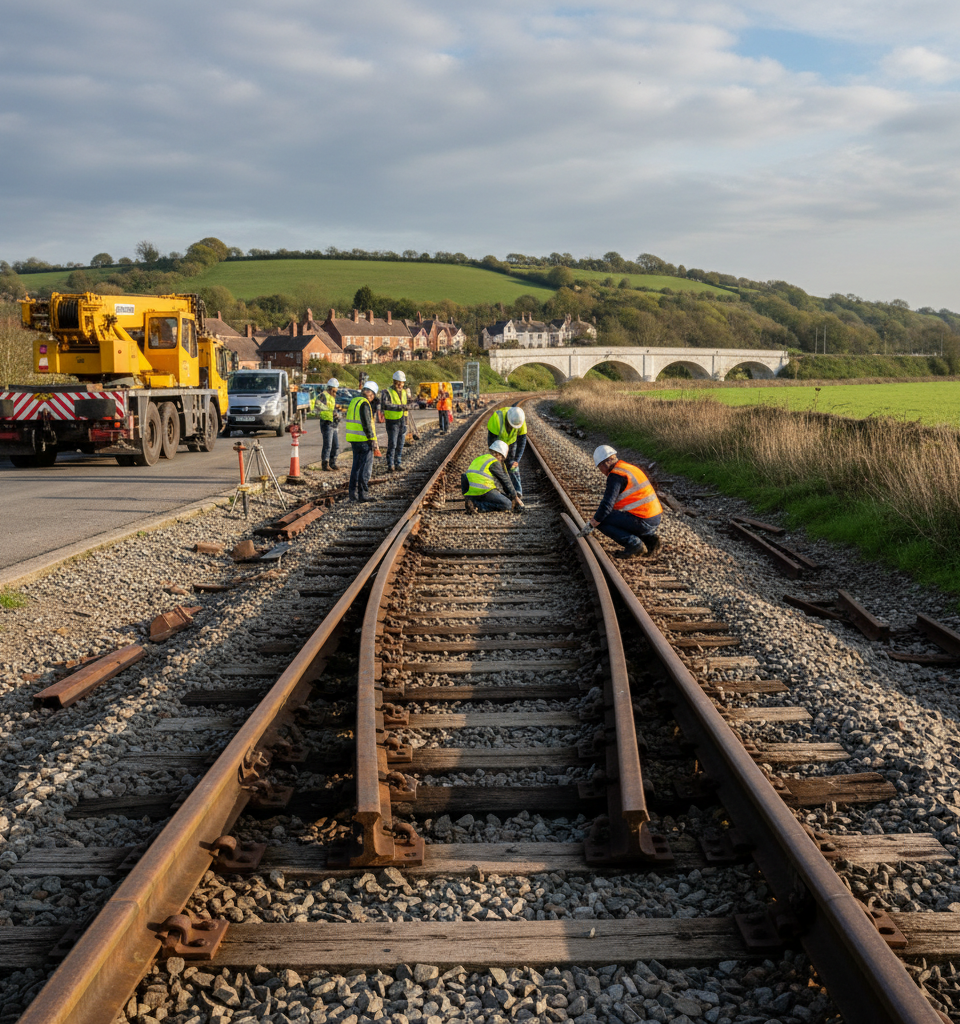
The discovery of a track defect on a critical rail line can trigger significant financial re-evaluations for infrastructure owners, insurers, and freight operators, potentially impacting investment in network resilience and operational costs across the sector. Companies reliant on rail transport will be closely monitoring the investigation's implications for supply chain stability and future regulatory burdens. This finding could prompt a broader industry review of inspection methods and maintenance schedules, with potential ripple effects on capital expenditure and long-term operational strategies.
The Rail Accident Investigation Branch (RAIB) has announced a critical initial finding in its ongoing inquiry into the recent train derailment near Lewes: an 'irregularity' on the railway track has been identified on the approach to the incident site. This preliminary revelation, detailed in an initial report, immediately thrusts railway infrastructure integrity and maintenance practices into the spotlight, positioning the track defect as a central element of the comprehensive investigation.
Context and Background
The derailment, which occurred recently near Lewes, prompted immediate concern regarding rail safety and operational standards. While the specific details of the incident itself—such as the type of train, extent of damage, or potential injuries—were not outlined in the initial source, the RAIB's swift identification of a track anomaly underscores the severity with which such incidents are treated. The RAIB is the independent body responsible for investigating railway accidents and incidents in the UK to improve safety and prevent recurrence. Its findings often lead to significant operational changes and policy recommendations across the rail network.
Key Details of the Finding
The 'irregularity' on the track, though not yet fully defined in terms of its nature or precise dimensions, was detected on the section of track leading directly to the location of the derailment. This suggests a potential causative link that the investigation will now vigorously explore. The RAIB's initial report signals that investigators are prioritizing the examination of infrastructure conditions as a potential factor, alongside other variables such as train speed, operational procedures, and human factors. The language used—'irregularity'—implies a deviation from standard track specifications, which could range from minor alignment issues to more significant structural damage.
Industry and Market Impact
This early finding could have substantial implications for the broader railway industry. Investors and operators may face increased scrutiny regarding asset management and capital expenditure on maintenance. Shares of rail infrastructure companies and operators could see volatility as the market assesses potential liabilities and future investment requirements for network upgrades. For freight and passenger services, the incident and its aftermath could lead to service disruptions and revised operational protocols, impacting logistics and passenger confidence. The cost of track maintenance and inspection, already a significant operational expense, might see upward pressure as standards are potentially reviewed and enhanced.
What's Next
The RAIB's investigation is still in its nascent stages, with this initial report representing only the first public disclosure of findings. The focus will now intensify on understanding the exact nature of the track irregularity, how long it existed, and whether it directly contributed to the derailment. Future steps will include detailed forensic analysis of the track, examination of maintenance records, interviews with railway personnel, and potentially simulations to recreate the incident.
The RAIB will eventually issue a full report, which is expected to include detailed findings, safety recommendations, and potentially highlight systemic issues within rail infrastructure management. These recommendations will be crucial for Network Rail and train operating companies as they strive to enhance safety across the national network. The industry will be awaiting further updates to assess the full scope of preventive measures and potential regulatory adjustments that may follow.
The timeline for a complete report from the RAIB typically spans several months, indicating a protracted period of analysis before definitive conclusions are reached.