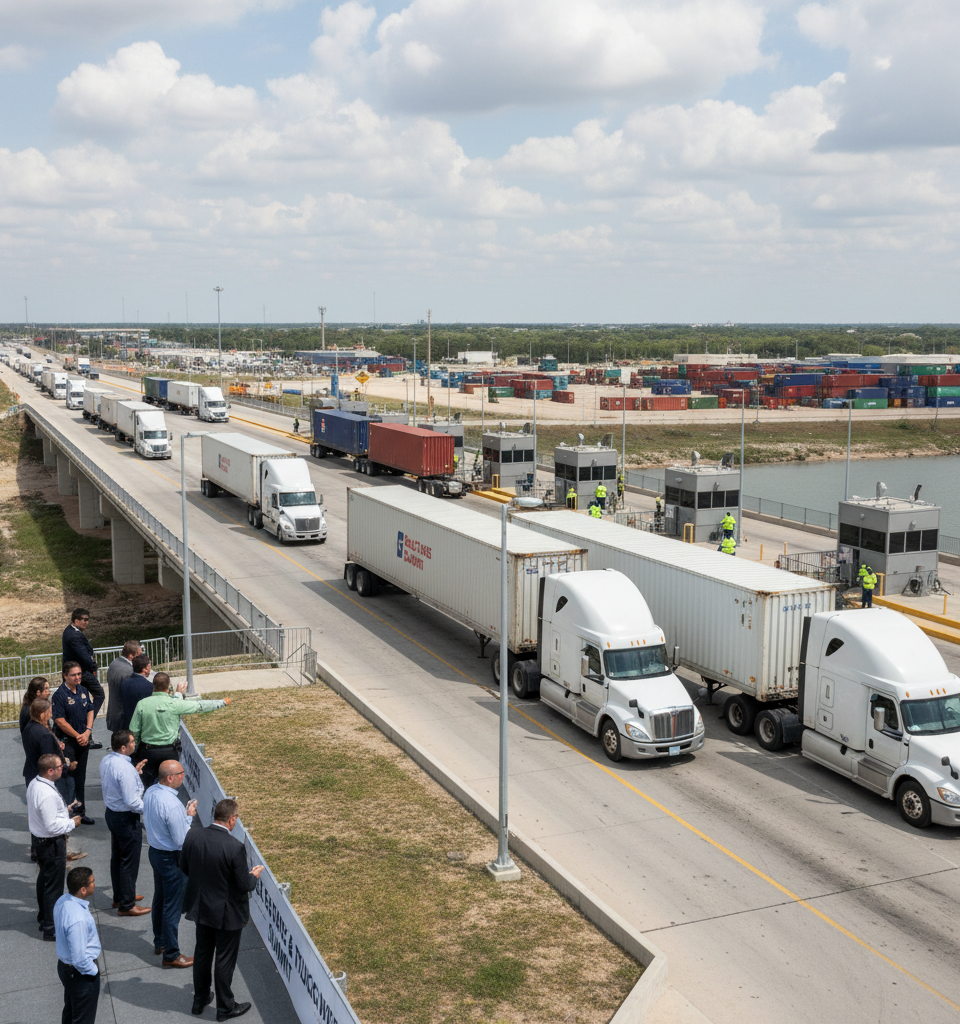
The annual Port of Eagle Pass summit, a pivotal event for stakeholders in U.S.-Mexico commerce, recently convened to address the dominant themes of trade and trucking. The gathering brought together industry leaders, policymakers, and logistics professionals to discuss challenges and opportunities in cross-border operations, emphasizing the port's strategic importance as a gateway for goods flowing between the two nations. The discussions come at a time of escalating nearshoring trends and substantial investments in Texas's manufacturing and solar energy sectors.
Context and Background
The U.S.-Mexico border region has experienced a surge in economic activity, largely driven by companies seeking to shorten supply chains and reduce reliance on distant manufacturing hubs (a process known as nearshoring). This strategic shift has amplified the significance of efficient border crossings and robust transportation networks. The Port of Eagle Pass, situated along a vital trade corridor, has emerged as a critical node in this evolving landscape. Its role is increasingly vital not only for the movement of goods but also for facilitating the intricate web of logistics and customs operations that underpin bilateral trade. The discussions at the summit reflect a broader recognition of the border's economic potential and the need for collaborative solutions to maximize its benefits.
Key Details and Initiatives
Attendees at the summit delved into practical solutions for optimizing freight flow and addressing the operational complexities inherent in cross-border trucking. Key topics included strategies to reduce wait times at customs, improve road infrastructure, and leverage technology for enhanced supply chain visibility. In a related development demonstrating broader regional growth, Avant Technology, an AI-powered smart manufacturing company, secured a significant grant from the Texas Enterprise Fund to expand its factory in Pharr, Texas.
This expansion is projected to create 1,200 new jobs and involves a capital investment exceeding $300 million, underscoring the state's commitment to fostering high-tech manufacturing. Furthermore, SEG Solar announced plans to construct a 4-gigawatt solar module factory in Houston. This $2 billion investment will bolster domestic renewable energy production and create 500 new jobs, highlighting Texas's growing prominence in green technology manufacturing.
Industry and Market Impact
The collective impact of these developments is far-reaching. Enhanced trade facilitation at ports like Eagle Pass directly translates to reduced costs and increased efficiency for businesses engaged in international commerce. The expansion of Avant Technology in Pharr signifies a growing domestic capacity for advanced manufacturing, potentially reducing reliance on foreign-made components and strengthening U.S. supply chains. Similarly, SEG Solar's Houston factory represents a substantial step towards national energy independence and the creation of a robust domestic solar industry. These investments are not isolated incidents but rather reflective of a macroeconomic trend toward strengthening regional manufacturing capabilities, ultimately leading to greater economic resilience.
Expert Perspective
Industry analysts view these developments as a clear indication of Texas's magnetic appeal for both traditional and nascent industries. "The strategic location of Texas, coupled with a supportive business environment and substantial state investments, positions it as a prime beneficiary of the nearshoring phenomenon," commented a prominent economist specializing in cross-border trade. "The focus on improving logistics at ports like Eagle Pass is crucial; without efficient border operations, even the most significant manufacturing investments cannot reach their full potential." The sentiment among experts is that sustained investment in infrastructure and technology at the border will be paramount to realizing the full economic advantages of these new manufacturing ventures.
What's Next
Looking ahead, the momentum from the Port of Eagle Pass summit is expected to translate into actionable initiatives aimed at streamlining cross-border trade. S. and Mexican customs agencies are anticipated to further optimize processing times and introduce more digital solutions.
The ongoing expansions by companies like Avant Technology and SEG Solar are likely to attract further investment into the region, creating a positive feedback loop of job creation and economic growth. -Mexico border economy. The trajectory suggests continued robust growth, contingent on effective policy support and infrastructure enhancements.
Broader Economic Picture
The economic ties between the U.S. and Mexico are deepening, with bilateral trade reaching record levels. The emphasis on trade and trucking at the Eagle Pass summit is a direct response to this growing interdependency. Efficient transportation networks are the backbone of this relationship, facilitating the movement of everything from automotive parts to agricultural products. The investments in manufacturing in Texas, from advanced technology to solar modules, are creating new demand for freight services and placing additional pressure on border infrastructure. This confluence of factors underscores the importance of continuous dialogue and strategic planning among all stakeholders to ensure the smooth flow of goods and the continued prosperity of both economies.