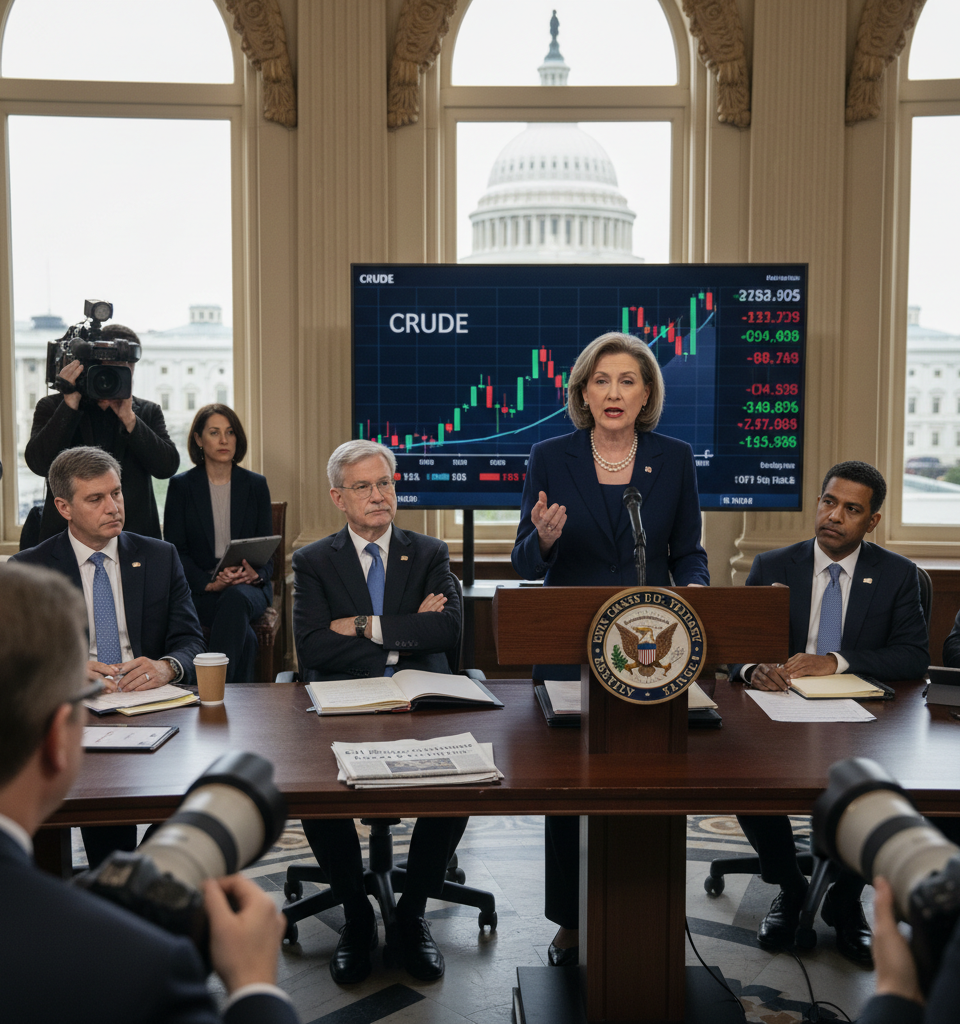
Washington D.C. – Treasury Secretary Bessent has signaled a significant departure from her earlier calls for hastened Federal Reserve interest rate reductions, now expressing support for the central bank to delay any cuts in light of soaring oil prices. This pivot marks a notable shift for Secretary Bessent, who had previously characterized rate reductions as "the only ingredient missing" for robust economic expansion.
Her updated perspective underscores the dynamic and often unpredictable nature of economic policymaking, particularly when confronted with volatile global commodity markets. The Secretary's former stance strongly advocated for monetary easing, viewing it as a catalyst essential for unlocking greater economic growth. Her revised position, however, implicitly acknowledges the emergent inflationary pressures that rising oil costs could introduce or exacerbate, necessitating a more cautious approach from the nation's central bank.
Shifting Economic Priorities
The previous emphasis from Secretary Bessent was firmly placed on stimulating economic activity through lower borrowing costs. Her argument centered on the idea that despite other positive economic indicators, the absence of accommodative monetary policy was a primary constraint. This viewpoint aligned with a segment of economic thought suggesting that the Fed risked stifling recovery by maintaining higher rates for too long. However, the recent escalation in crude oil benchmarks has evidently introduced a new variable into this economic calculus, forcing a reconsideration of potential inflationary risks against growth objectives.
Oil price surges typically exert multifaceted pressures on economies. They can elevate production costs for businesses, increase transportation expenses, and directly impact household budgets through higher fuel prices. Such cost-push inflation can effectively offset the benefits of economic stimulus and, if left unchecked, lead to a broader erosion of purchasing power. The implied concern is that premature rate cuts in such an environment could inadvertently fuel an inflationary spiral, challenging the Fed's dual mandate of maximum employment and price stability.
Market Repurcussions and Federal Reserve Autonomy
The Treasury Secretary's comments, while influential, do not directly dictate Federal Reserve policy. The Fed operates with a degree of independence, making decisions based on its own assessment of economic data and conditions. Nevertheless, the Secretary of the Treasury's public statements carry significant weight, often signaling the administration's economic priorities and concerns. Her revised opinion could provide political cover for the Federal Reserve to maintain its current stance or even prolong the period before any rate reduction, should the central bank's own analysis align with the perceived inflationary threat from oil.
The broader market implications of such a policy delay could include continued volatility in bond markets, as investors adjust their expectations for future interest rate trajectories. Sectors heavily reliant on consumer spending or susceptible to energy price fluctuations, such as transportation, manufacturing, and retail, might face increased headwinds. Conversely, energy producers could see continued robust performance, provided the upward trend in oil prices is sustained.
Global Economic Interplay and Forward Outlook
This development also highlights the intricate interplay between global geopolitical events, commodity markets, and domestic monetary policy. The reasons behind the current oil surge—whether driven by supply disruptions, increased demand, or speculative trading—are crucial context, though not detailed in the Secretary's statements. Regardless of the underlying causes, the impact on inflation expectations and monetary policy decisions is undeniable.
Looking ahead, the Federal Reserve will likely continue to monitor a wide array of economic indicators, including inflation measures, employment data, and global commodity prices, before making its next move. Secretary Bessent's updated perspective suggests a recognition of these evolving challenges and a more pronounced emphasis on inflation containment for the immediate term. The coming months will reveal how effectively the Fed can navigate these complex economic currents, balancing the imperative for growth with the critical need to maintain price stability in a potentially inflationary environment fueled by energy costs.