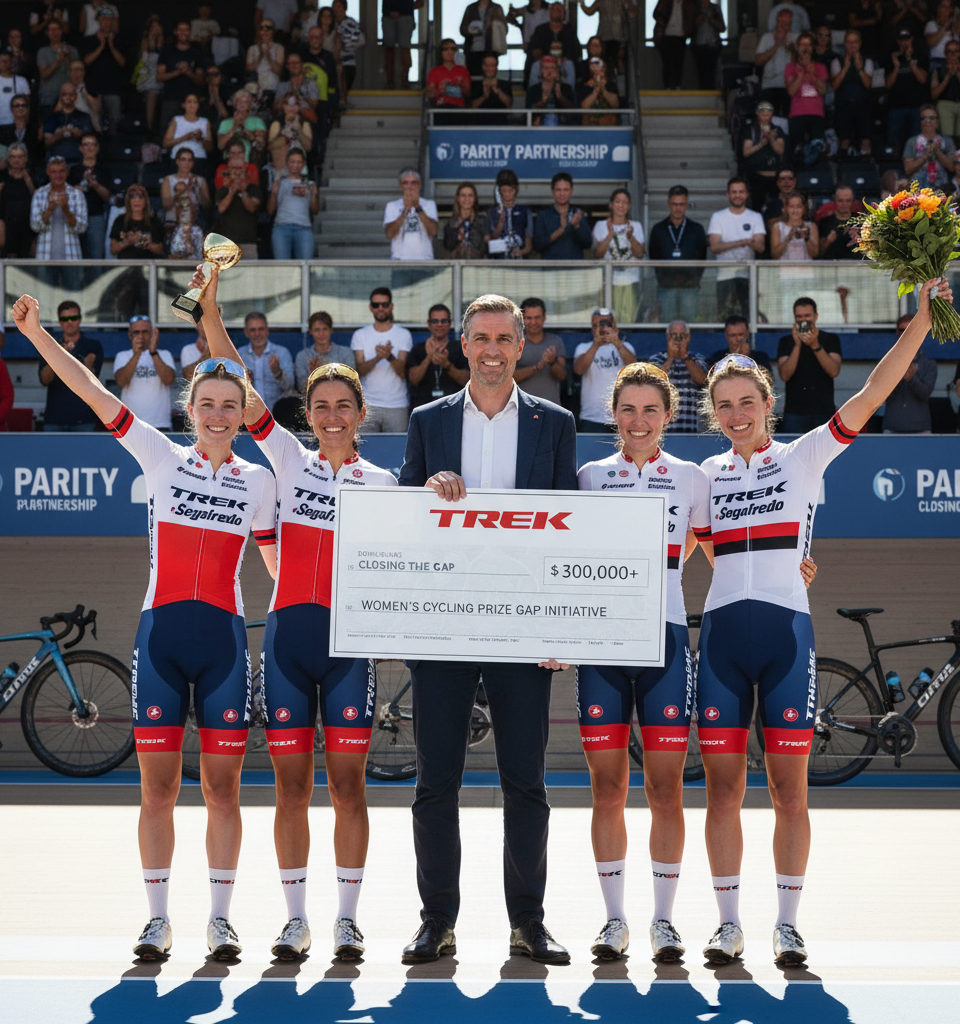
In a pioneering effort to champion gender equality in professional sports, Trek, the prominent bicycle manufacturer, has invested more than $300,000 to bridge the prize money disparity between men's and women's cycling races. This substantial financial intervention, initiated across various high-profile events, underscores a strategic move to not only support female athletes but also to encourage race organizers globally to adopt equitable prize structures. The initiative, spearheaded by Trek's leadership, signals a powerful commitment to transforming an often imbalanced financial landscape within the sport.
This concerted effort by Trek is particularly noteworthy given the historical underfunding and lower recognition often afforded to women's sports. For years, female cyclists have competed in the same grueling races as their male counterparts, often for fractions of the prize money. This disparity has not only impacted athletes' livelihoods but has also limited the sport's growth and appeal for women.
Trek's intervention directly addresses a long-standing grievance, aiming to dismantle systemic inequalities that have marginalized female athletes and hindered their professional development.
Trek's Investment and Shrinking Bill
Since embarking on this mission, Trek has meticulously tracked its contributions, revealing an outlay of over $300,000 to top up prize purses. The company's strategy involves assessing the prize money offered at mixed-gender races where both men's and women's professional teams compete. If a significant gap exists for the women's event, Trek steps in to cover the difference, ensuring parity. A crucial metric reflecting the success of this approach is the shrinking cost to Trek; CEO John Burke noted that the company's annual contribution has decreased as more race organizers recognize the importance of equal pay and adjust their prize structures accordingly. This reduction in Trek's direct financial obligation suggests a positive, albeit gradual, shift within the broader cycling ecosystem.
Industry-Wide Ripple Effects
Trek's proactive stance is sending clear ripples throughout the professional cycling world. Their actions are not merely about financial support but also about setting a new industry standard and fostering a culture of fairness. This initiative could catalyze other sponsors, federations, and race organizers to re-evaluate their own prize allocation policies. The increased visibility and financial viability for women's cycling will likely attract more talent, stimulate greater investment, and ultimately lead to a more competitive and engaging sport, benefiting athletes, fans, and commercial partners alike.
Expert Perspectives on Parity
Sports economists and gender equality advocates largely laud Trek's approach as a model for corporate social responsibility within professional sports. Dr. Eleanor Davies, a prominent sports sociologist, states, "Trek isn't just donating money; they're investing in the future of women's cycling and, more broadly, in the principle of equal work for equal pay. This sends a powerful message that financial equity is a prerequisite for true professionalization." Analysts predict that sustained pressure from influential entities like Trek, coupled with growing public demand for fairness, will gradually erode the lingering prize money disparities across various sports.
The Path Towards Obsolete Checks
The ultimate vision, according to Trek CEO John Burke, is to make the company's supplementary checks obsolete. This aspiration signifies a future where race organizers inherently offer equal prize money as a standard practice, without external prompting or financial intervention. To achieve this, continued advocacy, robust media coverage of women's events, and sustained pressure from athlete unions will be crucial. The progress seen thus far, marked by Trek's decreasing outlay, offers a hopeful indicator that the cycling world is indeed moving closer to a genuinely equitable and sustainable model for all its athletes.
Future Implications and Calls for Sustainability
Looking ahead, the challenge will be to ensure that these changes are not merely temporary but represent a fundamental and sustainable shift. This requires more than just prize money; it necessitates increased minimum salaries for female riders, better broadcast opportunities, and deeper investment in grassroots programs. Trek's initiative serves as a powerful testament to what can be achieved when major stakeholders prioritize equity, laying down a robust foundation for women's cycling to flourish on its own merits, free from historical financial biases. The hope is that their leadership will inspire a domino effect, leading to comprehensive structural changes that uplift the entire sport.