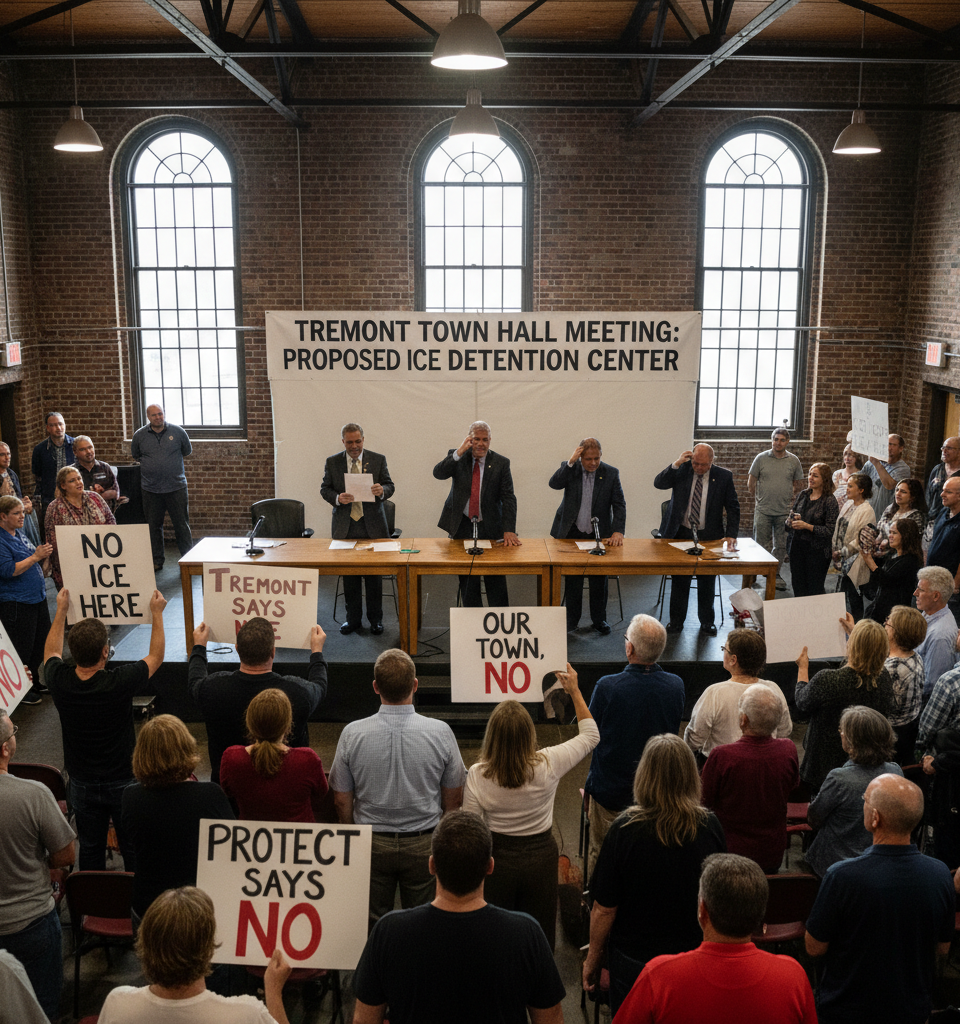
TREMONT, Pa. – This deeply Republican borough in Schuylkill County, home to approximately 2,000 residents, finds itself embroiled in an unexpected and intense local-federal conflict. The Trump administration's plan to transform a vacant warehouse into a U.S. Immigration and Customs Enforcement (ICE) detention center, with a proposed capacity nearly four times the town's population, has ignited fierce opposition among locals and regional advocacy groups. The controversial proposal, revealed in recent weeks, promises to drastically alter the character and resource landscape of this historically underserved community.
Context and Controversy: A Small Town's Unwanted Spotlight
The selection of Tremont for such a substantial federal project has thrust this quiet, economically challenged community into the national spotlight of immigration debates. Historically, rural towns with available industrial infrastructure and lower land values have often been targeted for such facilities. However, the sheer scale of this particular proposal – an anticipated 700 to 800 detainees in a town with just over 2,000 residents – has raised alarm bells regarding infrastructure, public safety, and the moral fabric of the community. This situation mirrors similar controversies across the nation where federal immigration policies often clash with local capacities and community values, particularly in resource-limited areas. The timing, amid a highly polarized national discussion on immigration, only amplifies the intensity of local sentiment.
Community Outcry and Resource Strain
Local residents, many of whom voted for President Trump, have expressed a profound sense of betrayal and exasperation. During recent town hall meetings, which drew hundreds, citizens voiced concerns ranging from overburdened emergency services and increased traffic to potential impacts on local school systems and the town's tranquil small-town atmosphere. "We moved here for the peace and quiet, the low crime," stated Mary Jenkins, a lifelong Tremont resident, at a recent public forum. "This facility threatens everything we cherish." The borough's limited police force, volunteer fire department, and single ambulance service are already stretched thin, and the influx of such a large managed population, even with federal support promises, is seen as an insurmountable burden without significant, guaranteed infrastructure investment, which remains largely undefined.
Broader Implications: A Shifting Detention Landscape
This Tremont proposal is emblematic of a broader trend within federal immigration enforcement, which has increasingly relied on a network of privately-operated detention centers. The market for these facilities is substantial, often involving multi-million dollar contracts. Companies like GEO Group and CoreCivic, dominant players in the private corrections industry, have seen their revenues tied closely to government immigration policies. The Tremont plan, if realized, would represent another significant expansion of this detention infrastructure, potentially channeling millions of taxpayer dollars into private hands while simultaneously reshaping the local economy, creating some jobs but also new civic challenges. The ongoing debate highlights the economic incentives driving the expansion of immigrant detention and its sometimes-unintended consequences for host communities.
Expert Analysis: Local Governance vs. Federal Mandate
Legal and policy experts note that while local communities often have limited direct power to halt federal projects, a strong, unified local opposition can significantly complicate and delay implementation. Dr. Emily Carter, a professor of public policy at Penn State University Scranton, states, "While federal eminent domain or site selection prevails, the pushback from local zoning boards, environmental assessments, and organized public outcry can create significant logistical and political hurdles. The 'not in my backyard' sentiment, though sometimes derided, is a potent political force, especially when it crosses partisan lines as it appears to be doing in Tremont." She adds that the lack of robust community engagement prior to the announcement was a critical misstep by the federal government.
The Road Ahead: Legal Challenges and Persistent Protest
The future of the Tremont ICE detention center remains uncertain. Local officials are exploring all legal avenues to challenge the proposal, including potential zoning variances and environmental impact assessments. Community groups are organizing protests and lobbying state and federal representatives to intervene. The debate in Tremont is set to become a microcosm of the larger national conversation about immigration enforcement, federal power, and the rights of local communities. As the federal government pushes forward with its plans, Tremont residents are preparing for a protracted battle, signaling that this small town will not yield its tranquility without a fight, with every stage likely to involve public hearings, legal filings, and fervent local activism.