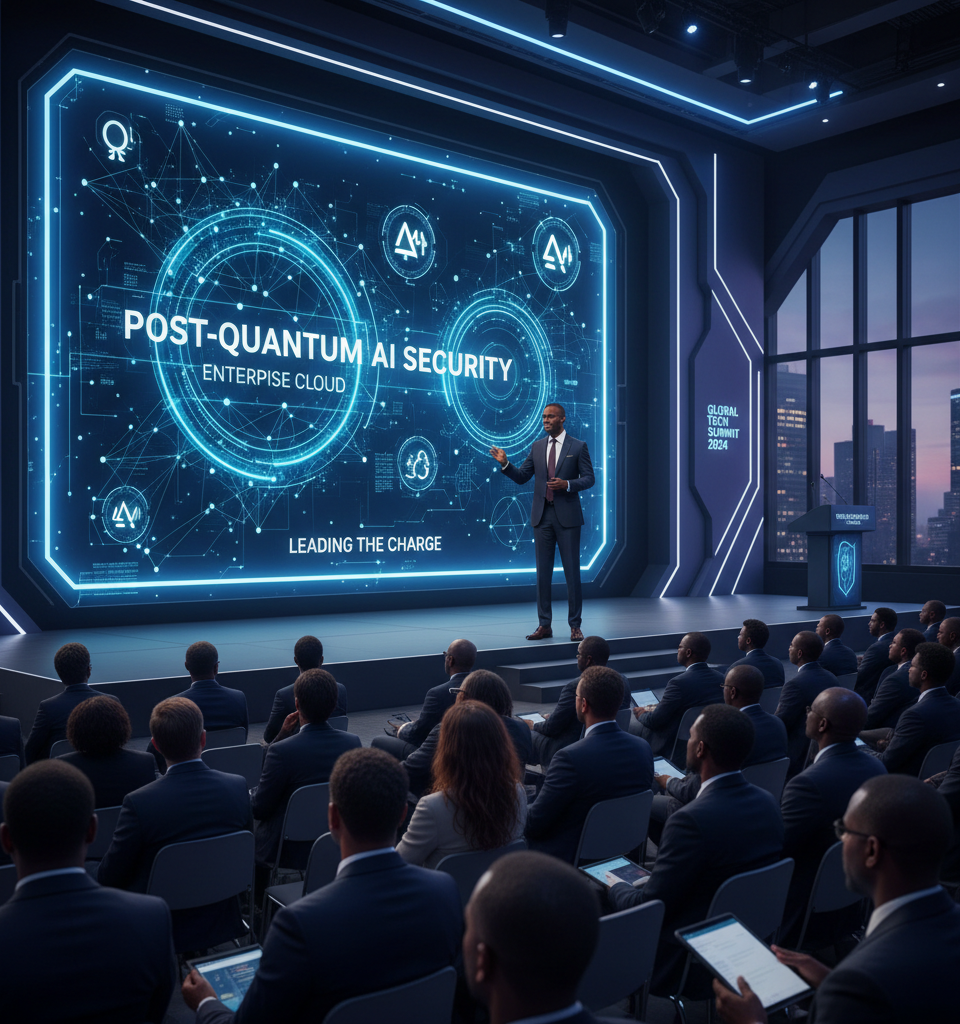
In a pivotal move for enterprise technology, Tresor Lisungu Oteko is spearheading efforts to fortify artificial intelligence systems against both current and future cyber threats, particularly those anticipated from quantum computing. Oteko, a prominent figure in cybersecurity innovation, is developing and integrating advanced post-quantum security protocols with existing cloud infrastructure to safeguard AI deployments across critical sectors. This initiative comes as organizations are rapidly embedding AI into core operational workflows, customer engagement platforms, and strategic decision-making frameworks, creating an urgent demand for security frameworks that can evolve at the same pace as AI adoption.
The Escalating AI Security Imperative
The rapid proliferation of AI across enterprises has created an unprecedented attack surface. While AI drives considerable efficiencies and competitive advantages, its integration into production environments often outstrips the development of robust security measures. Traditional cryptographic methods, the bedrock of internet security, are widely expected to be vulnerable to attacks from sufficiently powerful quantum computers, a threat known as 'decrypt now, read later.' This looming obsolescence necessitates a proactive shift towards post-quantum cryptography (PQC). The challenge is not merely abstract; compromised AI systems could lead to data breaches, intellectual property theft, algorithmic manipulation, and even the subversion of critical national infrastructure where AI plays a role. Oteko's work directly confronts this existential threat, aiming to establish a secure foundation for AI's long-term viability.
Bridging Cloud and Quantum-Resistant Security
Oteko's methodology involves a multi-pronged approach to seamless integration. He is focused on designing and implementing API-driven security layers that can overlay existing cloud-native AI deployments without requiring a complete overhaul. Key to this is the development of cryptographic agility — the ability to rapidly swap or update cryptographic algorithms as new threats emerge or more robust PQC standards are ratified. His team is exploring sophisticated techniques such as homomorphic encryption and federated learning combined with PQC to ensure data privacy and computational integrity even when AI models are distributed across multiple cloud environments. Specific initiatives include the piloting of quantum-safe VPNs and the integration of hardware security modules (HSMs) capable of generating and managing PQC keys within cloud data centers, ensuring that the cryptographic roots of trust are quantum-resistant from inception.
Industry Implications and Market Impact
This pioneering work has significant ramifications across various industries. Financial services, healthcare, defense, and critical infrastructure, all heavy users of AI, stand to benefit immensely from enhanced security. For instance, in financial services, where AI-driven fraud detection and algorithmic trading are prevalent, compromised systems could lead to catastrophic losses; quantum-safe AI would prevent such scenarios. The demand for PQC solutions is projected to grow substantially, with some market analyses estimating the PQC market to reach over $2 billion by 2030, reflecting a compound annual growth rate (CAGR) exceeding 35%. Companies that adopt these advanced security paradigms early will gain a significant competitive advantage, demonstrating a commitment to data privacy and system resilience that will be increasingly valued by clients and regulators alike.
Expert Outlook on PQC and AI
Cybersecurity experts and government agencies widely acknowledge the urgency of Oteko's mission. Dr. Evelyn Reed, a leading cryptographer at the National Institute of Standards and Technology (NIST), commented, "The convergence of AI and quantum computing presents both immense opportunities and severe threats. Proactive adoption of post-quantum standards, as Tresor Oteko is championing, is not merely prudent — it's an absolute necessity for the continuity of secure digital operations." Analysts at Gartner predict that by 2028, 50% of large enterprises will have a dedicated budget and roadmap for migrating to quantum-safe cryptographic methods, up from less than 5% today. This shift underscores a growing recognition within the C-suite of the impending quantum threat.
The Road Ahead: Standardisation and Scalability
Looking forward, the success of Oteko's initiatives, and PQC adoption generally, hinges on several factors. Continued collaboration with international standard bodies like NIST, ISO, and ETSI is crucial for developing universally accepted quantum-safe algorithms and protocols. Furthermore, the scalability and performance overheads of PQC need to be optimized for enterprise-grade AI workloads. Oteko's team is actively participating in cryptographic standardisation forums and exploring hardware acceleration for PQC operations to minimize computational latencies. Future developments will likely include the integration of quantum random number generators (QRNGs) directly into AI hardware, providing an even higher level of cryptographic strength. The goal is to create an "AI security by design" paradigm where quantum-resistant capabilities are inherent rather than a bolted-on afterthought, ensuring AI systems remain trustworthy and resilient well into the quantum era.