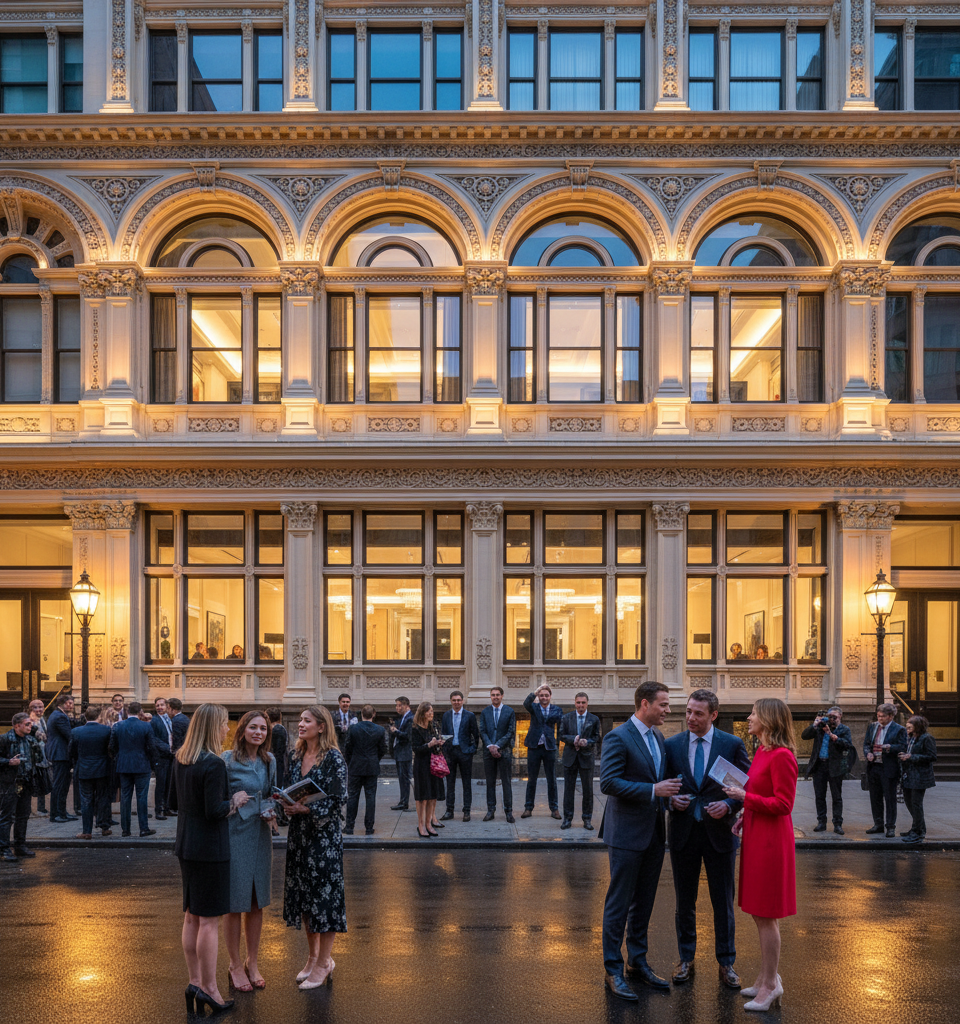
The recently completed residential conversion at 32 Walker Street in Manhattan’s iconic Tribeca district has swiftly captivated New York's discerning luxury real estate market, with units reportedly selling at an accelerated pace even prior to official completion. This ambitious project, which restored a historic cast-iron industrial building into a collection of high-end residences, represents a significant moment for architectural preservation and urban redevelopment, simultaneously setting new benchmarks in the city's competitive property landscape.
Historical Significance and Architectural Vision
Built in the late 19th century, the original structure at 32 Walker Street stands as a testament to New York's rich industrial past, featuring the distinctive cast-iron facade characteristic of its era. These buildings, once ubiquitous in lower Manhattan, are now celebrated for their aesthetic appeal and historical value. The developers, whose names have not been widely publicized, undertook a monumental task to meticulously preserve the building's historical integrity while integrating state-of-the-art contemporary design and amenities. This balance of old and new is crucial to its appeal, transforming what was once an industrial relic into a modern residential marvel without sacrificing its soul.
Unprecedented Market Reception
The market’s reception to 32 Walker Street has been nothing short of extraordinary. Reports indicate that several units were placed under contract well before public marketing efforts fully ramped up, driven by early access and word-of-mouth among high-net-worth individuals. While specific sales figures and pricing for all units remain proprietary, initial indications suggest strong per-square-foot values, underscoring the intense demand for unique, high-quality residences in prime Manhattan locations. The limited supply of such meticulously restored properties further fuels this exclusivity, creating a seller's market even amidst broader economic uncertainties.
Impact on the Luxury Real Estate Market
The rapid absorption of units at 32 Walker Street sends a powerful signal to the broader luxury real estate market in New York City. It reaffirms the enduring strength of Tribeca as a premier residential destination and highlights a persistent appetite among buyers for properties that offer both historical character and contemporary luxury. This success could inspire other developers to invest in similar preservation-to-residential conversion projects, particularly in historically rich neighborhoods. It also underscores a market segment that remains resilient to fluctuations, driven by wealth preservation and lifestyle aspirations rather than purely investment-driven motives.
Expert Insights on Buyer Trends
Real estate analysts have pointed to several factors contributing to 32 Walker Street’s success. "Buyers in this top-tier segment are not just looking for square footage; they're seeking unique narratives and unparalleled craftsmanship, and 32 Walker delivers on both," remarked one New York-based luxury real estate broker. Another expert noted the appeal of Tribeca's vibrant cultural scene and excellent connectivity. "There's a flight to quality and authenticity, and a building like 32 Walker Street taps directly into that desire for something truly special, distinct from new-build glass towers." The scarcity of available land for new construction in these coveted downtown neighborhoods further elevates the value of such rare historical renovations.
Future Implications and Preservation Endeavors
The triumph of 32 Walker Street provides a compelling case study for future development in historic districts. It demonstrates that substantial investment in architectural preservation, when coupled with thoughtful modern design, can yield significant financial and cultural dividends. Expect to see increased interest from developers in similar overlooked historical properties, particularly those with unique architectural features. The project also serves as a strong argument for historical preservation societies, showing that adaptive reuse can be not only viable but highly profitable, encouraging a broader conversation around the sustainable development and revitalization of New York's architectural heritage. Its success may well set a new precedent for how urban history is integrated into future luxury living.