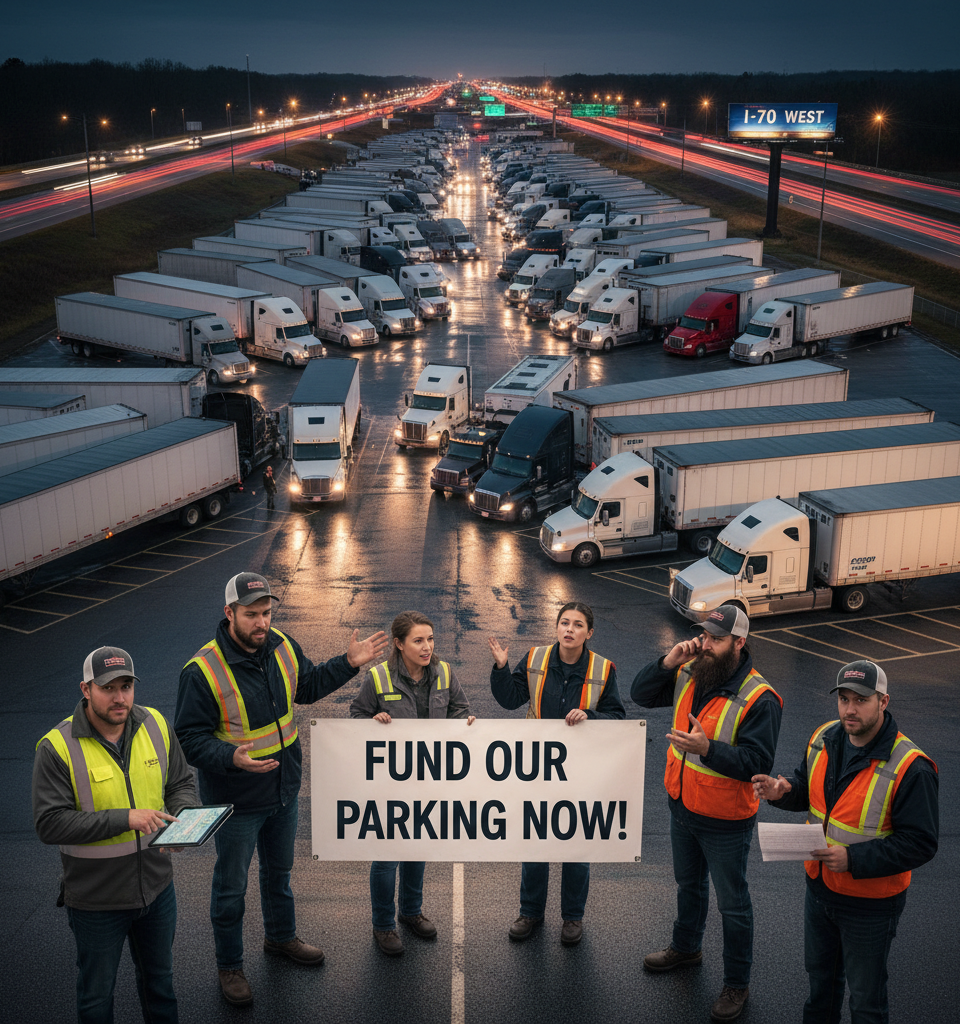
Washington D.C. — The American Trucking Associations (ATA) has formally requested that the U.S. Congress include robust, dedicated funding for truck parking infrastructure in the next surface transportation reauthorization bill. This renewed advocacy, stemming from decades of unaddressed infrastructure deficits, aims to mitigate a nationwide truck parking crisis that imperils driver safety, exacerbates supply chain inefficiencies, and contributes to increased operational costs for the U.S. trucking industry.
The Lingering Parking Crisis
For decades, the availability of safe and adequate truck parking has been a critical concern, repeatedly cited by drivers as a top issue impacting their welfare. The problem stems from a confluence of factors including stagnant infrastructure investment, regulatory mandates like hours-of-service rules that necessitate planned rest stops, and increasing freight volumes. Industry surveys consistently highlight the severe shortage, with estimates suggesting a deficit of hundreds of thousands of parking spaces across the country. This forces drivers to park in unsafe locations, such as highway shoulders, abandoned lots, or exit ramps, leading to heightened risks of accidents, cargo theft, and driver fatigue. The economic impact is also substantial, with drivers reportedly losing up to an hour a day searching for parking, translating to billions of dollars in lost productivity annually.
ATA's Legislative Push and Proposed Solutions The
ATA's proposal zeroes in on creating a dedicated funding stream, likely through a formula-based or competitive grant program, similar to existing federal infrastructure initiatives. They advocate for federal investment that would incentivize states and private entities to develop new parking facilities, expand existing ones, and incorporate advanced technologies like real-time parking availability systems. Chris Spear, President and CEO of the ATA, emphasized the urgency, stating, “Without safe places to park, drivers are forced to violate hours-of-service rules or park in unsafe locations. This isn't just an inconvenience; it's a safety crisis and a major bottleneck for the economy.” The organization points to prior legislative efforts, such as funding provisions within the Bipartisan Infrastructure Law, as a precedent, while advocating for a more substantial and sustained commitment in the upcoming reauthorization.
Broad Economic and Safety Implications
Beyond direct driver impact, the parking shortage has far-reaching consequences for the broader economy and supply chain resilience. An inefficient trucking sector directly translates to higher transportation costs, which are ultimately passed on to consumers. With approximately 72% of all U.S. freight moved by trucks, bottlenecks created by inadequate parking can disrupt the timely delivery of goods, from essential consumer products to critical manufacturing components. Furthermore, the constant stress of finding parking contributes to driver turnover, exacerbating an already challenging driver shortage within the industry. It compromises road safety for all motorists, as fatigued drivers are more prone to accidents, and illegally parked trucks create hazards.
Expert Insights and Industry Support
Transportation policy experts largely echo the ATA's concerns, emphasizing that investing in truck parking is a fundamental requirement for a functioning modern economy. Dr. Cathy Zoi, a transportation economist specializing in logistics, commented, “The ROI on truck parking infrastructure is incredibly high. It’s not just about cement and asphalt; it's about safety, efficiency, and worker retention, directly impacting our GDP. Neglecting this issue is akin to building a highway without rest stops.” The call for federal action is also supported by various state trucking associations, law enforcement agencies, and even some freight shippers, who recognize the cascading negative effects on their operations and delivery schedules.
The Road Ahead: Legislative Challenges and Opportunities As
Congress begins to lay the groundwork for the next surface transportation reauthorization—typically a multi-year legislative process—the ATA faces the challenge of securing bipartisan support and competing for limited federal dollars against numerous other infrastructure priorities. Advocates are optimistic that the strong evidence demonstrating the safety and economic benefits of improved truck parking, coupled with increasing public awareness of supply chain vulnerabilities, will provide sufficient impetus for lawmakers to act decisively. Key legislative hurdles will include determining specific funding mechanisms, allocations to states, and oversight on project implementation. Opportunities exist for inclusion in broader infrastructure packages, potentially leveraging existing grant programs or creating new ones dedicated solely to parking. The outcome of these discussions will largely define the quality of life for millions of truck drivers and the efficiency of the American supply chain for years to come.