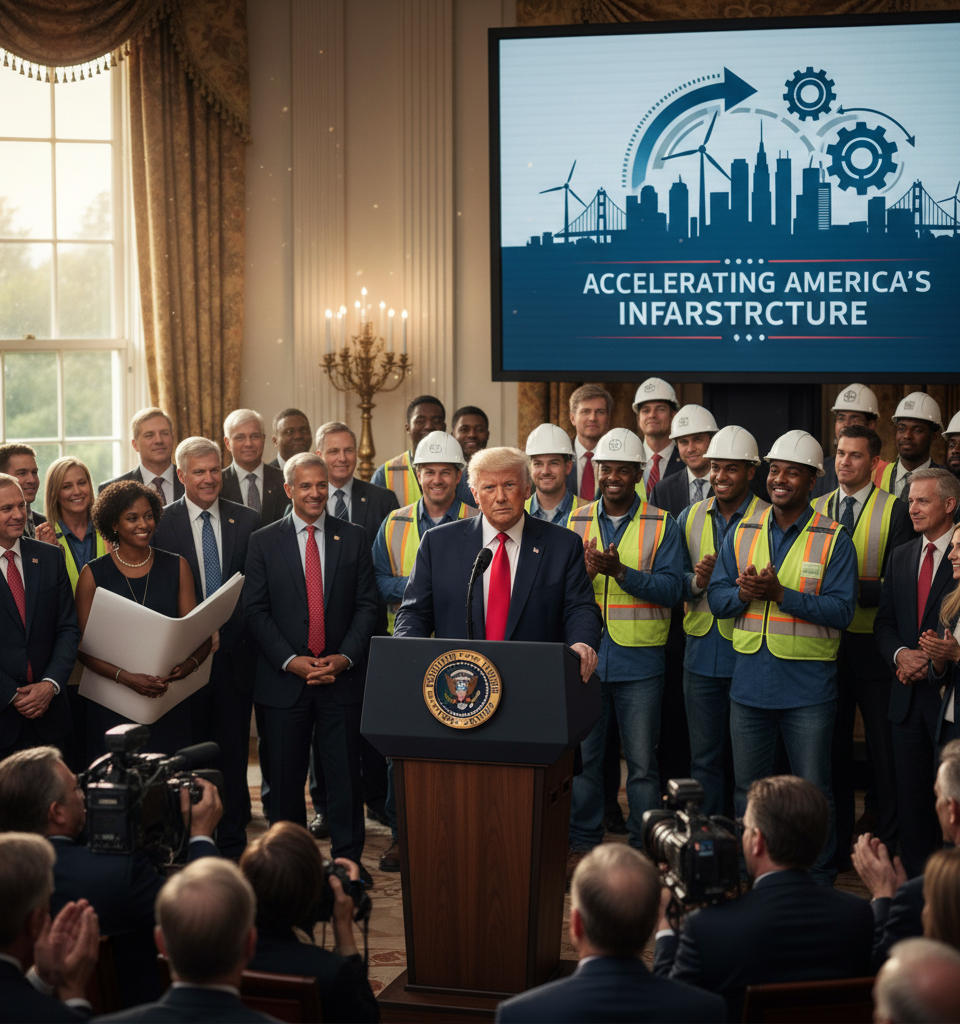
Officials from the Trump administration this week renewed calls for reforms to the federal environmental permitting process, emphasizing the urgency of speeding up approvals for critical energy and infrastructure projects across the United States. During panels at the SelectUSA Investment Summit, key figures outlined the administration's multi-pronged approach to dismantle perceived regulatory bottlenecks, a move they argue is essential for fostering economic growth and attracting foreign investment.
The Drive for Deregulation
The push for streamlined permitting is a cornerstone of the Trump administration's broader deregulation agenda, rooted in the belief that excessive environmental reviews and bureaucratic delays hinder economic competitiveness and job creation. Historically, large-scale infrastructure projects, from pipelines to highways, have faced years-long environmental impact assessments and permit applications, often leading to cost overruns and shelved plans. The current administration has consistently framed these delays as detrimental to national interests, particularly in the energy sector where rapid development is seen as crucial for achieving energy independence and global market leadership.
Key Initiatives and Specifics
Among the initiatives discussed was the "One Federal Decision" policy, implemented under Executive Order 13807. This policy aims to establish a two-year goal for completing environmental reviews and authorization decisions for major infrastructure projects, and requires federal agencies to coordinate better, often producing a single environmental review document and a single record of decision. Panelists cited examples where this approach has already begun to reduce timelines, though specific project successes were not detailed.
Furthermore, recent amendments to the National Environmental Policy Act (NEPA) regulations, finalized in 2020, sought to narrow the scope of environmental reviews, limit the consideration of cumulative and indirect effects, and set clearer deadlines for agency responses. These changes, while lauded by industry, have drawn considerable criticism from environmental groups who argue they weaken protections for ecosystems and public health.
Industry and Market Implications
The energy sector, particularly fossil fuel and renewable energy developers, stands to be a primary beneficiary of these reforms. Companies pursuing large-scale oil and gas pipelines, liquefied natural gas (LNG) terminals, and inter-state transmission lines have long cited permitting delays as significant impediments to project viability. Accelerated approvals could de-risk investments, reduce project financing costs, and bring new capacity online faster, potentially impacting global energy supply chains and pricing. Beyond energy, sectors like transportation, manufacturing, and even digital infrastructure (e.g., fiber optic cable deployments) could see improved efficiency in project execution, stimulating domestic and foreign direct investment in U.S. infrastructure.
Expert Perspectives and Criticisms
Experts familiar with environmental law and infrastructure development offer mixed views. Proponents, often from industry associations and conservative think tanks, argue that the reforms introduce much-needed efficiency without compromising environmental standards, pointing to the economic benefits of timely project completion. However, environmental advocacy groups and some legal scholars contend that the emphasis on speed over thoroughness risks overlooking critical environmental impacts and undermining local community opposition. They highlight concerns that reduced oversight could lead to irreversible damage to natural resources, increase pollution, and exacerbate climate change. The expedited process, they argue, may also leave projects more vulnerable to legal challenges down the line, potentially creating new forms of delay.
The Path Ahead
The future of these permitting reforms remains subject to political shifts and ongoing legal challenges. While the current administration has aggressively pursued its deregulation agenda, a change in presidential administration could lead to a re-evaluation or reversal of some policies, particularly the NEPA amendments. Many of the reforms are currently facing litigation from environmental organizations and state attorneys general, adding an element of uncertainty to their long-term efficacy. The discussions at SelectUSA underscore the administration's commitment to these changes, but their ultimate impact will depend on continued political will, judicial review, and the practical implementation by federal agencies, as well as the ability of industry to capitalize on the expedited process while navigating potential public and legal pushback.