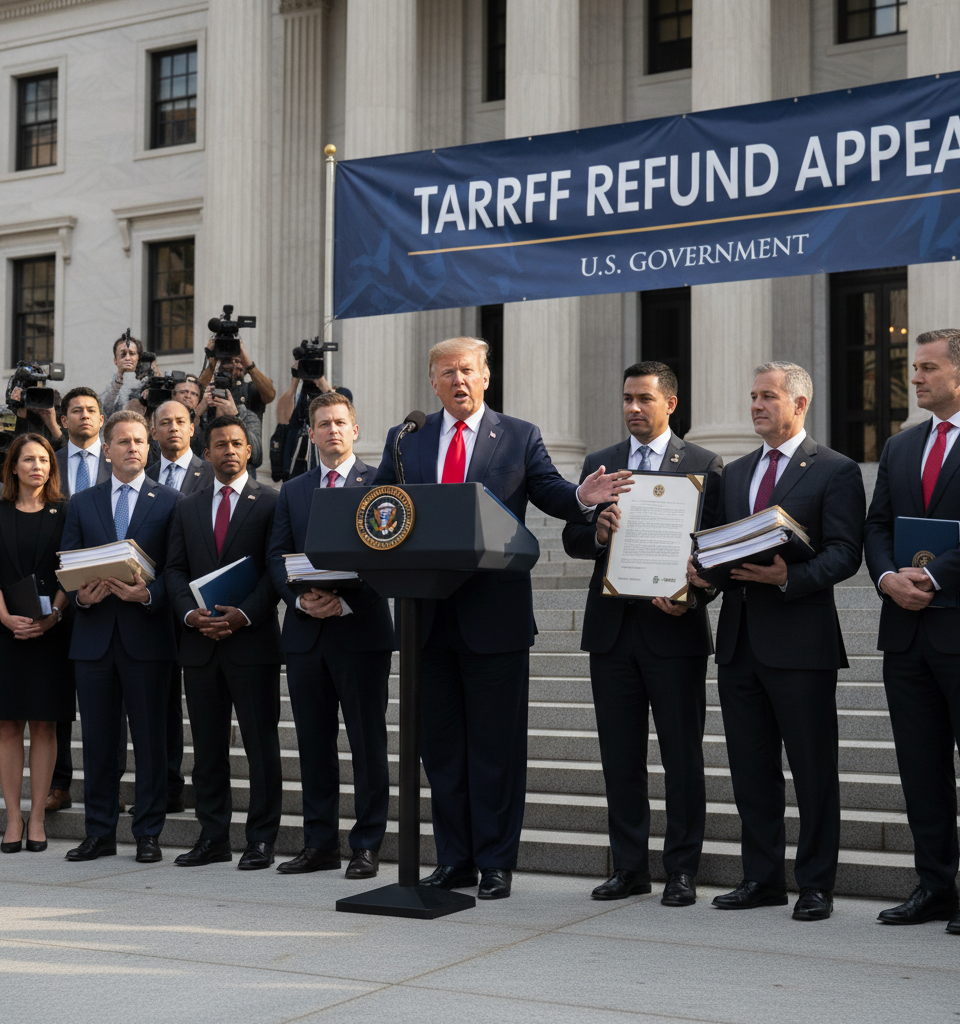
The Trump administration intends to seek an appeal of a federal judge’s recent order that would significantly broaden the scope of tariff refunds. The judicial directive stipulates that all companies that previously paid the invalidated duties should be eligible to seek refunds, a departure from the administration’s initial stance that limited such recourse to only those companies specifically filing legal challenges.
This development is rooted in a complex legal dispute surrounding duties that were levied by the administration, which a federal court later declared invalid. The initial imposition of these duties, part of a broader trade policy, affected numerous importers across various sectors. The subsequent invalidation set the stage for potential refunds, but the mechanism and breadth of these refunds have become the focal point of the current judicial and administrative disagreement. The administration's move to appeal underscores its commitment to its interpretation of the law and its prerogative in trade policy implementation.
At the heart of the matter is the principle of equitable treatment for businesses. The federal judge's order essentially argued against a two-tiered system for refunds, asserting that all entities similarly impacted by the invalidated duties should have an equal opportunity for restitution. This interpretation directly challenges the administration's position, which, by requiring individual lawsuits, would have significantly narrowed the pool of eligible claimants and potentially reduced the total financial outlay in refunds.
The implications for the broader import industry are substantial. If the judge's order is upheld, it could result in a much larger outflow of funds from federal coffers to companies seeking reimbursement for duties paid. This would be a significant financial boon for a wider array of businesses that likely absorbed these costs, either through increased consumer prices or reduced profit margins. Conversely, should the administration's appeal succeed, it would maintain the more restrictive refund process, benefiting only those with the resources and foresight to pursue legal action.
While the source does not detail specific expert opinions, the situation presents a classic confrontation between judicial oversight and executive branch discretion in trade matters. Legal scholars would likely scrutinize the arguments presented by both sides, focusing on precedents concerning administrative law, the scope of judicial review, and the equitable application of remedies in cases of invalidated government actions. Economists would be keenly watching the potential financial impact on the affected industries and possibly on the federal budget, depending on the scale of the refunds.
Looking ahead, the appeal process will undoubtedly involve thorough legal arguments before a higher court. The outcome will set an important precedent regarding how invalidated government-imposed costs are remediated and the extent to which businesses can expect broad relief versus needing to pursue individual litigation. The administration’s robust defense of its position suggests a prolonged legal battle is likely. Further developments will be closely watched by legal professionals, importers, and trade policy analysts, as the final ruling will clarify the landscape for economic redress in similar future scenarios.