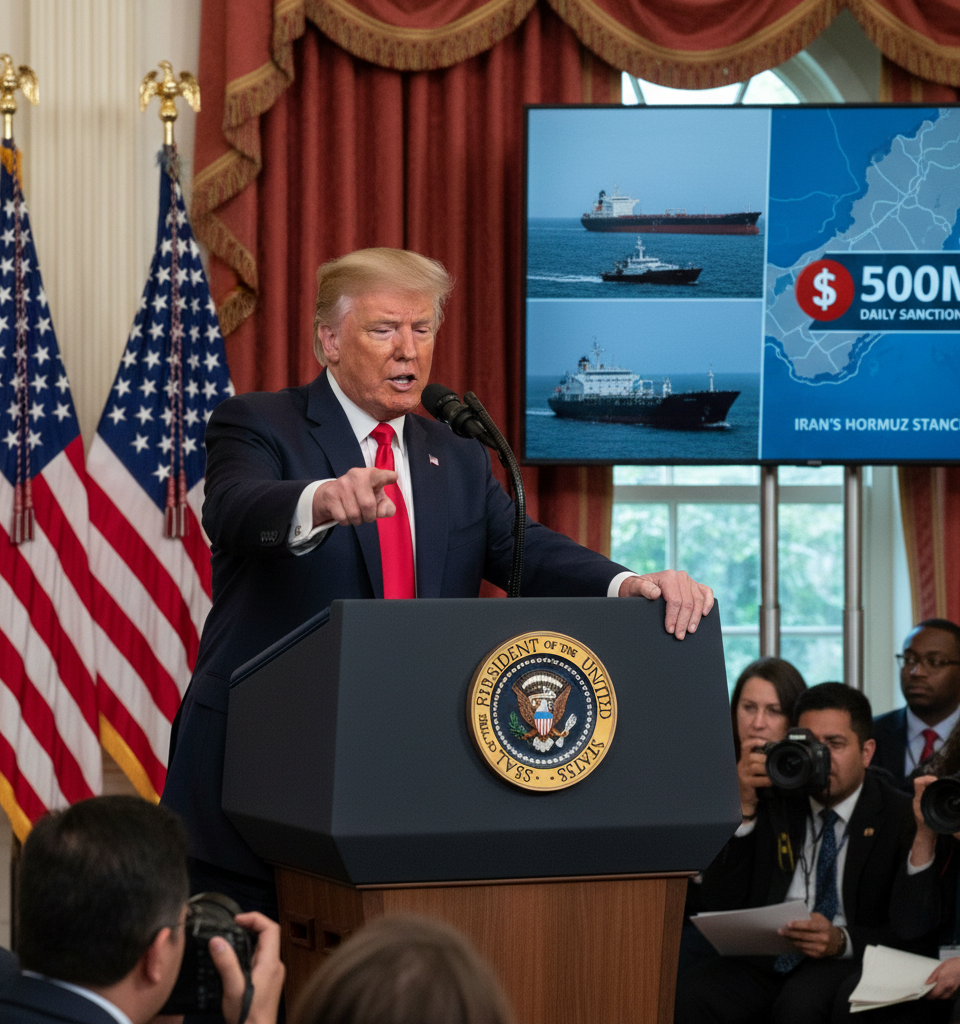
The Geopolitical Chessboard: Hormuz and Sanctions
This assertion comes at a critical juncture in U.S.-Iran relations, which have been deteriorating steadily since Washington's withdrawal from the Joint Comprehensive Plan of Action (JCPOA), commonly known as the Iran nuclear deal, in May 2018. The subsequent re-imposition and escalation of sanctions have targeted Iran's oil exports, banking sector, and other key industries, aiming to cripple the Islamic Republic's economy and force it to renegotiate a more comprehensive agreement. The Strait of Hormuz, a narrow waterway through which roughly one-fifth of the world's oil supply transits, has emerged as a flashpoint, with Iran repeatedly threatening to block its passage in retaliation for economic warfare.
Unpacking the $500 Million Daily Figure While President
Trump did not elaborate on the specific methodology behind the $500 million daily loss figure, it likely reflects a holistic calculation of lost oil revenues, frozen assets, depressed trade, and reduced foreign investment. Prior to the latest round of sanctions, Iran was exporting approximately 2.5 million barrels of oil per day. With current estimates suggesting exports have plummeted to below 300,000 barrels per day, and international oil prices fluctuating around $60-70 per barrel, the direct loss in oil revenue alone could account for a substantial portion of this sum. Additionally, the broader economic contraction, currency devaluation, and rising inflation within Iran contribute to the overall financial burden.
Broader Market Repercussions and Energy Security
The ongoing standoff has sent ripples through global energy markets, contributing to price volatility and increasing the risk premium on oil. Major shipping insurers have raised rates for vessels traversing the Persian Gulf, reflecting the elevated security concerns. Any actual closure of the Strait of Hormuz, however improbable many analysts deem it, would have catastrophic consequences for global trade and supply chains, potentially triggering a severe economic recession worldwide. International efforts to secure alternative energy routes and diversify supply are gaining traction but offer no immediate panacea for a Hormuz disruption.
Expert Analysis: A Glimpse into Iran's Economic Reality Economists and geopolitical analysts largely concur that
U.S. sanctions are indeed inflicting significant pain on the Iranian economy. "The maximum pressure campaign has undeniably squeezed Iran's finances," states Dr. Sarah Ahmad, a Middle East economic expert at the Council on Foreign Relations. "While the precise $500 million daily figure is difficult to independently verify without access to Iran's internal economic data, the country's GDP is contracting sharply, inflation is rampant, and unemployment is rising. Their rhetoric on Hormuz can certainly be interpreted as a strategic leverage play born out of economic desperation, not necessarily a genuine intent to close the strait, which would invite immediate military retaliation." Other experts suggest that while exaggerated for political effect, the figure paints a grim picture of Iran's financial health.
The Path Forward: De-escalation or Further Confrontation?
The immediate future of U.S.-Iran relations remains highly uncertain. The Trump administration shows no signs of relenting on its maximum pressure strategy, believing it to be the most effective means to secure a new, more comprehensive agreement that addresses Iran's nuclear program, ballistic missile development, and regional destabilizing activities. Iran, for its part, continues to demand relief from sanctions before any negotiations can occur, maintaining its stance that the JCPOA is a binding international agreement that the U.S. unilaterally abandoned. The next few months will likely see continued diplomatic brinkmanship, potential proxy confrontations, and an ongoing test of economic endurance, with the Strait of Hormuz remaining a crucial barometer of regional stability.