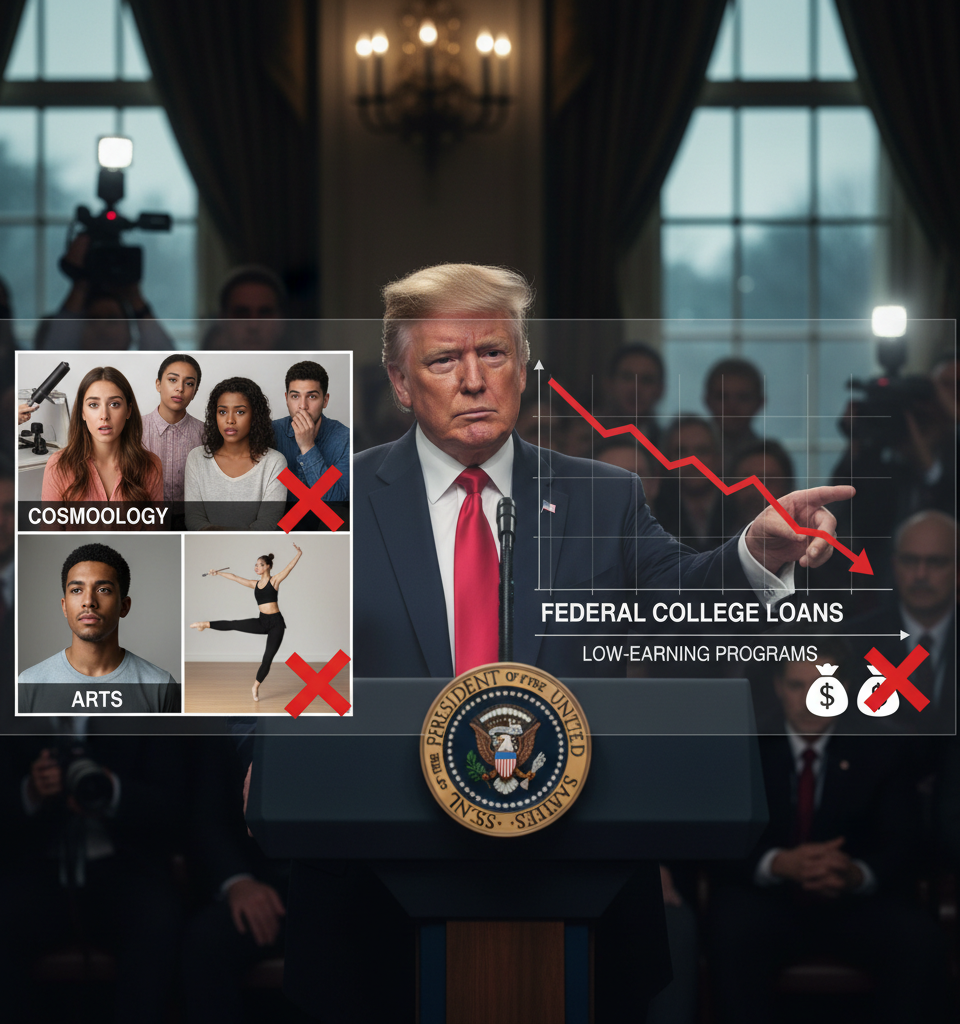
A potentially sweeping policy shift, initially proposed by the Trump administration, is poised to reshape the landscape of higher education funding by directly linking federal student aid eligibility to post-graduation earnings. The regulation, if implemented, would strip federal loan access from colleges offering degree and certificate programs where graduates consistently fail to achieve a specified earnings threshold relative to their debt. This aggressive approach aims to curb the rapid growth of the nation's $1.7 trillion student debt burden, but has prompted significant concerns within academic and professional circles, particularly for disciplines like cosmetology, fine arts, and music, where immediate high salaries are less common.
Context and Background
The discussion around linking federal aid to outcomes is not new, reflecting growing bipartisan frustration over the escalating cost of higher education and the subsequent debt crisis. Proponents argue that taxpayer-backed loans should primarily support programs that provide a clear return on investment for students, preventing individuals from accumulating unmanageable debt for degrees with limited career prospects. The United States currently holds the second-highest average student loan debt burden per borrower among developed nations, with the average federal student loan borrower owing approximately $37,000. Critics of the existing system point to a perceived lack of accountability for programs that consistently leave graduates underemployed or earning low wages, despite often high tuition costs.
Key Details of the Proposed Rule
The proposed regulation, dubbed the "Gainful Employment" rule during its initial iteration, would establish specific debt-to-earnings ratios as a benchmark for program eligibility. While precise figures are subject to finalization, early proposals suggested that programs failing to meet these thresholds for a consecutive number of years could lose their ability to accept federal student loan recipients. This would encompass Pell Grants, Stafford Loans, and other vital federal financial aid.
The rule specifically targets vocational and certificate programs, but its principles could potentially extend to certain degree programs. Institutions would be required to transparently report graduate earnings data, placing a significant onus on colleges to demonstrate the financial viability of their offerings. The intent is to provide prospective students with clearer information about the economic value of various educational pathways.
Industry and Market Impact
The potential impact on specific sectors, particularly arts and vocational training, is substantial. Cosmetology, culinary arts, music performance, and fine arts programs often lead to careers with diverse earning potentials that may not immediately register high on typical salary scales, despite their cultural and economic contributions. For example, the median annual wage for a hairdresser or cosmetologist was around $33,000 in 2022, while many entry-level fine artists earned less.
Such figures could put these programs at risk of losing federal funding, potentially forcing their closure or drastic restructuring. This could, in turn, reduce access to these fields, disproportionately affecting students from lower-income backgrounds who rely heavily on federal aid. Furthermore, a significant reduction in available programs could have a ripple effect on industries that depend on graduates from these fields.
Expert Perspective
Education policy experts and economists offer varied perspectives. Dr. Eleanor Vance, a higher education policy analyst, states, "While the intent to protect students from predatory programs is laudable, an overly rigid application of earnings metrics could inadvertently penalize crucial fields that contribute to societal well-being and offer long-term, if not immediately high-paying, career satisfaction." Conversely, Dr. David Chen, an economist specializing in labor markets, argues, "Institutions have a responsibility to prepare students for viable careers. If a program consistently fails to deliver on that, using taxpayer dollars to subsidize it becomes fiscally irresponsible." He suggests that the rule, if carefully crafted, could incentivize programs to better align curricula with market demands and provide more robust career services.
What's Next
The path to full implementation of such a rule involves navigating complex regulatory processes, including public comment periods and potential legal challenges. While currently a Trump-backed initiative, the underlying concerns about student debt are bipartisan, suggesting that some form of outcomes-based funding could eventually materialize regardless of administration. Colleges and universities are already bracing for increased scrutiny of their program outcomes, with many proactively reviewing their curricula and career support services. The debate is expected to intensify as specific metrics and implementation timelines become clearer. The ultimate success of such a policy will likely hinge on its ability to strike a balance between fiscal responsibility and the preservation of diverse educational pathways that serve a wide range of individual aspirations and societal needs.
This policy represents a significant potential shift in how higher education is funded and perceived, moving towards a model that emphasizes tangible economic returns. Its long-term effects on program availability, student choice, and the overall educational ecosystem will be closely watched.