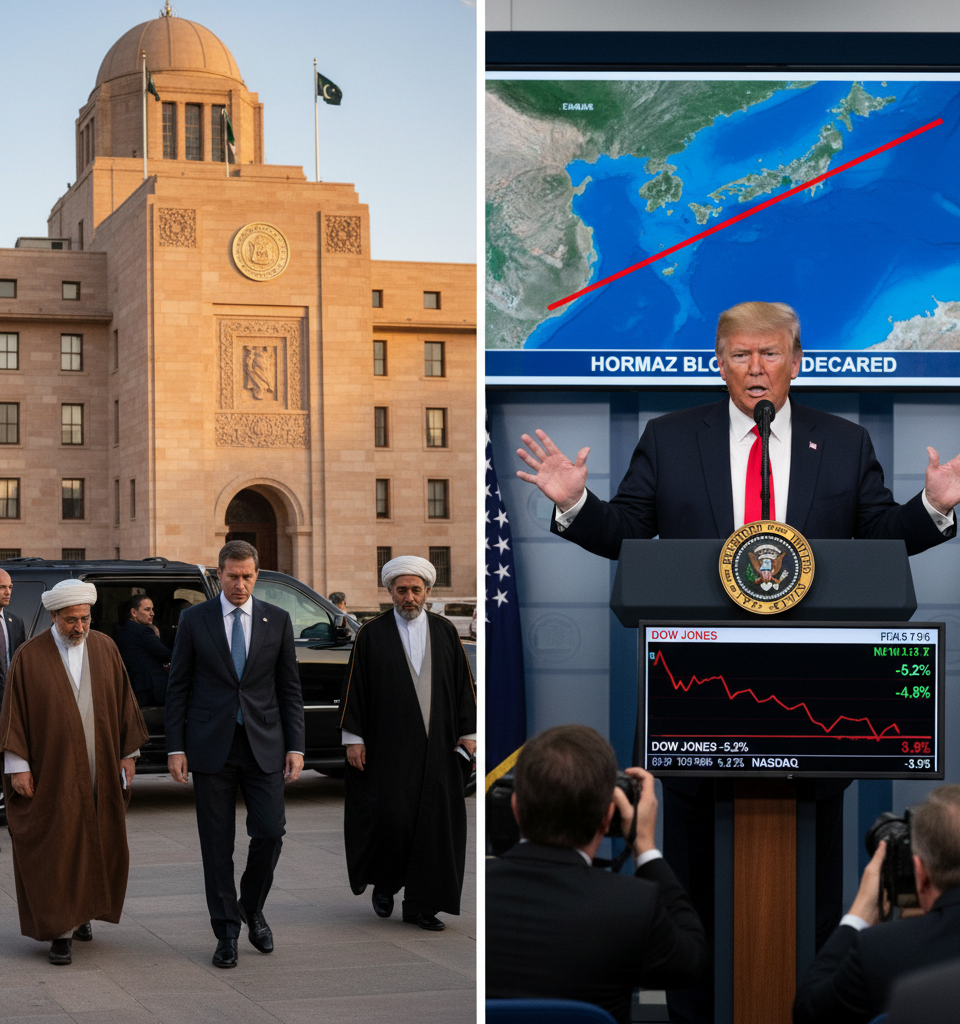
Islamabad, Pakistan / Washington D.C. – In a move that dramatically elevates geopolitical tensions, President Donald Trump yesterday declared a full naval blockade of the Strait of Hormuz, a critical chokepoint for global oil supplies. This assertive declaration came immediately after U.S. envoy Robert Vance concluded unproductive talks with Iranian officials in Islamabad, Pakistan, failing to secure a de-escalation agreement. The immediate fallout has been a fierce reaction in global financial markets, with U.S. stock futures experiencing a sharp decline and crude oil prices surging on the back of fears over supply disruptions.
The Precipice of Conflict: Failed Diplomacy and Strategic Showdown
President Trump's announcement signals a severe hardening of the U.S. stance against Iran, moving beyond sanctions to a direct military-economic posture. The Strait of Hormuz is a narrow waterway through which approximately 20% of the world's petroleum and a third of all seaborne-traded oil passes daily. Historically, threats to this strait have been flashpoints for international crises, emphasizing its indispensable role in global energy security. This blockade order follows months of escalating rhetoric and tit-for-tat actions, including attacks on tankers in the Gulf and Iran's seizure of foreign vessels, raising concerns that the region is teetering on the brink of open conflict.
Market Turmoil: Stocks Slide, Oil Rockets Upward
The financial markets reacted swiftly and decisively to the news. On a prominent crypto-based trading platform facilitating traditional asset trading, U.S. S&P 500 futures immediately plunged by 3.5%, signaling a likely sharp opening downturn for the broader market. The tech-heavy Nasdaq futures followed suit, shedding 4.1%. Concurrently, global benchmark Brent crude oil futures soared by an astonishing 7.8% to over $85 per barrel, while West Texas Intermediate (WTI) crude saw a similar leap to $79 per barrel. Gold, often considered a safe-haven asset, also rose, though its ascent was more modest at 1.2%.
Repercussions Across Industries: Energy, Shipping, and Beyond
The impact of a Strait of Hormuz blockade would reverberate across numerous industries. Energy companies are bracing for volatile pricing and potential supply chain disruptions. Shipping and logistics firms face immediate rerouting challenges, higher insurance premiums, and increased operational costs, with some analysts predicting a 20-30% rise in freight costs for Middle Eastern routes. Beyond oil, the blockade could impact the global flow of liquefied natural gas (LNG), industrial chemicals, and even consumer goods, triggering inflationary pressures worldwide. Major airlines are also reviewing flight paths over the region due to heightened security risks.
Expert Analysis: Uncharted Territory and Geopolitical Risks
Speaking to BNN Bloomberg, Dr. Eleanor Vance, a senior geopolitical strategist at Quantum Global Investments, stated, "This isn't merely a show of force; it's a direct challenge to the global energy supply chain. The economic ramifications of a sustained blockade would be catastrophic, far exceeding those of previous regional conflicts." She added, "While the immediate market reaction reflects fear, the true test will be how long this blockade can be maintained without triggering a military response from other global powers dependent on that oil flow." Analysts at Fitch Ratings have already indicated they are reviewing sovereign debt outlooks for several oil-importing nations due to the projected economic instability.
The Path Forward: Diplomacy, Military Engagement, or Economic Warfare?
The immediate future remains highly uncertain. International bodies, including the United Nations, are expected to convene emergency sessions to address the crisis and urge de-escalation. The possibility of direct military engagement between the U.S. and Iran now looms larger than ever. Furthermore, the blockade could catalyze a reshaping of global energy alliances, with nations scrambling to secure alternative energy sources and diversify their supply chains. The coming days will be critical in determining whether this dramatic escalation leads to a diplomatic breakthrough, a prolonged period of economic strife, or outright military conflict in the Persian Gulf.
Global Response and Energy Security Concerns
Major economies, heavily reliant on Middle Eastern oil, have expressed grave concern. China, the world's largest oil importer, has called for restraint and resolution through dialogue. European Union leaders are reportedly working on a joint position, emphasizing the need for global energy security. The blockade also puts the spotlight on strategic petroleum reserves, with many nations likely to consider releasing their stockpiles to mitigate immediate price shocks, though such measures offer only temporary relief against a sustained disruption. The long-term implications for global energy policy could be profound, accelerating the push towards renewable energy sources and localized energy production.