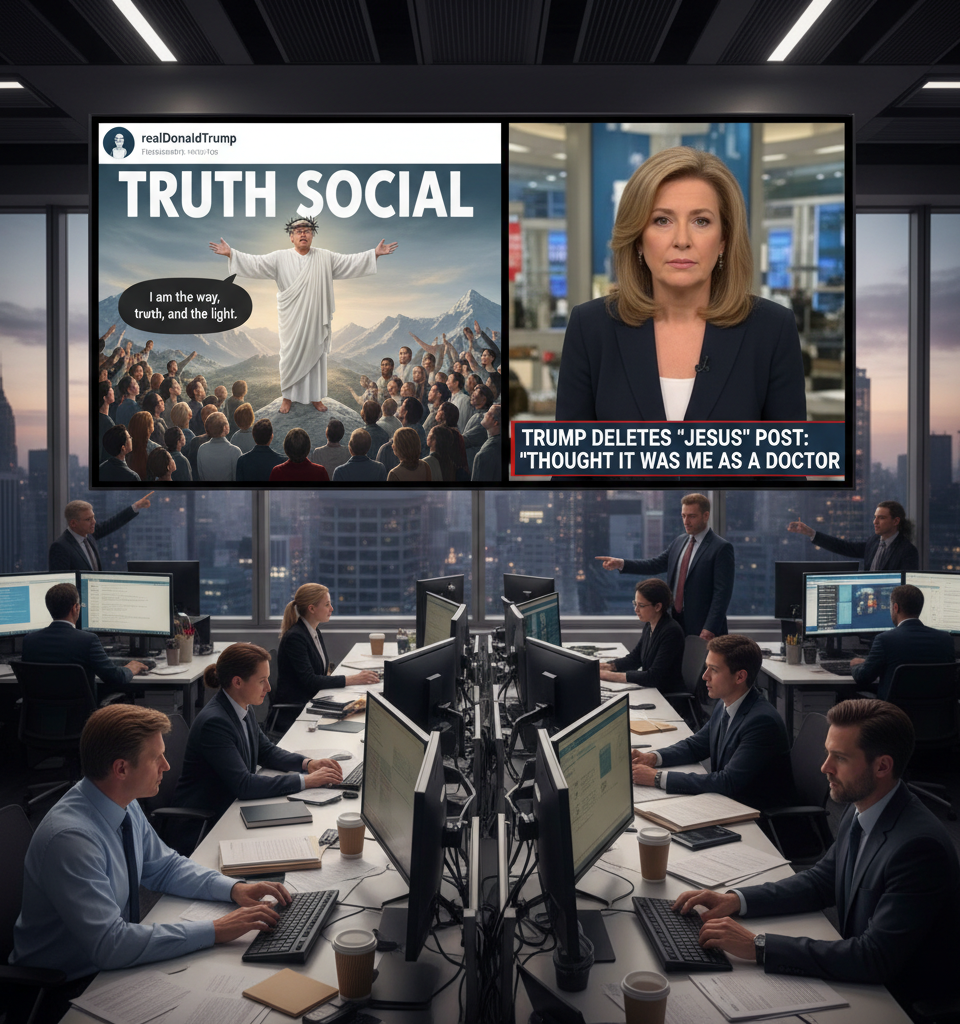
In a notable social media episode from May 2025, former President Donald Trump engaged with his Truth Social platform by posting, and subsequently deleting, an Artificial Intelligence (AI) generated image that appeared to depict him as Jesus Christ. The controversial image was quickly removed, with Trump later reportedly stating that he had initially perceived the figure in the image to be a doctor.
This incident garnered significant attention, not least because it followed closely on the heels of another contentious AI-generated image shared by Trump earlier the same month. That previous posting had portrayed him as a Catholic pope, an image that also sparked widespread discussion and criticism, particularly as it emerged in the immediate aftermath of the reported death of Pope Francis. The May 2025 events collectively highlighted an ongoing pattern of Trump's use of AI imagery and his often-unconventional social media engagement, which frequently draws both fervent support and strong condemnation.
Context of Trump's Social Media Strategy
Donald Trump's use of Truth Social, the platform he established, has frequently been characterized by direct and often provocative communication. Since its inception, the platform has served as a primary conduit for his public statements, commentaries, and the dissemination of various forms of media, including self-generated or AI-assisted content. The former president's approach to social media has long been recognized for its ability to cut through traditional media filters and directly address his extensive base of supporters.
The May 2025 postings, particularly the 'Jesus' image incident, underscore the fine line often walked in digital political communication. While supporters might view such imagery as playful or symbolic endorsements of Trump's perceived leadership qualities, critics frequently interpret them as irreverent, self-aggrandizing, or even blasphemous. The rapid deletion of the 'Jesus' image, coupled with Trump's explanation, suggests an awareness of the potential for negative backlash, even on a platform where he enjoys significant editorial control.
Implications for Digital Content and Political Messaging
These incidents from May 2025 also served as a broader commentary on the burgeoning role of AI-generated content in political discourse. The increasing sophistication of AI image generation tools allows for the creation of highly realistic, yet entirely fabricated, scenarios and portrayals. While offering new avenues for creative expression, this technology simultaneously introduces significant challenges regarding authenticity, misinformation, and the ethical boundaries of political messaging. The ease with which such images can be created and disseminated means that public figures and their teams must exercise increased vigilance over the content they share, regardless of its origin.
Furthermore, the controversy surrounding the 'Jesus' image underscored the deeply sensitive nature of religious iconography in public life. For many, the depiction of a political figure as a revered religious leader can be seen as highly offensive, conflating spiritual authority with earthly power in ways that are deemed inappropriate or sacrilegious. This sensitivity is amplified when such imagery is perceived as being used for political gain or self-promotion.
The Lingering Aftermath and Future Considerations
The swift deletion of the image, while perhaps aimed at quelling controversy, did not prevent the incident from being widely reported and analyzed. It became another data point in the ongoing discussion about how political figures, particularly those with a populist appeal, utilize digital platforms and emerging technologies to shape their public image and connect with their audience. The explanation offered by Trump – that he mistook the figure for a doctor – did little to appease critics, who often scrutinize his public statements for underlying intentions or strategic messaging. Critics argued that such a mistake, if genuine, pointed to a lack of due diligence before posting on a high-profile public platform.
Looking ahead, the May 2025 events provided a preview of the complexities and potential pitfalls associated with the integration of AI into political campaigning and public relations. As AI technology continues to advance, the distinction between authentic and fabricated content will likely become even more blurred, raising critical questions about media literacy, content verification, and the responsibilities of public figures in the digital age. The incidents involving Donald Trump's Truth Social posts vividly illustrate the immediate and far-reaching impacts that even a fleeting piece of digital content can have in the contemporary political landscape.