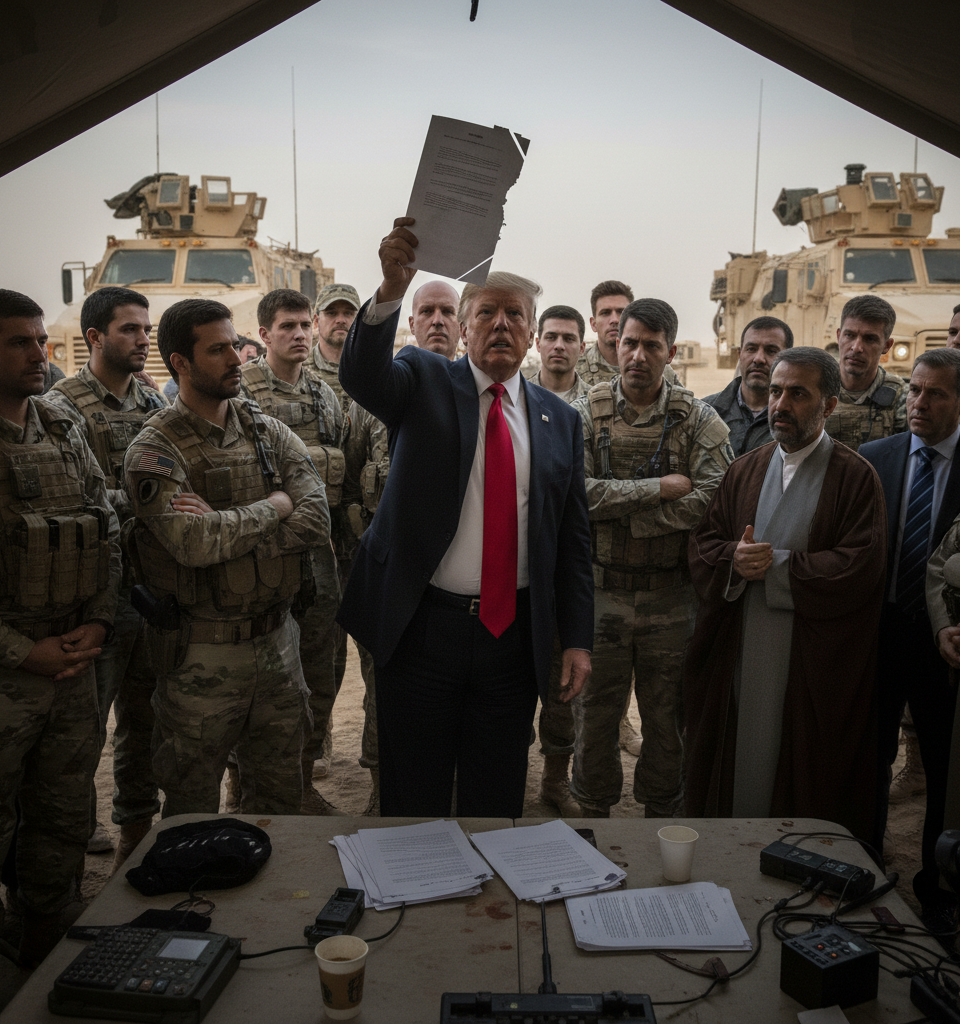
WASHINGTON D.C. – President Donald Trump is presently navigating a tenuous cease-fire agreement with Iran, a culmination of a diplomatic trajectory characterized by significant and often abrupt shifts. The accord, which emerged from a period of intense and at times chaotic negotiations, is reportedly facing early indications of strain, challenging its immediate stability and raising concerns about its effectiveness in de-escalating regional tensions.
The development follows a tumultuous period where the Trump administration employed a blend of maximalist pressure tactics and intermittent overtures towards Tehran. This strategic oscillation, moving from heightened confrontation to eleventh-hour diplomatic scrambling, ultimately yielded the current cease-fire. The inherent fragility of the present arrangement is, according to observers, a direct consequence of this unpredictable and often reactive foreign policy approach, leaving the new agreement susceptible to internal and external pressures.
The Diplomatic Tightrope Walk
The path to this cease-fire was marked by a series of high-stakes maneuvers. From the abrupt withdrawal from the Joint Comprehensive Plan of Action (JCPOA) in 2018 to the subsequent re-imposition of crippling sanctions, the administration’s Iran policy has been a study in escalation. This was often followed by sudden, albeit short-lived, gestures towards de-escalation, creating an environment of significant uncertainty. Sources familiar with the negotiations, who wished to remain anonymous given the sensitive nature of the discussions, have indicated that the scramble to secure this deal involved intense, late-stage concessions from both sides, though the specifics remain largely undisclosed. This eleventh-hour push, driven by a desire to avert further escalation, left little room for a more robust and comprehensive agreement.
Origins of Instability
The current cease-fire, while a temporary reprieve from escalating tensions, appears to have been constructed on a foundation of expediency rather than mutual trust or deeply rooted agreement. The very nature of its creation – a rapid consolidation of diplomatic efforts after significant diplomatic swings – inherently makes it prone to instability. Early reporting suggests that various factions within both the American and Iranian political establishments are viewing the cease-fire with skepticism, contributing to its already apparent signs of fraying. The lack of a unified front or sustained commitment from all relevant stakeholders on both sides poses a significant challenge to its endurance.
Geopolitical Implications and Market Reactions
The immediate impact of this fragile cease-fire on global markets has been a mixed bag. While the initial announcement provided a temporary sense of relief, driving down oil prices slightly due to averted military conflict, the subsequent reports of the deal's fragility have injected renewed uncertainty. Analysts from major financial institutions are closely monitoring the situation, with many suggesting that persistent geopolitical instability in the Middle East will continue to exert upward pressure on commodity prices, particularly crude oil. Global shipping routes and insurance premiums, especially through the Strait of Hormuz, remain particularly sensitive to any perceived breakdown of the agreement.
The broader geopolitical landscape is also affected. Regional allies of the United States, particularly those in the Gulf, are reportedly concerned about the long-term implications of a cease-fire that they perceive as less than definitive. Discussions among senior security officials in allied nations indicate a desire for a more robust and verifiable agreement that addresses Iran's regional activities and missile program, issues that appear to be inadequately covered or unresolved within the scope of the current fragile understanding.
Looking Ahead: A Precarious Path
The immediate future of the Iran cease-fire hinges on the ability of both nations to adhere to its terms and manage internal dissent. The signals of fraying are a critical early warning that without concerted effort and perhaps further diplomatic engagement, this agreement could unravel quickly. Experts are pointing to the need for a sustained, rather than episodic, diplomatic strategy to build a more resilient framework for peace. President Trump's administration faces the formidable task of not only maintaining this precarious peace but also addressing the underlying issues that led to the diplomatic maelstrom in the first place, or risk a return to the brink of conflict.