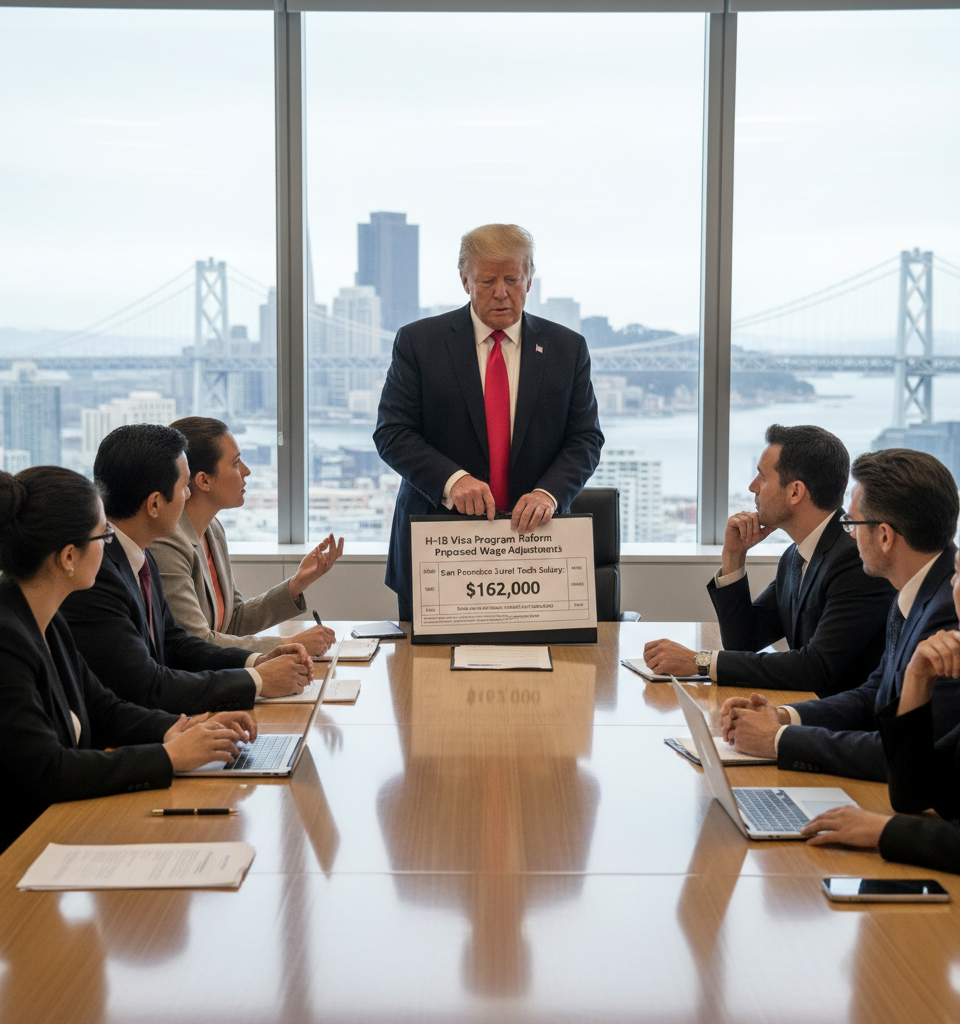
A proposed rule by the Trump administration, published in March, threatens to dramatically revise the salary thresholds for H-1B specialty occupation visas, with particular implications for the tech sector. Under the new guidelines, an entry-level software engineer in San Francisco would need to command an annual salary of at least $162,000 to qualify for an H-1B visa. Similar roles in other tech hubs would see significant increases, with Dallas reaching approximately $113,000 and New York City rising to $132,000. These proposed increases represent a nearly 30% jump above current minimums in each respective market.
Context and Background
The H-1B visa program has long been a focal point of immigration debates, intended to allow U.S. employers to temporarily employ foreign workers in specialty occupations that require theoretical or technical expertise. Critics of the existing system often argue that companies exploit the program to hire cheaper foreign labor, thereby depressing wages for American workers. Proponents, however, maintain that the H-1B program is crucial for filling critical skills gaps, especially in the rapidly evolving technology sector, and for maintaining America's competitive edge in innovation. The proposed salary hike aligns with a broader push to ensure H-1B workers are paid at prevailing wage levels, theoretically safeguarding American jobs and discouraging the use of the visa for entry-level positions that could be filled by domestic talent.
Key Details of the Proposal
The proposed rule, known as “Strengthening the H-1B Nonimmigrant Visa Program” (RIN 1615-AC66), specifically targets the prevailing wage levels used to set minimum salaries for H-1B workers. The U.S. Department of Labor (DOL) currently categorizes wages into four levels based on experience and skill. The new rule seeks to adjust these levels upwards, significantly impacting Level 1 (entry-level) and Level 2 (qualified) positions. For instance, the approximately 30% increase mentioned for various cities reflects the re-calibration of these wage levels, intending to align them more closely with actual market rates for experienced professionals rather than entry-level roles. This would mean that companies looking to hire on an H-1B would need to justify a much higher salary, essentially positioning the visa as a tool for securing highly experienced and specialized talent exclusively.
Industry and Market Impact
The tech industry, a significant user of H-1B visas, would face substantial operational and strategic adjustments. Startups and smaller tech firms, often operating on tighter budgets, might find it challenging to meet the new, elevated salary requirements for entry-level positions, potentially limiting their access to a global talent pool. Larger corporations, while perhaps better equipped to absorb the increased costs, could still see their hiring strategies shift, prioritizing highly senior roles for H-1B sponsorship.
This could exacerbate the existing talent shortage in certain specialized areas and potentially slow down innovation if companies are unable to quickly onboard necessary expertise. Furthermore, it might push some companies to consider relocating certain operations or intellectual property development to countries where skilled labor is more readily and affordably available.
Expert Perspectives
Immigration attorneys and tech industry analysts view the proposal with mixed reactions. Many agree that wage protections for H-1B workers are important, but concerns have been raised about the magnitude and suddenness of the proposed increases. "This isn't merely an adjustment; it's a fundamental re-definition of who qualifies for an H-1B at the entry-level," stated a Washington-based immigration lawyer. "It makes it clear that the visa is intended for senior, highly compensated roles, effectively closing the door on new graduates or junior professionals seeking to begin their careers in the U.S. via this route." Economists also warn that while the intent may be to protect American jobs, such a drastic change could inadvertently force companies to look abroad for talent, ultimately hindering domestic job creation and economic growth in the long run.
What's Next?
The proposed rule underwent a public comment period, and the Department of Homeland Security (DHS), which oversees the H-1B program, is currently reviewing the feedback received. Given the contentious nature of immigration policy and the significant economic implications, the final rule could face legal challenges once implemented. Businesses reliant on the H-1B program are advised to monitor developments closely and consider adjusting their long-term talent acquisition strategies. The ultimate impact will depend on the final form of the rule, its implementation timeline, and potential judicial oversight, all of which remain subject to ongoing political and legal processes.
Future Implications
Should the proposal be enacted as written, the U.S. could see a noticeable shift in its global competitiveness for tech talent. Companies might explore alternative visa categories or increase investments in domestic workforce development and STEM education to fill the void. The move could also inadvertently bolster other countries' efforts to attract highly skilled immigrant workers. The long-term implications for the U.S. tech sector's growth trajectory and its ability to innovate at the cutting edge are significant and will be closely watched by industry leaders and policymakers alike.