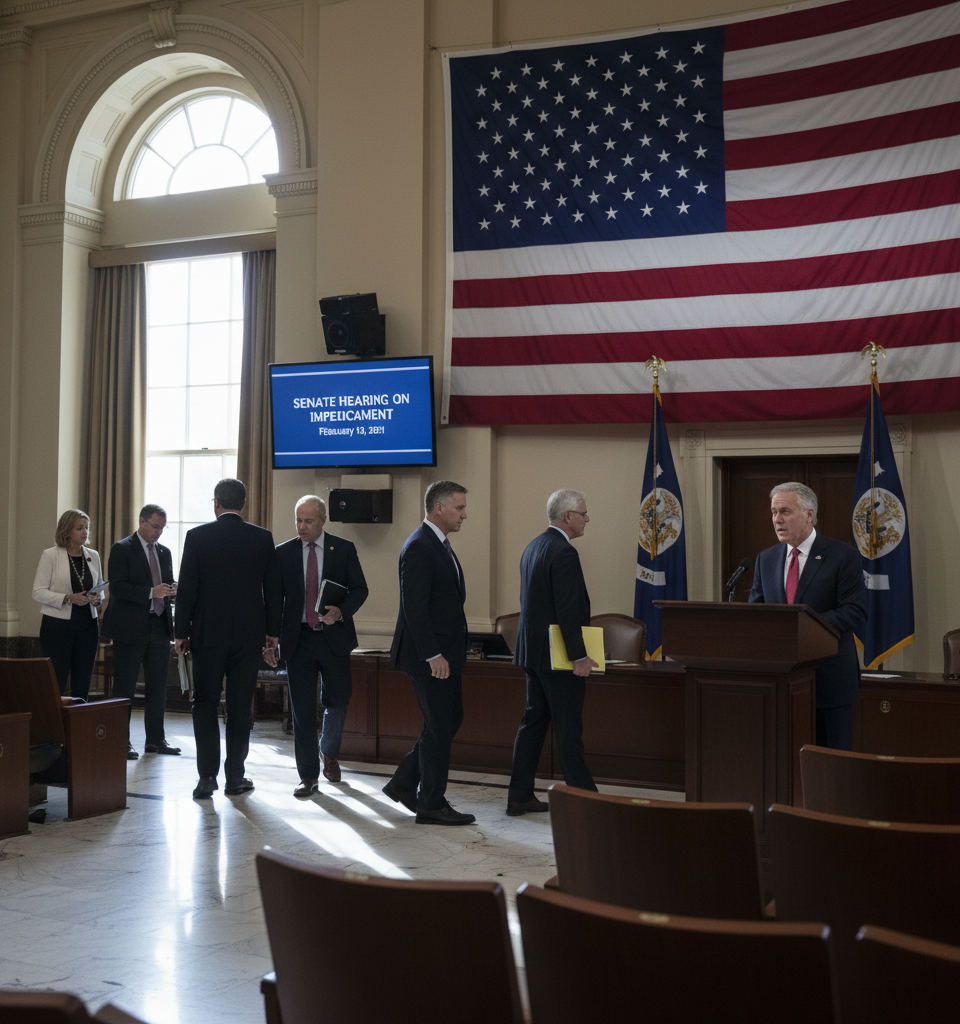
The political landscape for Republicans who voted to convict former President Donald Trump following the January 6th Capitol attack has profoundly shifted, solidifying the former president's enduring influence within the party. With the recent electoral defeat of Senator Bill Cassidy (R-LA), a prominent figure among the seven Republicans who supported Trump's conviction, no more than two of these individuals are poised to retain their seats in Congress for the upcoming term. This outcome underscores the severe political repercussions faced by those who broke ranks with Trump, illustrating a compelling narrative of a party increasingly unified around its former leader.
This trend is a stark indicator of the ongoing power dynamics within the Republican Party, where loyalty to Donald Trump often outweighs traditional conservative tenets. The second impeachment trial, which concluded on February 13, 2021, saw a largely partisan vote, with only seven Republican senators and ten Republican House members voting to impeach Trump for incitement of insurrection. Their actions, though lauded by some as principled stands, were widely condemned by many within their own party, leading to primary challenges, censure votes, and a significant decline in political viability for most.
The Fallout for Defiant Republicans
Of the seven senators who voted to convict Trump – Senators Richard Burr (NC), Bill Cassidy (LA), Susan Collins (ME), Lisa Murkowski (AK), Ben Sasse (NE), Pat Toomey (PA), and Mitt Romney (UT) – only Senators Collins and Murkowski remain in office and have viable paths forward. Senator Burr and Senator Toomey opted not to seek re-election, anticipating difficult primary battles and general election challenges. Senator Sasse resigned from the Senate in January 2023 to become the president of the University of Florida, effectively removing himself from the immediate political fray.
Senator Cassidy's recent primary loss, where he faced a Trump-backed challenger, seals his exit from federal office. Senator Romney, a consistent critic of Trump, has also announced his decision not to seek re-election, citing a desire to spend more time with family and expressing concerns about the direction of political discourse.
This attrition is even more pronounced among the ten House Republicans who voted to impeach: Representatives Liz Cheney (WY), Anthony Gonzalez (OH), Jaime Herrera Beutler (WA), John Katko (NY), Adam Kinzinger (IL), Peter Meijer (MI), Dan Newhouse (WA), Tom Rice (SC), Fred Upton (MI), and David Valadao (CA). Of this group, only Representatives Newhouse and Valadao managed to survive their re-election bids, a testament to the particular political landscapes of their districts. The others either lost their primaries, retired, or were defeated in the general election, with Liz Cheney's high-profile loss in Wyoming serving as a potent symbol of Trump's retribution against his intra-party adversaries.
Cheney, once a leading figure in House Republican leadership, became a vocal critic of Trump and a key member of the Jan. 6th Committee, actions that ultimately cost her the support of her party's base.
Expert Perspectives on Party Cohesion
Political analysts widely interpret these outcomes as a clear sign of the Republican Party's continued realignment around its populist wing. Dr. Sarah Jenkins, a political science professor at a prominent East Coast university, commented, "The data unequivocally shows that diverging from Donald Trump on critical votes, particularly the impeachment trials, carries immense political risk within the contemporary Republican Party. It effectively acts as a litmus test for a significant portion of the base, making it incredibly difficult for dissenters to survive primary challenges." She added, "This is less about traditional policy debates and more about loyalty and identity politics."
This phenomenon has several implications for the future of the Republican Party. It suggests a continued consolidation of power around figures aligned with the 'America First' agenda, potentially stifling internal dissent and intellectual diversity. It also raises questions about the party's ability to appeal to broader swaths of the electorate if it becomes too insular or narrowly focused on Trumpian loyalty. The diminishing number of centrist or moderate Republicans in Congress could lead to more entrenched political polarization and gridlock.
Looking Ahead: The 2024 Election and Beyond
The near-complete exodus of these anti-Trump Republicans from Congress paves a clearer path for Donald Trump's influence, regardless of his 2024 presidential aspirations. Should Trump secure the Republican nomination, the party apparatus, largely purged of his critics, would likely coalesce with greater uniformity than in previous cycles. For those few remaining, like Senators Collins and Murkowski, their continued political survival hinges on their ability to cultivate strong individual brands and represent unique state electorates that value independent decision-making over strict party adherence, or simply being in states where Trump's opposition is more pronounced. The upcoming election cycle will undoubtedly test the resilience of these remaining outliers and further define the evolving identity of the Republican Party for years to come.