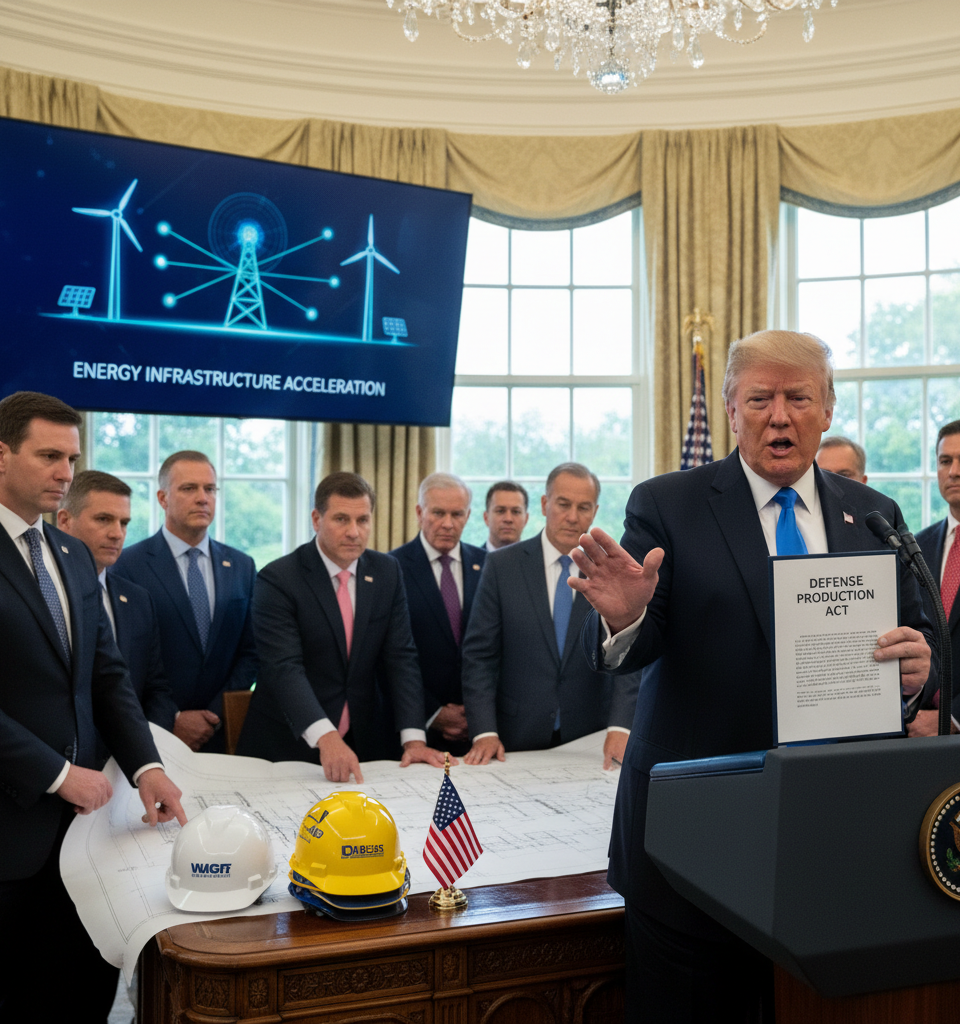
Washington D.C. — In a significant and potentially far-reaching policy declaration, former President Donald Trump has signaled his intention to leverage the rarely-used Defense Production Act (DPA) to accelerate critical domestic energy endeavors. The move, articulated as a direct response to escalating energy prices for consumers and the burgeoning power needs of industries like artificial intelligence (AI), underscores a strategic shift towards bolstering U.S. energy independence and addressing economic pressures.
Context: Energy Security and Economic Headwinds
The declaration arrives amidst a complex global energy landscape marked by geopolitical instability, fluctuating oil prices, and increasing domestic demand. Consumers have grappled with persistent inflationary pressures, with energy costs as a significant contributor to household budgets. Simultaneously, the rapid expansion of data centers and the computational intensity of AI development are placing unprecedented demands on the existing power grid, raising concerns about future energy supply resilience. Trump's proposal taps into a long-standing conservative tenet of prioritizing domestic resource extraction and reducing reliance on foreign energy sources.
Key Details: Unleashing the DPA's Power
While specific projects or timelines were not immediately detailed, the invocation of the DPA would grant the executive branch significant authority to compel private companies to prioritize and produce materials or services deemed essential for national defense. In this context, it would likely be used to expedite permits, secure supply chain components, and potentially allocate resources for oil and gas exploration, refining, and infrastructure projects. This would bypass some traditional regulatory hurdles, potentially accelerating project completion but also inviting environmental scrutiny.
Industry Impact: A Boon for Fossil Fuels, a Challenge for Renewables?
The immediate beneficiaries of such a policy would likely be the traditional fossil fuel sectors – oil, natural gas, and potentially coal. Companies involved in extraction, refining, and pipeline construction could see accelerated approvals and preferential access to resources. However, the exact impact on the broader energy mix remains to be seen. While proponents argue that robust fossil fuel production can act as a bridge to a renewable future, critics contend that such an approach could divert investment and attention away from clean energy initiatives, setting back climate goals and creating long-term environmental liabilities. The DPA's application could also potentially impact the procurement of critical minerals essential for renewable energy technologies, creating a complex interplay of priorities.
Expert Perspective: Balancing Expediency with Environmental Concerns
Energy policy experts are divided on the efficacy and implications of this approach. Dr. Eleanor Vance, an energy economist at the American Enterprise Institute, commented, “The DPA offers a potent tool to address immediate supply bottlenecks and meet urgent demand. This could provide real relief to consumers and industries like AI that are hungry for power.” Conversely, environmental advocacy groups have voiced strong opposition. A spokesperson for the Sierra Club stated, “Invoking the DPA for fossil fuel expansion is a dangerous step backward. It prioritizes short-term gains over long-term environmental sustainability and undermines efforts to transition to a clean energy economy.” The legal precedent for using the DPA for broad energy purposes beyond explicit wartime needs could also face judicial challenges.
Geopolitical Repercussions: A Stronger Hand for the US?
Beyond domestic implications, the expansion of U.S. energy production could have significant geopolitical ramifications. Increased domestic supply lessens American vulnerability to global energy price shocks and provides greater leverage in international relations. This could be particularly impactful in a world grappling with ongoing conflicts and supply chain vulnerabilities, allowing the U.S. to project greater energy security and potentially stabilize global markets.
What's Next: Policy Debates and Implementation Challenges
Should Trump win the upcoming election, the implementation of this DPA strategy would undoubtedly trigger intense legislative and public debate. The precise scope and duration of DPA invocation, the balance between fossil fuel and renewable energy promotion, and the environmental review processes will be critical battlegrounds. Furthermore, the practical challenges of rapidly scaling energy projects — from labor availability to infrastructure development — would need to be meticulously addressed. The proposal sets the stage for a dramatic reshaping of U.S. energy policy, with profound economic, environmental, and geopolitical consequences looming on the horizon.