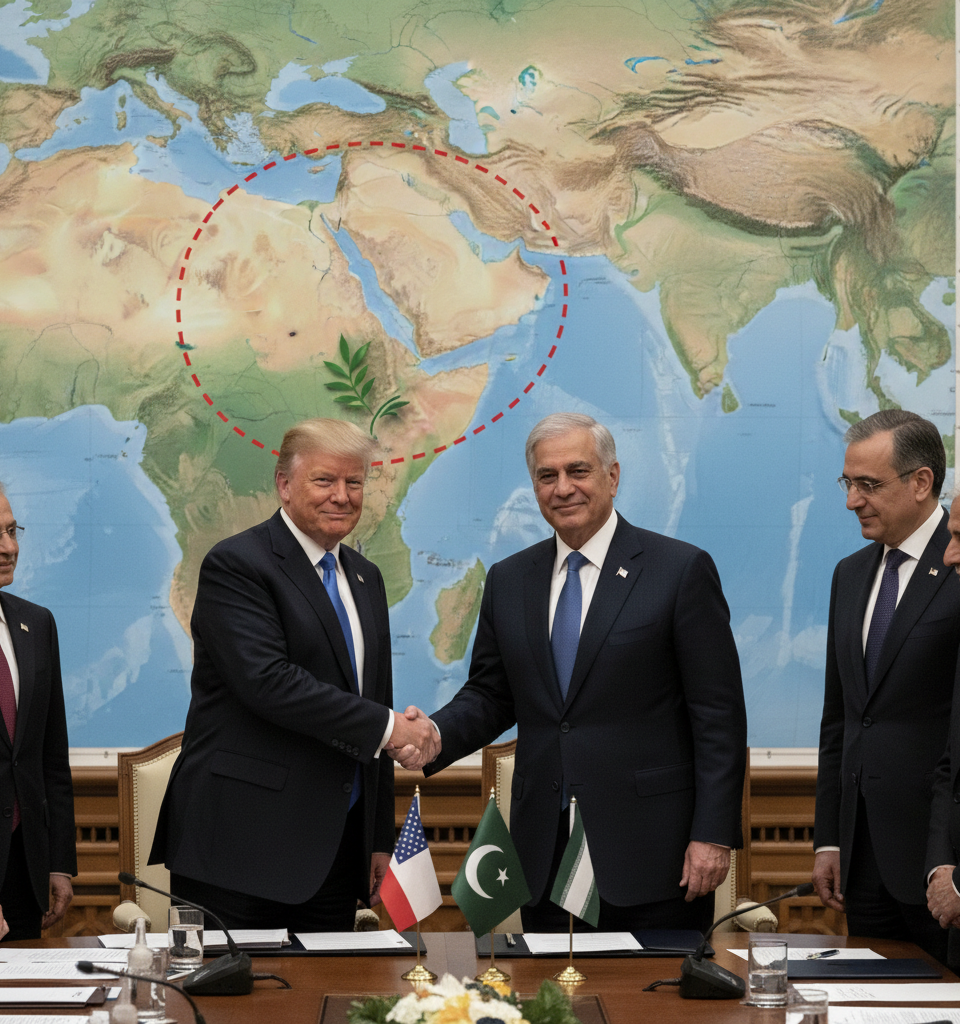
WASHINGTON D.C./TEHRAN – In a surprising development that has momentarily defused mounting geopolitical tensions, the Trump administration and the Islamic Republic of Iran have reportedly reached an agreement for a two-week ceasefire. Crucially, this accord also includes the temporary reopening of the Strait of Hormuz, a critical global shipping choke point. The breakthrough comes after intensive diplomatic efforts spearheaded by Pakistani Prime Minister Shehbaz Sharif, who reportedly appealed directly to President Trump to delay a looming deadline for Iranian action and facilitate the maritime corridor's accessibility.
Contextualizing the Escalation
This agreement emerges against a backdrop of severely strained relations between Washington and Tehran, following the Trump administration's withdrawal from the 2015 Iran nuclear deal (JCPOA) and its subsequent imposition of stringent economic sanctions. These sanctions, targeting Iran's oil exports and financial sector, have crippled its economy, pushing the regime to brinkmanship, including alleged attacks on oil tankers and the downing of a U.S. drone. The Strait of Hormuz, through which roughly 20% of the world's total petroleum liquids and around $1.2 billion in oil alone transit daily, has been ground zero for several recent confrontations, raising fears of a broader conflict that could destabilize the entire Persian Gulf region and global energy markets.
Key Details of the Diplomatic Rapport
While specific details of the agreement remain sparse, sources close to the negotiations indicate that Prime Minister Sharif played a pivotal role, leveraging Pakistan's unique diplomatic posture with both the U.S. and Iran. His request to President Trump sought a two-week moratorium on any punitive actions against Iran, paralleled by a reciprocal commitment from Tehran to ensure safe passage through the Strait of Hormuz for the same period. The duration, while brief, signals a willingness from both sides to explore de-escalation, possibly paving the way for indirect talks or further mediation. Neither the White House nor the Iranian foreign ministry has officially confirmed the details, but news of the agreement has begun circulating among diplomatic circles.
Industry and Market Reactions
The immediate impact on global energy markets, which have been on tenterhooks, is expected to be a temporary calming of volatility. Crude oil prices, which saw a nearly 5% surge following recent maritime incidents, could see a slight retreat as supply chain fears abate. Shipping insurance premiums for vessels traversing the Persian Gulf, which had skyrocketed by as much as 100% in recent weeks, may also experience a short-term reduction. However, analysts caution that this reprieve is fragile; a two-week window is insufficient to address the fundamental issues driving the conflict, meaning long-term market stability remains elusive. Global stock markets, particularly those heavily reliant on oil imports, are likely to react positively in the very short term, albeit with significant underlying caution.
Expert Analysis and Geopolitical Implications
Geopolitical analysts are cautiously optimistic, viewing the agreement as a crucial, albeit temporary, off-ramp from a potentially catastrophic conflict. Dr. Eleanor Vance, a Middle East foreign policy expert at the Royal Institute of International Affairs, states, "Sharif's intervention appears to have provided invaluable breathing room. This is less about a grand bargain and more about preventing an immediate military escalation, which was a very real possibility." However, she adds, "The efficacy of this ceasefire will hinge on whether both parties use this window constructively for deeper engagement, even if through intermediaries." Others highlight the symbolism of Pakistan's mediating role, potentially positioning it as a more significant regional player in future diplomatic overtures.
The Road Ahead: Navigating the Next Fortnight
The next two weeks will be critical. The temporary ceasefire, while offering a desperately needed pause, does not resolve the core disagreements between the U.S. and Iran regarding nuclear ambitions, regional proxy conflicts, and sanctions. Observers will be keenly watching for any backdoor communications or confidence-building measures that might emerge during this period. The potential for a continuation of this diplomatic channel, or even the initiation of direct negotiations, remains speculative but is undoubtedly the desired outcome for international stakeholders. Failure to build upon this nascent agreement, however, could see a rapid return to, or even an intensification of, the previous hostile standoff, pushing the region once more to the brink of open conflict.