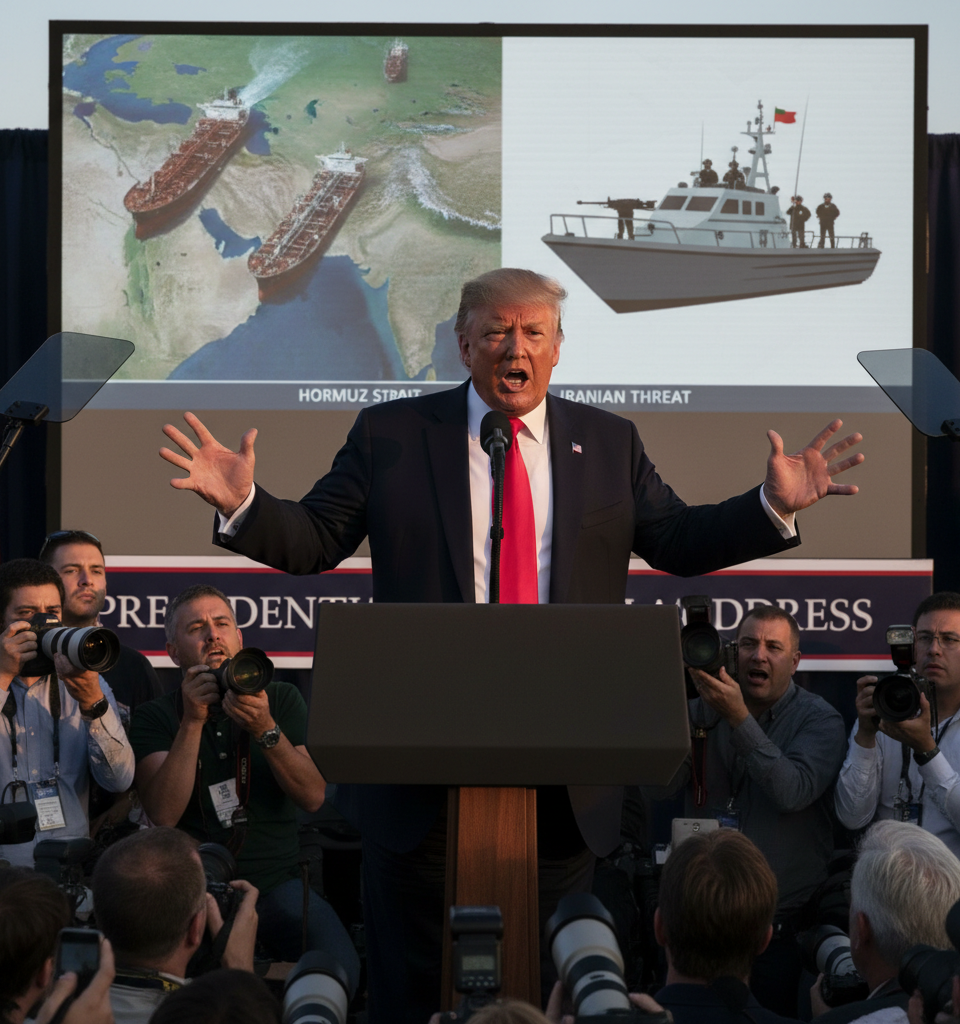
In a dramatic escalation of rhetoric, United States President Donald Trump has issued an explicit and expletive-laden threat against Iran, stating he would order the destruction of Iranian power plants and bridges should the nation proceed with any blockage of the Strait of Hormuz. The unequivocal declaration underscores heightened anxieties surrounding one of the world's most critical maritime chokepoints and signals a potentially volatile new chapter in U.S.-Iranian relations.
Geopolitical Flashpoint: The Strait of Hormuz
This latest threat by President Trump originates from persistent concerns regarding the free flow of international shipping through the Strait of Hormuz. Situated between Oman and Iran, this narrow waterway is a strategic artery for global oil supply, with approximately one-fifth of the world’s crude oil, alongside a significant portion of liquefied natural gas (LNG), passing through it daily. Any disruption to this strait has immediate and severe consequences for energy markets and the global economy. Iran has, in the past, threatened to close the strait in response to international sanctions or military pressure, viewing it as a leverage point against Western powers and regional rivals. This historical context heightens the gravity of President Trump's current warning.
President Trump's direct and forceful language — specifically mentioning the destruction of 'power plants and bridges' — marks a notable deviation from conventional diplomatic warnings. While previous administrations have issued cautions against interfering with international shipping, the current administration's threat is unusual in its explicit naming of specific targets and its unfiltered delivery. This approach aligns with President Trump's characteristic communication style, often employing strong language to deter perceived adversaries and project an image of unwavering resolve.
Broader Economic and Security Implications
The immediate implications of such a confrontation would be profound. A militarized response in such a critical region could trigger a rapid and substantial surge in global oil prices, potentially leading to significant economic instability worldwide. Energy-dependent nations would face increased costs, impacting industries from transportation to manufacturing, and could even precipitate a global recession. Furthermore, the security landscape of the Middle East, already fragile, would be irrevocably altered, drawing in regional and international powers and potentially leading to a broader conflict rather than a localized one. The Strait is foundational to the economies of several Gulf nations, including Saudi Arabia, Kuwait, Bahrain, Qatar, and the UAE, all of whom rely on its unimpeded access for their hydrocarbon exports.
From a military perspective, any U.S. action against Iranian infrastructure, as threatened, would represent a major military engagement. Such a move would undoubtedly be framed by Iran as an act of war, demanding a response. The potential for a protracted conflict, with ripple effects across the entire Middle East, cannot be understated. International bodies and allied nations will likely watch these developments with extreme apprehension, as the prospect of direct military confrontation between the U.S. and Iran escalates.
International Reactions Anticipated
Global leaders and international organizations are expected to react swiftly to President Trump's alarming statement, likely urging de-escalation and diplomatic engagement. The European Union, often a proponent of the Iran nuclear deal which the U.S. withdrew from, would likely view such threats with deep concern, fearing further instability in a region already grappling with numerous crises. China and Russia, both significant players in the region and holding their own complex relationships with Iran, would also be compelled to weigh in, potentially complicating any consensus-based international response. Analysts suggest that the phrasing itself, while aiming to deter, might paradoxically galvanize hardliners within Iran, making a diplomatic resolution even more challenging.
Looking ahead, the immediate focus will be on whether Iran issues a direct response to President Trump's threats. Any provocative actions by Iran in the Strait of Hormuz, or indeed any perceived infringement on international shipping, would likely test the veracity of President Trump's warning. The situation remains highly fluid, with the potential for either a cautious de-escalation by both sides or a dangerous acceleration towards military conflict. The international community holds its breath, aware that the stakes involve not only regional stability but the health of the global economy and the potential for a new, devastating conflict.