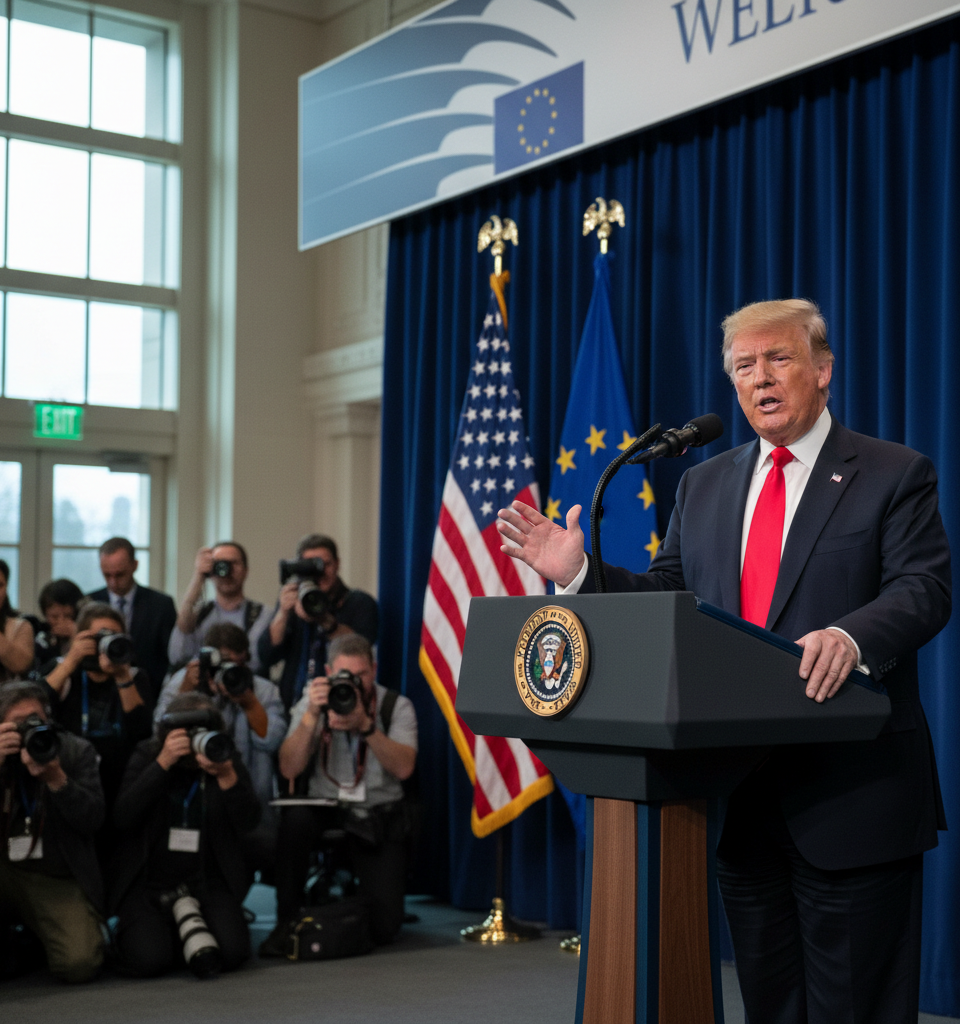
President Donald Trump has issued a formidable ultimatum to the European Union, demanding the 27-member bloc finalize a trade agreement by July 4, or face the imposition of increased tariffs on its exports to the United States. The pronouncement, made recently, underscores the administration's aggressive approach to international trade and signals a potentially significant escalation in transatlantic economic tensions. Failure by the EU to approve the trade framework tentatively agreed upon last year would trigger punitive measures, impacting a broad range of European goods and potentially disrupting global supply chains.
Context and Background
This latest declaration follows months of often-contentious negotiations between Washington and Brussels. The Trump administration has consistently criticized the EU's trade practices, particularly its agricultural policies and perceived trade imbalances. In 2018, the US imposed tariffs on steel and aluminum imports from the EU, citing national security concerns, which was met with retaliatory tariffs from the bloc. A temporary truce was reached in July 2018 when President Trump and then-European Commission President Jean-Claude Juncker agreed to work towards a comprehensive trade deal, aiming to reduce tariffs and non-tariff barriers. The current ultimatum revisits the specter of a full-blown trade war, reminiscent of the early days of the administration's trade policy.
Key Details and Specifics
The trade framework in question, primarily focused on industrial goods (excluding agriculture, a major point of contention), aimed to reduce tariffs and enhance regulatory cooperation. President Trump's insistence on a firm deadline, specifically referencing the American Independence Day, adds a layer of political symbolism to the economic threat. While specific tariff percentages were not immediately detailed, previous threats from the administration have included levies of up to 25% on European automobiles and parts, which would have a devastating impact on the German car industry and other European manufacturers. The EU, for its part, has consistently emphasized the need for a balanced and comprehensive agreement, rejecting pressure tactics and reiterating its commitment to multilateral trade rules.
Industry and Market Impact
Industries on both sides of the Atlantic are bracing for potential repercussions. European manufacturers, particularly in sectors like automotive, luxury goods, and agriculture, face significant uncertainty. American consumers could see higher prices for imported European goods, while US exporters might face retaliatory tariffs from the EU, should the situation deteriorate. The ambiguity surrounding which specific goods would be targeted creates a climate of anxiety for businesses engaged in transatlantic trade, forcing them to re-evaluate supply chains and investment strategies. The tourism sector and service industries could also be indirectly affected by a broader chill in economic relations.
Expert Perspective
Trade analysts and economists have cautioned against the weaponization of tariffs. Dr. Eleanor Vance, a senior research fellow specializing in international trade at a prominent think tank, commented, "Setting arbitrary deadlines and threatening tariffs undermines the very spirit of good-faith negotiations. While the US asserts leverage, such aggressive tactics often lead to suboptimal outcomes for all parties involved, including American businesses and consumers." Others point out that the EU's complex decision-making process, involving all 27 member states and the European Parliament, makes rapid approval by a specific date challenging, regardless of political will.
What's Next
The coming weeks will be critical as the EU leadership weighs its options. European Commission President Ursula von der Leyen and other top officials are expected to engage in intensive diplomatic efforts to de-escalate the situation or, conversely, prepare for potential tariff retaliation. The EU has a history of presenting a united front in such disputes, and any US tariffs would likely be met with reciprocal duties on American goods. The underlying tensions surrounding aerospace subsidies and digital services taxes further complicate the path to a resolution. The July 4 deadline sets the stage for a high-stakes standoff, the outcome of which will significantly shape the future of transatlantic economic relations and potentially, the global trade landscape for years to come.