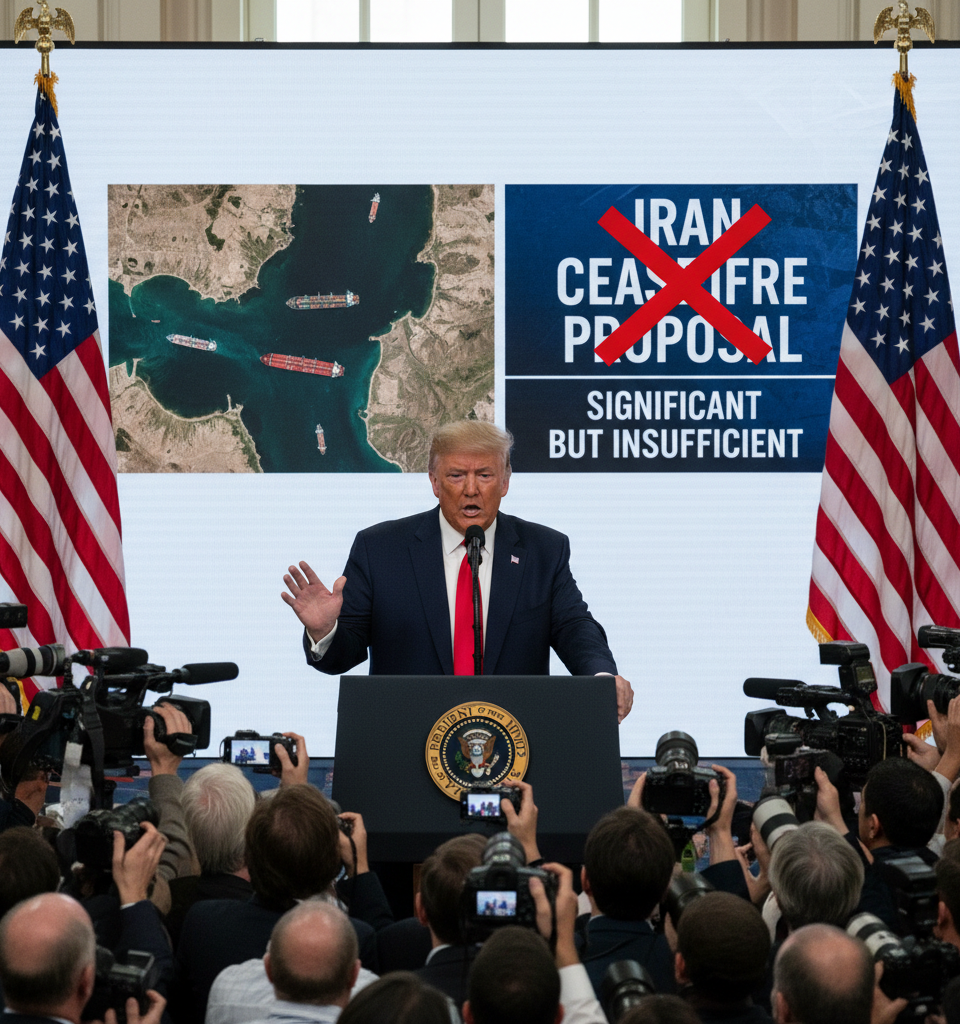
WASHINGTON, D.C. – Former U.S. President Donald Trump has critically assessed a proposed 45-day ceasefire agreement emanating from Tehran, calling it 'significant' yet ultimately 'not good enough' to resolve the simmering crisis in the strategically vital Strait of Hormuz. The announcement, made just days before a critical deadline, highlights the fraught negotiations reportedly underway between the United States, Iran, and a consortium of regional intermediaries in an effort to de-escalate hostilities and avert a potentially devastating regional conflict.
Geopolitical Stakes and Historical Context
This latest development underscores the precarious geopolitical landscape surrounding the Strait of Hormuz, a narrowchokepoint through which approximately 20% of the world's petroleum and a substantial portion of its liquefied natural gas pass daily. The stakes are extraordinarily high, with any disruption having immediate and severe repercussions on global energy markets, potentially triggering an economic downturn. The current tensions are rooted in decades of animosity, exacerbated recently by the breakdown of the 2015 Iran nuclear deal (JCPOA) under the Trump administration, renewed U.S. sanctions, and retaliatory actions by Iran, including increased uranium enrichment and harassment of commercial shipping. The proposed ceasefire represents a fragile moment, offering a potential off-ramp from a dangerous escalation spiral that has seen several near-miss confrontations.
Details of the Proposal and Trump's Stance
The specifics of the 45-day ceasefire proposal, while not fully disclosed by official sources, are understood to involve a temporary halt to military activities and a commitment to de-escalation from Iran, possibly in exchange for limited sanctions relief or a pathway to broader negotiations. President Trump, speaking from his Mar-a-Lago estate, did not elaborate on what he found lacking in the proposal, stating only that "while it's a step in the right direction, it doesn't fully address the underlying issues we face in the region." This measured yet critical response suggests that the U.S. and its allies are seeking more comprehensive concessions from Tehran, potentially including a cessation of support for proxy militias, verifiable limits on its ballistic missile program, or a more permanent reduction in its nuclear activities beyond the current scope. Reports suggest the proposal originates from a third party seeking to mediate.
Impact on Global Markets and Energy Security
The ongoing uncertainty has already sent jitters through global commodity markets. Oil prices have seen a nearly 8% increase over the past month, with Brent crude futures hovering around $85 per barrel, largely attributed to the risk premium associated with a potential conflict in the Middle East. Shipping insurance premiums for vessels transiting the Strait of Hormuz have reportedly surged by an estimated 25-30% in recent weeks, adding millions to operational costs for tanker operators. A full-scale military confrontation could see oil prices spike above $120 per barrel, triggering a global recession and inflationary pressures not seen in decades, according to analyses from the International Energy Agency (IEA).
Expert Analysis and Strategic Outlook
"Trump's assessment, while politically charged, reflects a broader skepticism within Washington regarding Iran's long-term strategic intentions," commented Dr. Eleanor Vance, a senior fellow at the Center for Strategic and International Studies (CSIS). "A short-term ceasefire, while welcome, doesn't address the fundamental distrust that plagues U.S.-Iran relations. The administration will be looking for concrete, verifiable steps that demonstrate a genuine commitment to regional stability, not just a temporary pause." Other experts suggest that the 45-day window might be an Iranian tactic to gain leverage, test the waters for concessions, or buy time for further nuclear advancements, hence the U.S. apprehension.
The Path Forward: Negotiations and Potential Flashpoints
The coming days are expected to be critical. Diplomats involved in the talks face immense pressure to bridge significant gaps between the parties. The U.S. is reportedly exploring both diplomatic pressure and contingency plans should the ceasefire negotiations fail. Potential next steps could include a renewed push for UNSC resolutions, increased maritime patrols in the Gulf, or further unilateral sanctions on sectors of the Iranian economy. Conversely, a successful negotiation could pave the way for more substantive, long-term discussions aimed at a comprehensive regional security framework. The deadline for Iran's response to the current offer, or for the implementation of the ceasefire, remains fluid but is understood to be imminent, with global attention fixed on the precarious balance of power in the Persian Gulf.