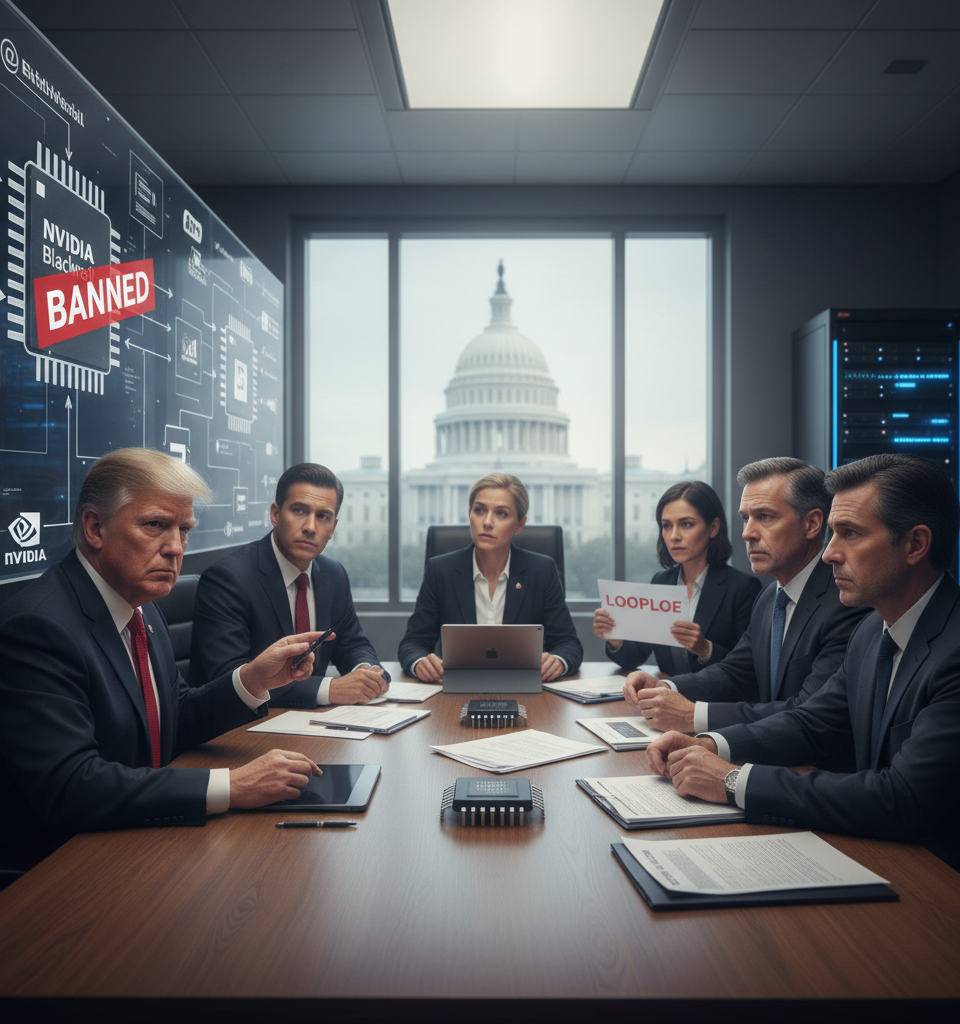
Former officials from the Trump administration are reportedly expressing concern over what they perceive as a critical flaw in U.S. export regulations, which they fear enabled Chinese companies to legitimately acquire advanced Nvidia Blackwell servers. This presumed loophole reportedly allowed Chinese firms to bypass restrictions by purchasing the high-performance chips through their international subsidiaries. The belated implementation of new guidance aims to rectify this oversight, but officials worry it may be too late to prevent the circulation of these restricted components within China.
Background on Export Controls
This situation underscores the ongoing challenges faced by U.S. policymakers in effectively curbing China's access to cutting-edge semiconductor technology, particularly those with potential military or advanced AI applications. The initial export ban, a cornerstone of the Trump administration's strategy to limit China's technological advancement, was designed to restrict the sale of advanced computing chips to Chinese entities. While the intention was to create a robust barrier, the current concerns highlight the intricate methods companies can employ to circumvent such regulations, often by leveraging complex global corporate structures.
The Alleged Loophole and Its Exploitation
Sources close to the matter indicate that the loophole primarily centered on the interpretation and enforcement of export rules concerning subsidiaries of Chinese companies located outside mainland China. It is believed that these foreign-based entities were able to purchase the restricted Nvidia Blackwell chips and then transfer them to their Chinese parent companies or affiliates without directly violating the letter of the initial ban. This method effectively created a pipeline for sensitive technology to reach China, despite the U.S. government's explicit efforts to prevent it.
Industry and Market Implications
The potential circumvention of these export controls could have significant ramifications for both the U.S. and global technology markets. For Nvidia, while direct sales to China for banned chips would have ceased, the indirect acquisition by Chinese entities could still fuel competition in the AI and high-performance computing sectors. For the broader industry, it raises questions about the efficacy of current export control mechanisms and the need for more comprehensive, globally coordinated strategies to prevent illicit technology transfer. The incident also highlights the complexity of supply chains and corporate structures that make such bans difficult to enforce perfectly.
Official Response and New Guidance
In response to these emerging concerns, the U.S. government has reportedly issued new guidance aimed at tightening the existing regulations. This updated framework is intended to close the identified loophole, specifically addressing the acquisition of banned technologies through overseas subsidiaries. However, the timing of this new guidance is a point of contention among officials, who lament that it arrives potentially after a significant quantity of these powerful chips may have already entered China, undermining the original intent of the ban. The precise details of the new guidance have not been fully disclosed, but it is expected to involve more stringent requirements for due diligence and more expansive definitions of entities subject to restrictions.
Looking Ahead
This development underscores the dynamic and often adversarial nature of technology regulation and evasion. S. government will likely face continued pressure to refine its export control policies to adapt to evolving corporate strategies and global supply chain complexities.
The effectiveness of the new guidance in preventing future circumvention will be closely watched by industry analysts and international observers. Furthermore, this situation may prompt a broader re-evaluation of how Washington approaches the control of critical technologies, potentially leading to more preemptive and adaptive regulatory frameworks designed to anticipate and counter future attempts at circumvention. S.
and China is expected to continue driving these policy adjustments, with continuous efforts to both protect technological advantages and prevent their misuse.