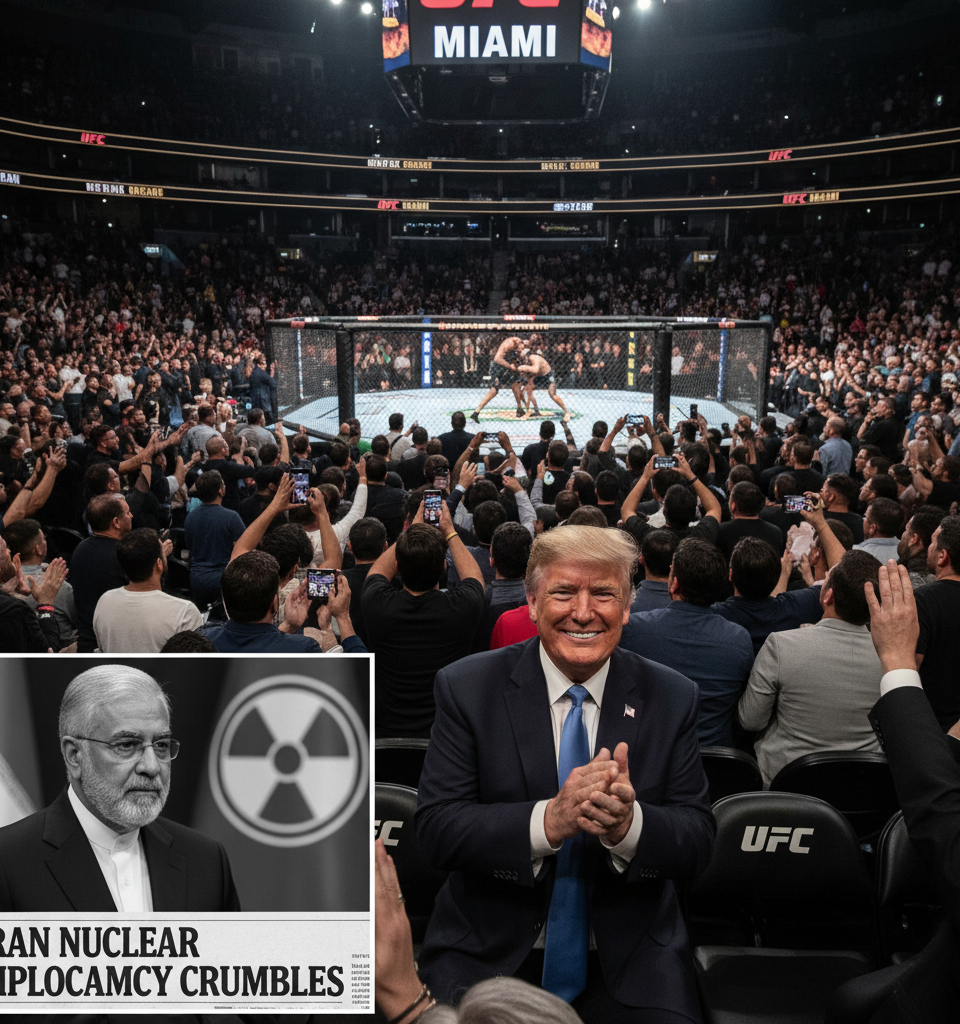
Miami, FL & Washington D.C. — As crucial diplomatic efforts to salvage a nuclear accord with Iran unraveled in a high-stakes geopolitical drama, then-President Donald Trump was observed attending a Ultimate Fighting Championship (UFC) match in Miami. The timing of this engagement, as negotiations reached a critical breaking point, has drawn significant scrutiny and ignited debate over the Trump administration's approach to persistent international challenges. Upon his departure for Florida, President Trump characteristically dismissed concerns regarding the outcome of the Iranian talks, stating definitively, “We win, regardless.” This declaration underscored a foreign policy stance that prioritized perceived American advantage over traditional diplomatic processes.
This incident is not merely a curious juxtaposition of events; it serves as a potent symbol of the Trump administration's disengagement from multilateral frameworks and its embrace of a more transactional, often confrontational, foreign policy. The Joint Comprehensive Plan of Action (JCPOA), signed in 2015, had been a cornerstone of international efforts to curb Iran's nuclear program in exchange for sanctions relief. Trump's insistence on withdrawing from the JCPOA in 2018, labeling it the “worst deal ever,” had already placed the agreement on life support. The subsequent collapse of talks aimed at finding a new pathway or reinstating elements of the original accord marked a definitive end to a chapter in U.S.-Iran relations, pushing the region further into uncertainty.
Key details surrounding the breakdown of negotiations indicate a fundamental chasm between the U.S. and Iranian positions, exacerbated by the Trump administration's 'maximum pressure' campaign. While specifics of the final moments of talks remain confidential, reports suggested irreconcilable differences over issues such as uranium enrichment levels, the scope of international inspections, and the sequencing of sanctions relief. President Trump's public indifference, even celebratory tone, regarding the failure of these talks contrasted sharply with the grave concerns expressed by European allies, who had tirelessly worked to bridge the diplomatic gap and prevent Iran from accelerating its nuclear activities.
The repercussions of this diplomatic breakdown reverberated across global markets, particularly in the energy sector. Oil prices exhibited increased volatility in the immediate aftermath, with futures contracts showing upward pressure as fears of heightened regional instability in the Middle East mounted. Defense sector stocks, conversely, often see a boost during periods of geopolitical tension. The broader implications for international trade and investment with Iran, already stifled by stringent U.S. sanctions, solidified the country's economic isolation, impacting industries ranging from automotive to aerospace that once eyed the Iranian market.
Foreign policy experts and regional analysts were quick to offer their perspectives. Dr. Evelyn Finch, a Middle East policy scholar at the Council on Foreign Relations, commented, "President Trump's attendance at a sporting event during such a critical juncture sent a powerful message of disinterest in traditional diplomatic outcomes. It solidified Iran's perception that negotiations were not a viable path with that administration, potentially pushing them further toward nuclear proliferation or confrontation." Others, however, argued that Trump's approach, while unconventional, reflected a deliberate strategy to demonstrate resolve and reject what he perceived as flawed agreements.
Looking ahead, the collapse of these talks left a vacuum in non-proliferation efforts and raised significant questions about the path forward for the international community. The incoming administration faced the daunting task of re-evaluating the U.S. posture towards Iran, potentially seeking new diplomatic avenues or intensifying existing pressures. The specter of a nuclear-armed Iran, coupled with heightened tensions in the Strait of Hormuz and proxy conflicts across the Middle East, suggests that the region will remain a flashpoint. The international community, led by European powers, continues to search for a viable strategy to de-escalate tensions and prevent further nuclear proliferation in the absence of a formal agreement.