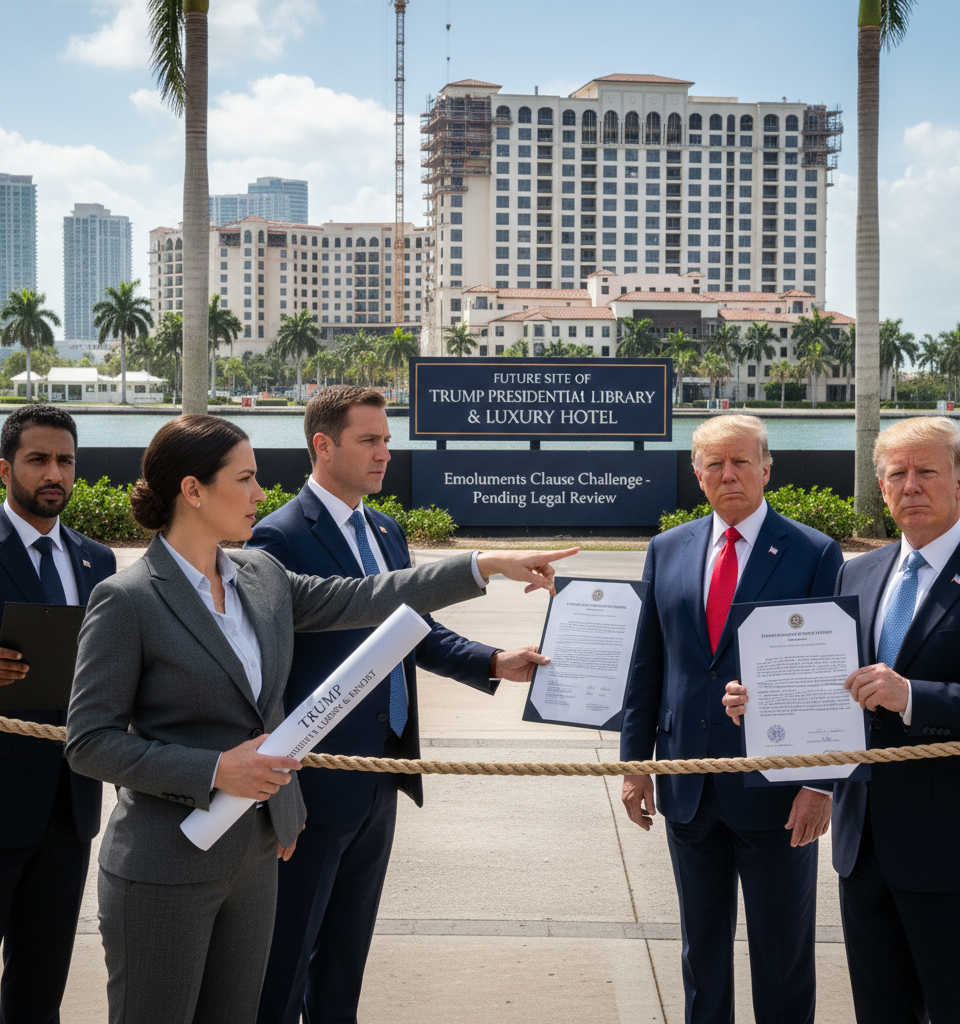
Miami residents have initiated a federal lawsuit challenging the proposed development plan for former President Donald Trump's presidential library, specifically citing the inclusion of a commercial hotel. The plaintiffs contend that the integration of a for-profit hotel within the presidential library complex opens the door to potential violations of the U.S. Constitution's Emoluments Clause, which prohibits federal officials from receiving gifts or payments from foreign states or U.S. states without Congressional consent. The legal action, filed this week, seeks to halt or significantly alter the project amidst concerns over ethical implications and potential conflicts of interest.
Context and Background
The construction of presidential libraries has long been a tradition in American politics, typically serving as repositories for documents and artifacts from each administration, often accompanied by educational facilities. However, the proposed Trump library deviates significantly from this traditional model by incorporating a commercial hotel, a feature that critics argue blurs the lines between public service and private enterprise. This particular case gains added salience given the numerous past allegations of Emoluments Clause violations leveled against Trump during his presidency, stemming from his continued ownership and operation of various business ventures, including hotels and golf courses, that frequently hosted foreign dignitaries and government officials.
The legal challenge underscores a broader national debate about the ethical boundaries of post-presidency activities, particularly when a former president maintains significant business interests.
Key Details of the Lawsuit
The lawsuit, filed by a collective of Miami residents, specifically targets the proposed hotel component of the library development. The plaintiffs argue that a hotel integrated within the presidential library structure could facilitate payments from foreign governments or state entities, which could then indirectly or directly benefit former President Trump. This, they contend, constitutes a direct violation of both the Foreign Emoluments Clause (Article I, Section 9, Clause 8) and the Domestic Emoluments Clause (Article II, Section 1, Clause 6) of the Constitution.
The legal filing reportedly details how the nature of hotel operations, inviting a diverse clientele including international guests and government-affiliated groups, creates an inherent vector for prohibited payments. While specific financial projections for the hotel were not immediately available, the plaintiffs' arguments center on the structural potential for emoluments rather than concrete, proven instances of receipt at this early stage.
Industry and Market Impact
The outcome of this legal challenge could set a significant precedent for future presidential library projects and, more broadly, for the ethical guidelines governing post-presidency conduct. If the court rules in favor of the plaintiffs, it could force a fundamental re-evaluation of how presidential libraries are conceived and funded, potentially leading to stricter regulations against commercial intertwining. For the real estate and hospitality sectors, particularly in regions like Miami that often host high-profile developments, this lawsuit introduces an element of regulatory uncertainty.
Developers might become more cautious about projects involving former high-ranking government officials, scrutinizing potential legal entanglements stemming from constitutional clauses. The project, estimated to be a multi-million dollar undertaking, also faces potential delays and increased legal costs, impacting local construction and employment outlooks.
Expert Perspective
Legal scholars specializing in constitutional law have expressed divided opinions on the merits of the lawsuit. "The Emoluments Clauses were designed to prevent officials from being unduly influenced by foreign or state powers while in office, and arguably, post-presidency activities that leverage one's former office for commercial gain fall within the spirit of these clauses," stated Professor Elena Rodriguez, a constitutional law expert at the University of Miami. " Other experts point out that the standard for proving emoluments violations, especially post-presidency, remains largely uncharted legal territory, making the case a potentially landmark decision.
What's Next
Following the filing of the lawsuit, the legal process will involve the former President's legal team responding to the allegations. This will likely include motions to dismiss the case, arguing a lack of standing by the plaintiffs or that the Emoluments Clause does not apply to post-presidency commercial ventures. Discovery phases could follow, depending on the initial rulings, potentially uncovering details about the proposed financial structure of the hotel and its operational ties to the library.
The timeline for a resolution is uncertain, but legal experts predict a potentially lengthy battle, possibly extending for several months to over a year, given the complex constitutional questions involved and the high-profile nature of the defendants. The focus will remain on whether the court interprets the Emoluments Clause broadly enough to encompass commercial activities engaged in after leaving office, especially when those activities are entangled with a public-facing institution like a presidential library.