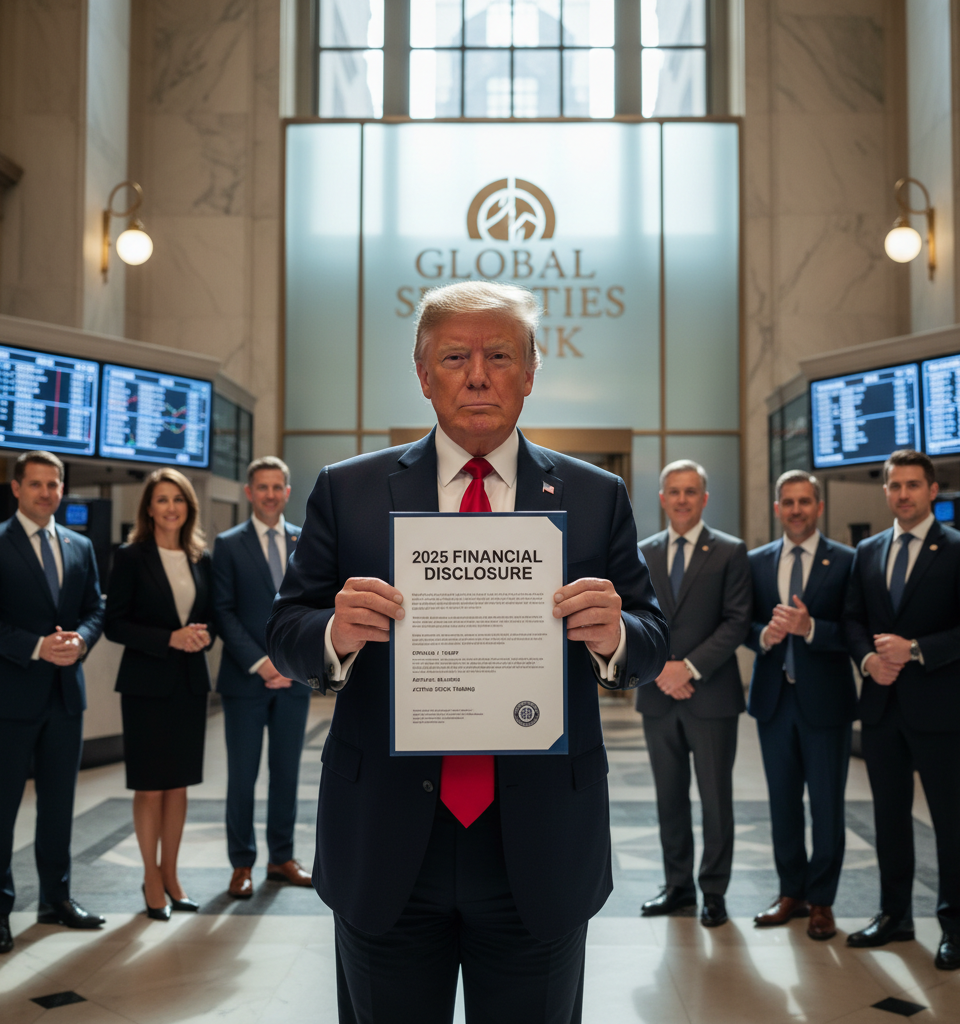
Donald J. Trump, the former President of the United States, has filed his annual financial disclosure form, a sprawling 927-page document that casts a wide net over his financial activities in 2025. The filing, made public today, reveals billions of dollars in revenue attributed to Trump's various holdings and activities. This detailed disclosure offers an unprecedented look into the former president's diverse financial portfolio, which includes significant investments in some of the world's leading technology firms.
The revelation arrives amidst ongoing public scrutiny concerning the financial dealings of political figures, particularly those who have held or are seeking high office. Such disclosures are mandated to ensure transparency and prevent conflicts of interest, providing the public with insight into the financial health and potential entanglements of their leaders. The sheer volume and detail of Trump's latest filing underscore the complexity and scale of his personal and business finances, a recurring theme throughout his public career. His assertion that outside funds manage his money adds another layer to the discussion, emphasizing a distinction between his personal direction and the day-to-day management of his investments.
Key Financial Details Emerge
The meticulously detailed disclosure form specifically itemizes Trump's purchases and sales across hundreds of companies' stocks. Among the prominent names listed are tech giants such as Nvidia, Amazon, and Microsoft, indicating a significant presence in the rapidly evolving technology sector. While the exact figures for individual transactions and total revenue from these specific stock dealings are embedded within the extensive document, the overall picture suggests a highly active and diversified investment strategy. The inclusion of these high-profile companies highlights strategic investments in sectors known for substantial growth and market influence.
Broader Market Implications
Trump's disclosed stock holdings, particularly in companies like Nvidia, Amazon, and Microsoft, could draw attention from market analysts and investors. While his individual trading activities are unlikely to singularly sway the market, the sheer scale of his reported revenue, coupled with his high public profile, often leads to increased scrutiny of the companies he invests in. This could potentially spark discussions about trends in high-net-worth individual investment strategies and the broader economic landscape, especially concerning sectors perceived as robust or poised for future expansion.
Questions of Financial Management
The former President's statement that "outside funds run my money" is a significant aspect of the disclosure. This indicates a reliance on professional money management firms or individuals to oversee his vast investment portfolio. This arrangement, common among high-net-worth individuals, aims to create a separation between personal decision-making and investment execution, potentially mitigating some conflict-of-interest concerns, though not entirely eliminating them. The extent of his personal involvement in the strategic direction of these funds remains a subject of public interest and speculation.
What Lies Ahead
The release of this financial disclosure is likely to fuel further debate and analysis among political commentators, financial experts, and the public. As the document is dissected, more specific details regarding the nature and timing of individual transactions, and their ultimate impact on Trump's net worth, are expected to surface. This annual transparency mechanism continues to serve as a critical tool for understanding the financial underpinnings of public figures, ensuring accountability in an era where the intersection of politics and personal wealth is consistently under the microscope. Future disclosures will provide ongoing updates to this complex financial picture.