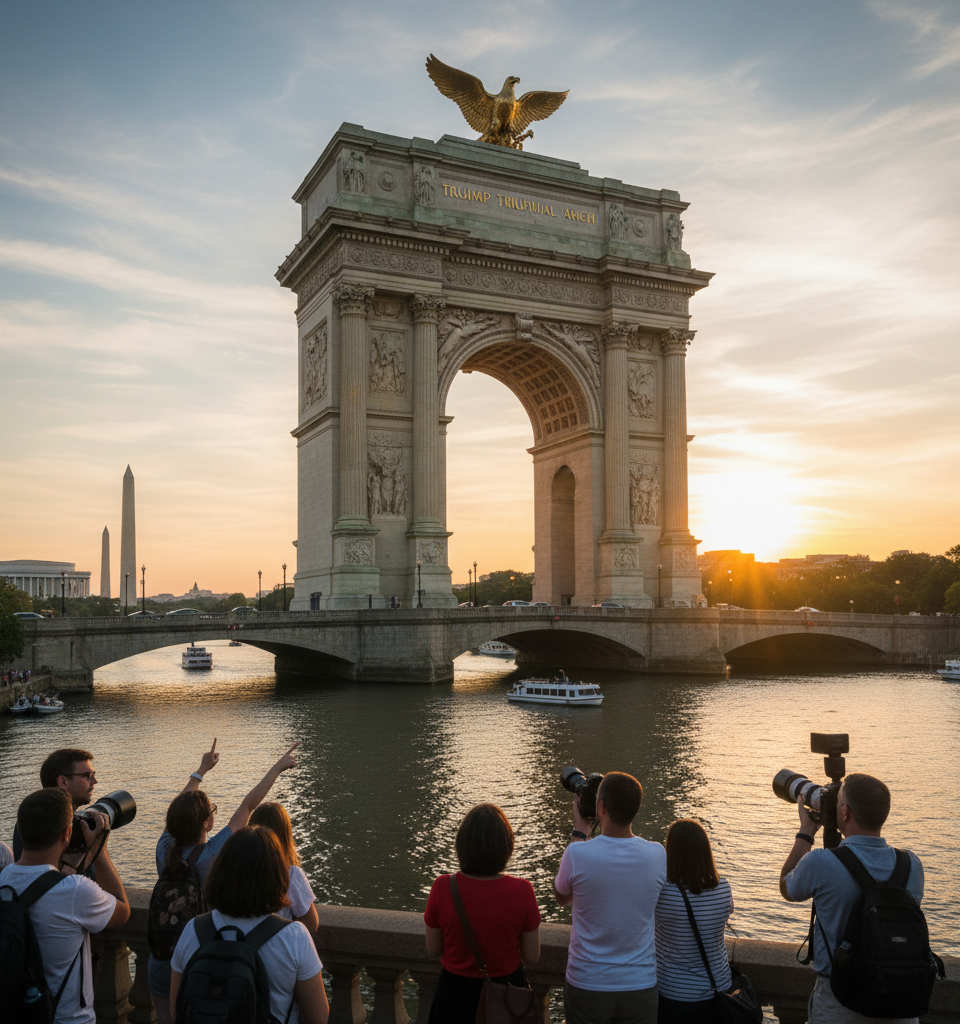
New conceptual renderings have unveiled a dramatic vision for a 250-foot 'triumphal arch,' a project reportedly championed by former President Donald Trump, which would dramatically reshape the Potomac River skyline. This towering structure, if realized, would represent a significant architectural and urban intervention in a sensitive and historically rich area, immediately adjacent to the nation's capital.
The proposal has swiftly ignited controversy, particularly among regional leaders and urban planners. The sheer scale of the arch, depicted as being more than double the height of many surrounding historic landmarks, prompts serious questions about its integration into the existing urban fabric and its potential environmental and functional consequences. The conversation around this project extends beyond mere aesthetics, delving into urban planning principles, historical preservation, and potential strains on public resources.
Local Opposition Mounts
Representative Don Beyer has emerged as a prominent critic of the proposed structure, characterizing it as a "taxpayer-funded vanity project." His strong condemnation underscores a growing sentiment among some local officials that the project, as currently envisioned, could impose considerable burdens on the region without offering commensurate benefits. Rep. Beyer articulated concerns that the arch would not only impede traffic flow in an already congested area but also "block our skyline" and potentially overshadow "sacred ground."
The financial implications are a focal point of the opposition, with the phrase "taxpayer-funded" suggesting that public monies would be allocated to a project perceived by critics as primarily serving personal aggrandizement. This aspect alone could fuel significant public debate and scrutiny, potentially leading to widespread resistance if the project advances. The potential for traffic congestion near such a large landmark is also a serious concern for local planning authorities and residents.
Impact on Urban Planning and Environment
Urban planners and environmentalists are likely to weigh in heavily on the potential impact of a structure of this magnitude. The Potomac River corridor is a critical ecological zone and a significant recreational area. A massive construction project and subsequent landmark could alter migratory bird patterns, affect river ecosystems, and increase light pollution. Furthermore, the visual dominance of a 250-foot arch could fundamentally change the character of a landscape long cherished for its historical vistas and natural beauty.
The concept of a "triumphal arch" itself carries historical weight, typically commemorating significant victories or achievements. The choice of such a monument, and its specific design as presented in the renderings, could provoke discussions about its appropriateness in a modern context and its stated purpose. The debate is likely to explore whether such a structure aligns with the region's historical narrative or if it risks being perceived as an anachronism.
The Road Ahead for the Proposal
Currently, the proposal remains in the conceptual stage, as evidenced by the release of new renderings. However, any move to transform this concept into a tangible development would necessitate navigating a complex maze of regulatory approvals, environmental assessments, and public consultations. Given the strong initial reactions from figures like Rep. Beyer, it is highly probable that the project would face substantial legislative and public hurdles.
The discussion surrounding this proposed arch highlights a recurring tension between grand architectural visions and the practical considerations of urban development and public sentiment. The project's progression, or lack thereof, will likely depend on a rigorous evaluation of its perceived benefits versus its potential drawbacks, both economically and culturally. Observers will be watching closely to see if this ambitious proposal gains any traction beyond the conceptual drawings.