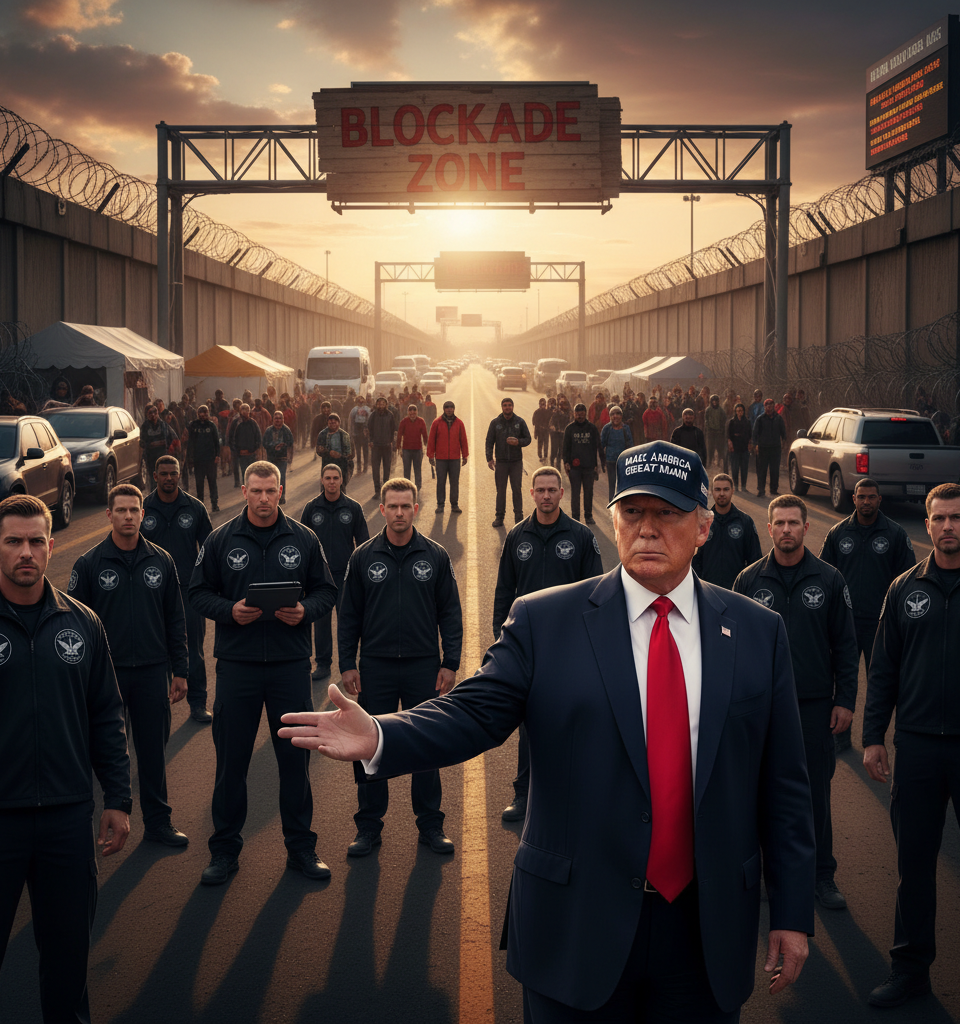
Former President Donald Trump's declaration regarding a potential blockade against Iran has immediately injected a new layer of complexity and danger into the already volatile Middle East, confirming analyst assessments that the underlying predicaments in the region remain fundamentally unchanged despite shifting rhetoric. The escalation transforms the ongoing confrontation into a profound test of resolve: Iran's demonstrated capacity to withstand sustained pressure and retaliatory strikes will be measured against the United States' (under a potential future Trump administration) appetite for the potentially immense economic and geopolitical costs associated with such a measure.
This development comes amidst a period of already fraught international relations, particularly concerning maritime security in key global chokepoints. A blockade, historically a potent but highly provocative tool, could have far-reaching implications, not just for Iran but for global energy markets and international shipping. The suggestion alone has sent ripples through diplomatic circles, prompting speculation about potential responses from regional powers and international bodies. The strategic implications are undeniable, forcing a reassessment of risk calculus among all involved parties.
Geopolitical Stakes Intensify
The immediate consequence of a blockade would be a dramatic increase in the potential for direct military confrontation. Iran has repeatedly indicated that any attempt to restrict its access to the Strait of Hormuz, a vital artery for global oil shipments, would be met with a forceful response. Such a move would effectively cripple Iran’s economy, already under immense strain from existing sanctions, potentially pushing the regime to desperate measures. The stakes are arguably higher now than in previous periods of tension, as the explicit mention of a blockade moves beyond implied threats to a concrete potential action.
Beyond the immediate military concerns, the economic ramifications would be profound. A blockade would almost certainly disrupt global oil supplies, leading to sharp price increases and potential instability in energy-dependent economies worldwide. Shipping insurance premiums in the Persian Gulf would skyrocket, further impacting trade and exacerbating existing supply chain vulnerabilities. For industries reliant on the smooth flow of goods through this critical region, the business landscape would be irrevocably altered, forcing contingency planning at an unprecedented scale.
Market Impact and International Response
The financial markets have already shown sensitivity to geopolitical instability in the Middle East, and a blockade threat could trigger significant volatility. Crude oil futures would likely surge, impacting not only gasoline prices for consumers but also the operational costs for transportation, manufacturing, and agricultural sectors globally. Investors are now closely monitoring the rhetoric for any further indications of escalation, incorporating a higher geopolitical risk premium into their valuations of assets tied to the region and global trade.
International bodies and key allies would undoubtedly face immense pressure to react. A blockade would challenge established norms of international law and freedom of navigation, potentially creating a diplomatic crisis on a scale not seen in decades. While some allies might express solidarity, others, particularly those with significant economic ties to the region, would likely advocate for de-escalation and diplomatic solutions. The cohesion of international alliances could be severely tested, forcing nations to weigh their strategic partnerships against their economic interests.
The Unchanged Predicament
The original assessment that the conflict's predicaments remain unchanged holds particular resonance. Despite changes in administration or rhetorical shifts, the core issues – Iran’s nuclear program, its regional influence, and its strategic depth – continue to drive the confrontation. A blockade, while a powerful tactic, does not inherently address these underlying challenges; rather, it amplifies the immediate risks of addressing them through confrontational means. The ultimate resolution likely remains elusive through purely coercive methods, pointing towards a long-term struggle requiring sustained diplomatic and strategic engagement.
Looking ahead, the immediate focus will be on the political landscape, particularly the U.S. presidential election cycle, where Mr. Trump's foreign policy stances are a central issue. Should he re-enter office, the probability of such an action would undoubtedly increase, requiring businesses and governments worldwide to recalibrate their risk assessments and operational strategies. The coming months will be crucial in determining whether this significant threat translates into concrete action, or remains a powerful, albeit unsettling, demonstration of intent.