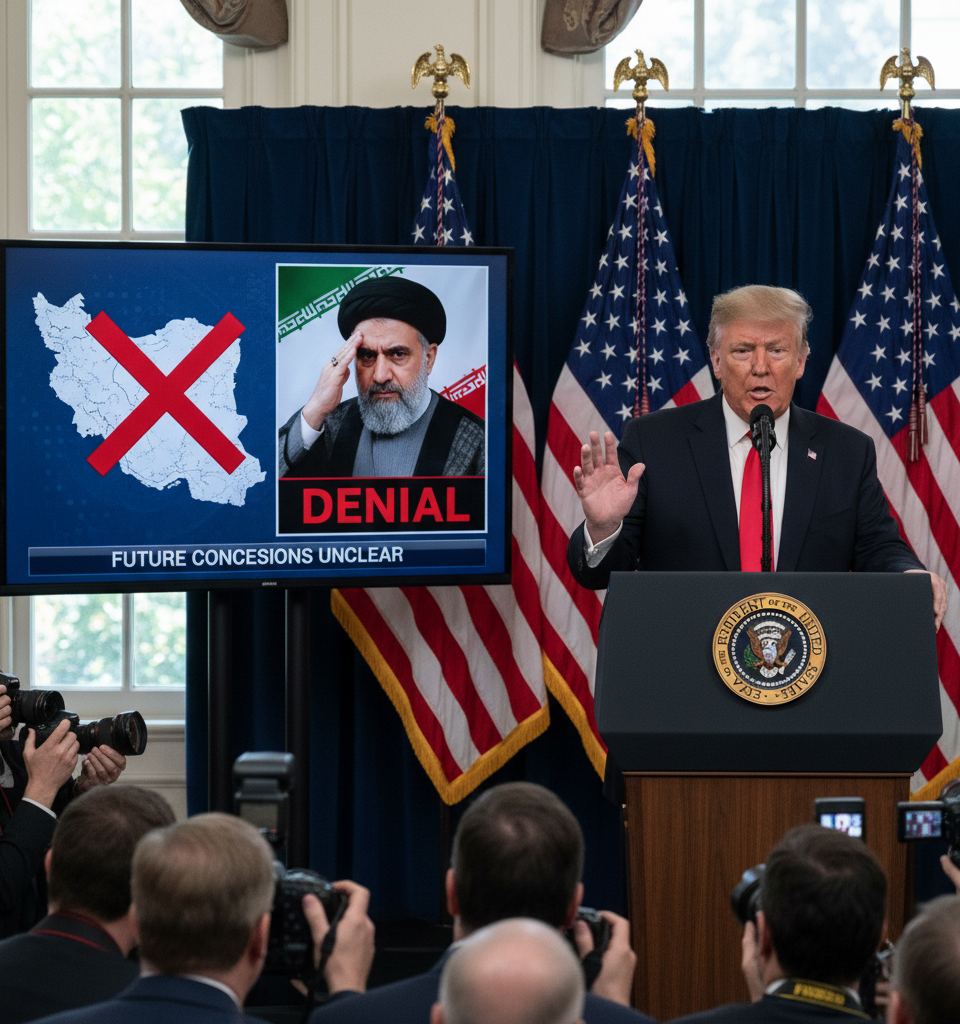
President Trump recently stated that Iran is eager to engage in new talks, a claim promptly and unequivocally denied by Tehran. This develops against a backdrop of escalating regional tensions and enduring diplomatic impasses between Washington and Tehran. The Iranian denial underscores a continued reluctance to make concessions or enter into direct negotiations with U.S. officials under perceived duress, raising critical questions about the feasibility and practical objectives of such proposed discussions.
Historical Context and Diplomatic Stalemate
The current diplomatic standoff is rooted deeply in the 2018 U.S. withdrawal from the Joint Comprehensive Plan of Action (JCPOA), the internationally brokered nuclear deal. Since then, the Trump administration has pursued a strategy of "maximum pressure," reimposing and escalating sanctions designed to cripple Iran's economy and force it to renegotiate a broader agreement covering its nuclear program, ballistic missile development, and regional activities. Iran, in response, has consistently demanded the alleviation of sanctions as a prerequisite for any meaningful dialogue, viewing the existing pressure as an impediment to fair negotiations. This reciprocal hardening of positions has made de-escalation exceptionally challenging.
Key Details and Iranian Stance
Iranian officials have not only rejected Trump's assertion but have also maintained a consistent public posture: they will not be coerced into talks. Their denial was firm, indicating that the U.S. claim was unfounded. There has been no visible internal or external signal from Tehran suggesting a newfound willingness to offer concessions that could pave the way for a diplomatic breakthrough. This steadfastness complicates the U.S. administration's stated aim of securing a more comprehensive deal, highlighting the significant chasm in expectations and conditions between the two nations.
Impact on Regional Stability and Global Energy Markets
The ongoing impasse and lack of direct communication between the U.S. and Iran have far-reaching implications, particularly for regional stability in the Middle East and global energy markets. Continued tensions in the Strait of Hormuz, a critical chokepoint for oil shipments, could lead to price volatility, affecting businesses and consumers worldwide. The absence of a clear diplomatic off-ramp fuels uncertainty, deterring foreign investment in the region and potentially exacerbating existing conflicts involving proxy forces. Industries reliant on stable oil prices and secure shipping lanes remain particularly vulnerable to these geopolitical undercurrents.
Expert Analysis on Prospects for Dialogue
Analysts closely monitoring U.S.-Iran relations generally view the prospects for immediate, unconditional talks as dim. Experts suggest that for any meaningful dialogue to occur, either the U.S. would need to offer significant sanctions relief, or Iran would have to signal a fundamental shift in its negotiating posture—neither of which appears imminent. Some argue that President Trump's declared willingness for talks might be an attempt to project a diplomatic option, even as the "maximum pressure" campaign continues. However, without a clear agenda or demonstrable mutual trust, such overtures are likely to remain rhetorical rather than substantive.
The Unclear Path Ahead
The lack of consensus on even the willingness to talk makes the immediate future of U.S.-Iran relations highly unpredictable. Without a clearer understanding of what President Trump hopes to achieve in new discussions, or a clearer indication from Iran about potential terms for engagement, the path forward remains clouded in uncertainty. The international community continues to watch closely, hoping for any development that could de-escalate tensions and promote a diplomatic resolution to the enduring nuclear and regional challenges posed by Iran.
Potential Future Developments
Looking ahead, any progress would likely hinge on third-party mediation or a significant geopolitical event that fundamentally alters the current calculus for both Washington and Tehran. Diplomatic channels through European allies or other interested nations could potentially offer indirect avenues for communication, though past efforts have yielded limited success. For now, the prevailing dynamic suggests a continuation of the current stalemate, with rhetorical exchanges replacing substantive diplomatic engagement, leaving the resolution of key issues in abeyance.