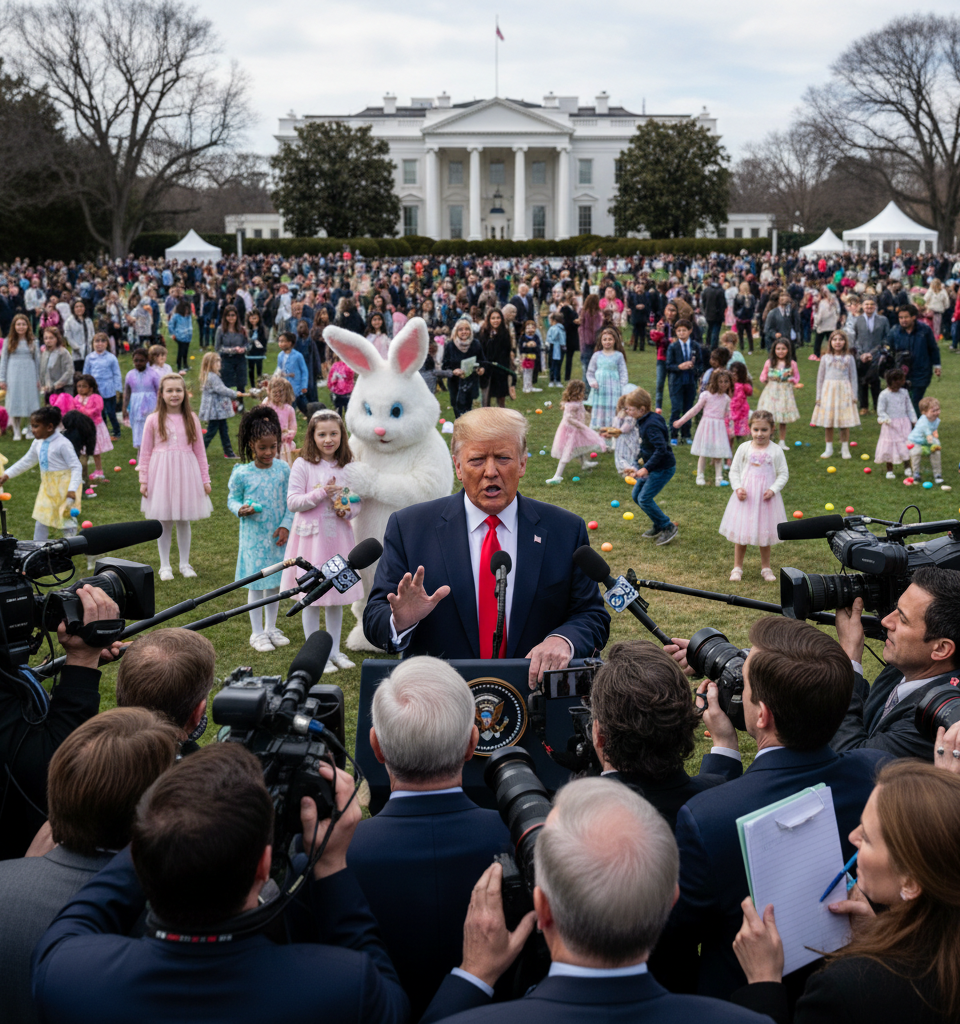
WASHINGTON D.C. – Former President Donald J. Trump, on Monday, April 1, 2024, unexpectedly steered the conversation at the White House Easter Egg Roll from children's festivities to stark geopolitical warnings, discussing potential conflict with Iran and launching pointed critiques at his successor, President Joe Biden. Addressing a gathered press contingent, Trump's remarks shattered the lighthearted atmosphere, injecting serious political discourse into an event traditionally reserved for family-centric merriment and photo opportunities. The impromptu press conference, held within earshot of the iconic Easter Bunny, has ignited debate regarding the appropriate venue for such weighty pronouncements and the continued intertwining of cultural events with deeply polarizing political narratives.
Contextualizing the Unconventional Announcement
This unscripted moment marks a significant departure from the customary decorum of the White House Easter Egg Roll, an event steeped in over 140 years of tradition, typically characterized by presidential readings, egg hunts, and family-friendly entertainment. Trump's choice to leverage this public platform for discussions on international relations and domestic political attacks underscores his consistent strategy of utilizing every available media opportunity to communicate his agenda. The comments arrive at a period of heightened tensions in the Middle East, particularly concerning Iran's nuclear program and regional proxies, lending an additional layer of gravity to his warnings. Furthermore, his ongoing criticism of President Biden's age and cognitive fitness remains a central pillar of his presumptive 2024 presidential campaign, highlighting his intent to maintain these narratives even during purportedly non-political events.
Key Remarks: Iran, Biden, and the 'Autopen' Controversy
During the impromptu exchange, Trump stated, "We could have a war with Iran very easily. It's a very dangerous situation." While not providing specific intelligence or details, his emphasis on the immediate danger contrasted sharply with the surrounding festive environment. Shifting focus, he then turned his attention to President Biden, questioning his mental capacity. "Does he know where he is?" Trump reportedly quipped, reiterating familiar campaign trail rhetoric. He also reignited a past controversy by questioning the authenticity of official documents signed by President Biden, implying the use of an "autopen" and questioning the President's engagement with his duties. This resurrected claim, previously debunked by White House officials who affirmed President Biden's consistent practice of personally signing legislation, serves to further undermine public trust in his administration's operations. The press scrum itself, lasting approximately seven minutes, became a focal point, with reporters struggling to extract substantive responses amidst the ambient sounds of children and the festive atmosphere.
Broader Political and Media Landscape Impact
Trump's Easter remarks reverberate across the political landscape, influencing both domestic discourse and international perceptions. For his supporters, the comments reinforce his image as a strong leader unafraid to tackle critical issues head-on, even at unconventional moments. For critics, it exemplifies a perceived disregard for traditional norms and an opportunistic exploitation of a family event for political gain. From a media perspective, such spontaneous and provocative statements guarantee extensive coverage, further driving engagement even as they blur the lines between news and entertainment. The incident also highlights the continued challenge for news organizations in covering presidential remarks made in informal, often chaotic, settings, where the opportunity for in-depth follow-up questions is limited.
Expert Analysis on Strategic Intent
Political analysts suggest that Trump's Easter appearance served multiple strategic purposes. Dr. Evelyn Reed, a political communications professor at Georgetown University, notes, "This was a quintessential Trump move: control the narrative, leverage a highly visible platform, and disrupt expectations. His comments about Iran tap into anxieties voters have about global stability, while the attacks on Biden reinforce his core campaign message about competence. The incongruity of the setting only amplifies the message, making it more memorable." Others argue that such unpredictable outbursts, while generating headlines, could alienate moderate voters who prefer a more measured and decorous approach from their leaders, especially during public holidays.
Looking Ahead: Campaign Trajectories and Continued Tensions
The episode provides a prelude to what is expected to be an intensely unconventional presidential election campaign. With both candidates frequently engaging in personal attacks and sharply contrasting rhetoric, Trump's Easter remarks signal a continuation of this combative style. The underlying geopolitical anxieties concerning Iran, coupled with ongoing domestic debates about presidential fitness, are likely to remain central themes as the election draws closer. Future public appearances by both candidates, regardless of their official purpose, will undoubtedly be scrutinized for similar unscripted moments that could shape public opinion and impact the electoral outcome. The incident ensures that even traditionally apolitical events will continue to be viewed through an electoral lens in the coming months, underscoring the high stakes of the current political environment.