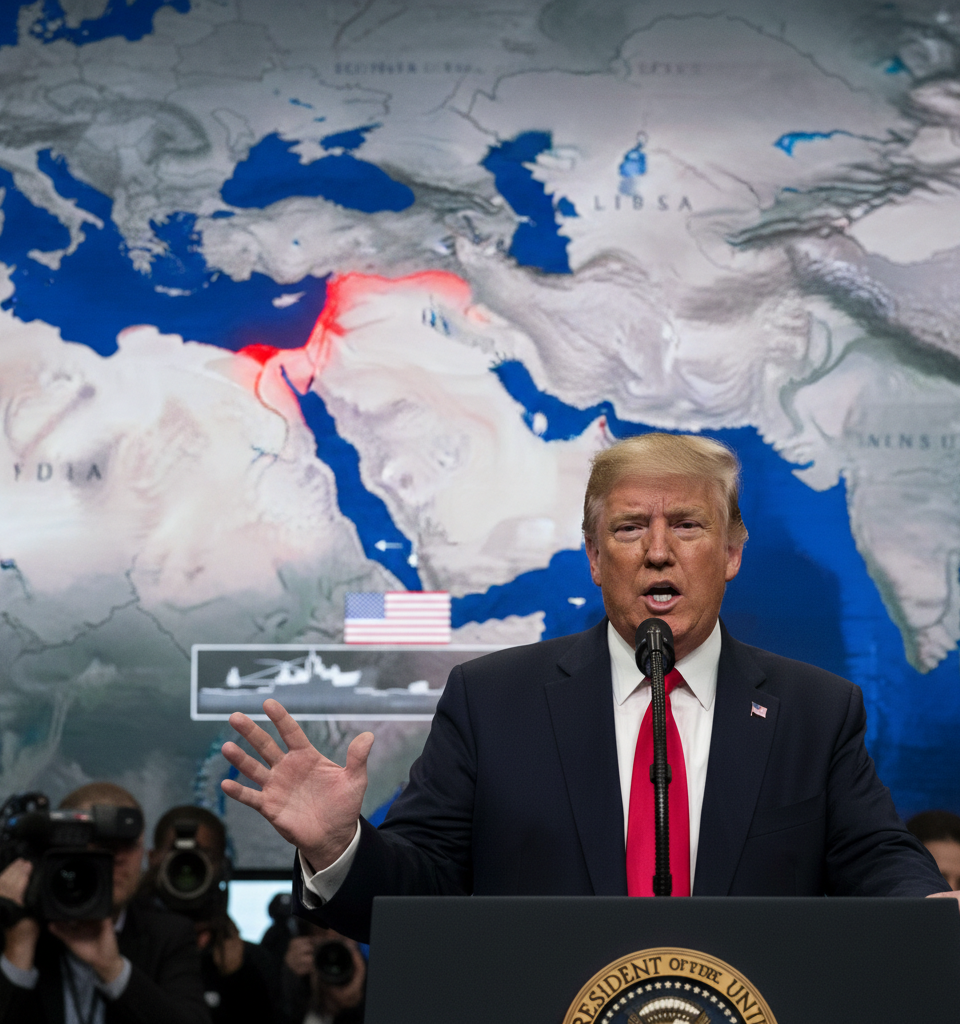
WASHINGTON, D.C. — Former President Donald J. Trump, seemingly emboldened by a recent successful diplomatic resolution, has unleashed an astonishing barrage of threats against the Islamic Republic of Iran, vowing to bomb critical infrastructure including bridges and power plants if the nation does not cede control of the vital Strait of Hormuz. Posted on his social media platform in an expletive-laden tirade earlier today, the pronouncements have ignited fervent debate among international observers and sent ripples of concern through global markets, raising urgent questions about the potential for conflict and the future of Middle Eastern stability.
Contextualizing the Escalation: A Fragile Peace
This dramatic escalation in rhetoric by the former commander-in-chief arrives at a particularly sensitive juncture in international relations, following what many perceive as a significant, albeit unspecified, 'successful rescue' operation or diplomatic victory that has seemingly bolstered Trump's confidence. While the specific nature of this 'rescue' remains largely undisclosed, its apparent positive outcome has demonstrably fueled an already hawkish stance towards Tehran. For decades, the Strait of Hormuz, a narrow chokepoint between the Persian Gulf and the open ocean, has been a flashpoint for geopolitical tensions, pivotal for global oil shipments, with approximately 20% of the world's petroleum and a substantial portion of its liquefied natural gas transiting its waters daily. Iran has on multiple occasions threatened to close the strait in response to sanctions or military provocations, a move international bodies have consistently condemned as a severe threat to global economic stability.
The Unprecedented Nature of the Threat
In a series of posts that quickly went viral across digital platforms, Trump's language was starkly explicit. "OPEN THE STRAIT, IRAN, OR WE WILL BOMB YOUR BRIDGES & POWER PLANTS!" read one post, replete with capital letters and expletives that have become a hallmark of his online communication style. This direct targeting of civilian infrastructure represents a significant departure from conventional diplomatic warnings, even from a figure known for unconventional approaches. Analysts are quick to point out the gravity of such declarations, noting that threatening to target civilian infrastructure could be interpreted as a violation of international humanitarian law, potentially inciting further international condemnation and retaliation. The immediate ramifications for the already strained U.S.-Iran relationship, which saw the U.S. withdraw from the Joint Comprehensive Plan of Action (JCPOA) under Trump's previous administration, are profound.
Industry and Market Repercussions
The immediate aftermath of Trump's statements saw a noticeable, albeit temporary, uptick in global oil prices, with Brent Crude futures rising by 1.5% to nearly $87.50 per barrel within hours of the social media posts. Shipping companies operating in the Persian Gulf have reportedly begun re-evaluating risk premiums and insurance coverages, leading to potential increases in freight costs that could impact supply chains globally. Major stock indices, while not experiencing a full-blown panic, showed increased volatility, particularly in sectors dependent on energy and international trade. Investment banks and geopolitical risk consultancies have hastily convened meetings to assess the potential for military engagement and its economic fallout, particularly concerning the flow of crude oil and natural gas from the Middle East.
Expert Scrutiny: Red Lines and Rhetoric
International relations experts and former diplomats have swiftly condemned the rhetoric as dangerous and counterproductive. Dr. Eleanor Vance, a senior fellow at the Carnegie Endowment for International Peace, commented, "Such inflammatory language, particularly from a former President with a known influence over a significant political base, crosses critical red lines. It risks a miscalculation that could rapidly escalate into a full-blown military conflict, dragging in regional and international powers. Diplomacy requires nuance, not threats of destruction." Others, like former Secretary of Defense James Mattis, have previously highlighted the strategic importance of avoiding bellicose rhetoric that could prematurely commit military action or alienate allies.
The Unpredictable Path Forward
The most pressing question now is whether these threats are merely rhetorical bluster intended to project strength, or if they signal a genuine willingness to engage in military confrontation should geopolitical events align. The international community, including key allies in Europe and Asia, is closely monitoring the situation, urging de-escalation and a return to diplomatic engagement. The Biden administration, facing renewed challenges in its approach to Iran, finds itself in a precarious position, needing to manage the implications of a former president's aggressive posturing without legitimizing calls for war. Future developments will likely involve heightened military posturing in the Gulf region, increased diplomatic efforts to diffuse tensions, and fervent debate over the implications of such informal but impactful declarations on global stability. The world watches, holding its breath for the next chapter in this unpredictable geopolitical drama.