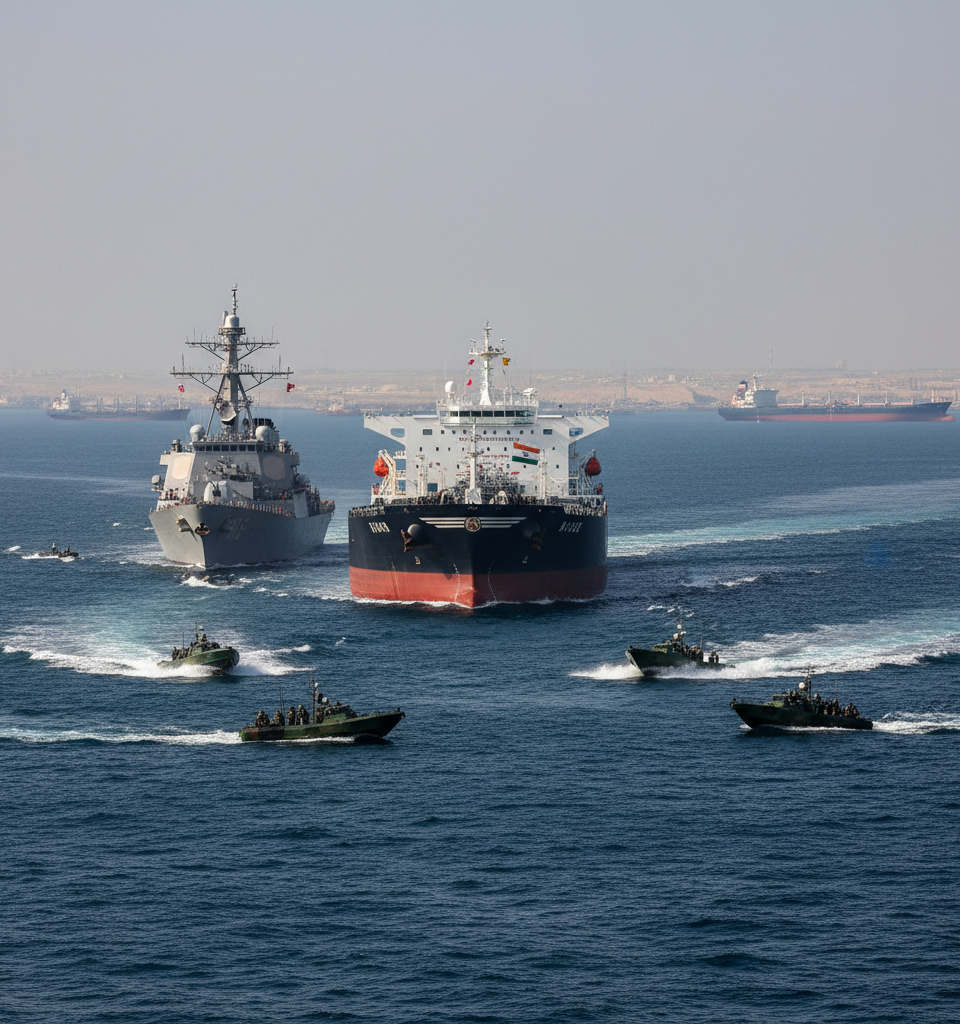
The unilateral decision by the Trump administration to impose a blockade on the Strait of Hormuz is poised to create substantial ripple effects, placing considerable strain on the United States' intricate relationships with both India and China. This aggressive posture against Iran, manifested in the critical chokepoint for global oil shipments, threatens to recalibrate international alliances and commodity markets, potentially forcing Beijing and New Delhi to navigate a complex geopolitical minefield.
The Strait of Hormuz is a strategically vital waterway, responsible for facilitating approximately one-fifth of the world's total oil consumption. Any disruption in this narrow passage has immediate and far-reaching consequences for global energy prices and supply chains. For China and India, both heavily reliant on imported oil, often sourced from the Middle East via this very strait, the blockade represents a direct threat to their energy security and economic stability. These nations are significant consumers of Iranian crude, and the U.S. action directly challenges their entrenched trade relationships and energy diversification strategies.
Geopolitical Repercussions for Asian Powers
For India, balancing its long-standing strategic autonomy with its growing partnership with the U.S. will become particularly challenging. New Delhi has historically maintained ties with Tehran, viewing Iran as a crucial partner for energy supplies and connectivity projects, such as the Chabahar Port, which offers a trade route bypassing Pakistan. A U.S. blockade would compel India to choose between maintaining its energy arteries and adhering to American sanctions, potentially jeopardizing its economic growth trajectory. The financial and logistical hurdles of finding alternative, reliable energy suppliers would be immense.
China, similarly, faces a precarious situation. As the world's largest crude oil importer, its economy is profoundly sensitive to energy price fluctuations and supply disruptions. While China has diversified its energy sources, a significant portion still transits through the Strait of Hormuz. Beijing has often bristled at what it perceives as U.S. overreach in international affairs, and this blockade could be interpreted as another instance of Washington leveraging its economic and military might to dictate global trade parameters. This could further exacerbate existing trade tensions between the U.S. and China, extending beyond traditional tariff disputes to encompass energy geopolitics.
Economic Impact and Supply Chain Vulnerabilities
Beyond direct energy concerns, the blockade risks triggering a broader economic fallout. Increased shipping costs due to longer routes or higher insurance premiums for vessels daring to traverse the region would inevitably be passed on to consumers. Furthermore, the volatility introduced into the oil market could stifle global economic recovery efforts, particularly as nations are still grappling with various post-pandemic challenges. Industries ranging from manufacturing to transportation are highly exposed to energy price shocks, meaning a prolonged blockade could lead to inflationary pressures and reduced industrial output globally.
The U.S.'s intensified pressure on Iran, including the potential for a naval blockade, underscores a strategic objective to cripple Tehran's oil revenues and force it to capitulate to American demands regarding its nuclear program and regional influence. However, the indirect consequences on allies and major economic partners like India and China could inadvertently undermine broader U.S. foreign policy objectives in Asia. The perception of Washington imposing economic hardships on its partners could erode trust and push these nations to seek more independent and potentially confrontational foreign policy stances.
Navigating a Diplomatic Quagmire
Looking ahead, India and China will likely engage in intensive diplomatic efforts to mitigate the impact of the blockade. This could include advocating for a de-escalation of tensions in the Persian Gulf, exploring alternative payment mechanisms for Iranian oil if direct purchases become untenable, or accelerating diversification of energy sources. However, the efficacy of such measures in the face of unwavering U.S. resolve remains to be seen. The situation presents a critical test for these Asian giants to assert their independent foreign policy while attempting to safeguard their economic interests in an increasingly volatile global landscape.
The prospect of a U.S. blockade underscores the intricate web of global dependencies and the potential for regional conflicts to spill over into far-reaching economic and geopolitical crises. The international community will closely monitor how India and China navigate this complex challenge, as their responses could significantly shape the future of global energy markets and international relations.