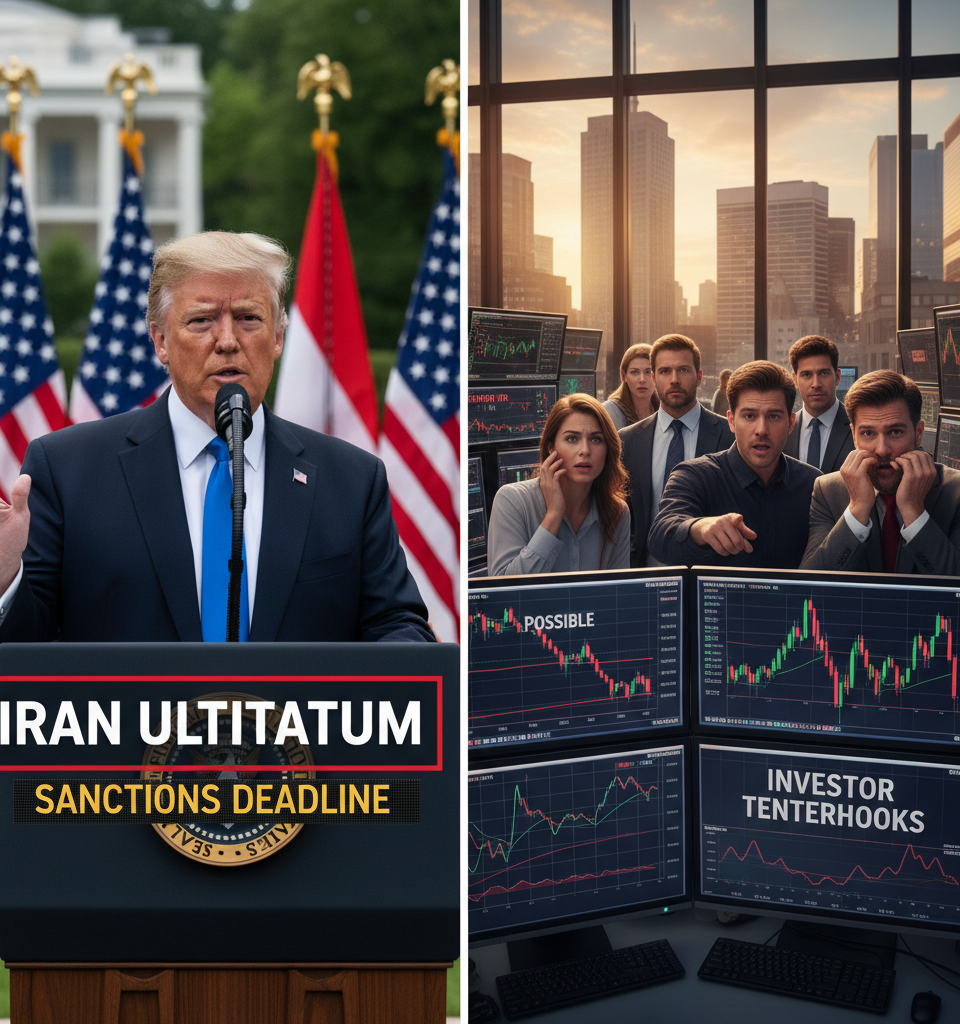
Global financial markets are entering a period of heightened anxiety as the international community awaits President Trump's critical decision regarding the Iran nuclear deal. This week is widely anticipated to be one of the most consequential yet in the evolving standoff, with investors positioning themselves for binary outcomes that could dramatically reshape geopolitical and economic landscapes.
The White House's posture, characterized by a firm ultimatum to Tehran, has set the stage for either a potential diplomatic resolution or a significant intensification of hostilities. The underlying tension stems from the 2015 Joint Comprehensive Plan of Action (JCPOA), which President Trump has consistently criticized, threatening to withdraw the United States unless substantial changes are made. This looming deadline has amplified market volatility, creating an environment where certainty is fleeting and speculative trading is rampant.
The Geopolitical Chessboard and Economic Ramifications
At the heart of the current crisis is the intricate interplay between international diplomacy, national security interests, and global economic stability. A resolution, whether through a renegotiated deal or a last-minute concession, could alleviate concerns about oil supply disruptions, potentially stabilizing energy markets and reducing geopolitical risk premiums. Conversely, a failure to reach an accord, particularly if it leads to the re-imposition of broad U.S. sanctions, could trigger a sharp rise in crude oil prices, disrupt global trade routes, and exacerbate existing inflationary pressures. Such an escalation would also likely increase defense spending and divert resources, impacting economic growth projections worldwide.
The potential for military engagement, while not explicitly stated as an immediate outcome of a failed deal, remains a significant, albeit underlying, concern for investors. The Strait of Hormuz, a critical chokepoint for global oil shipments, is particularly sensitive to any instability in the region. Any disruption there could have immediate and severe ripple effects on energy costs globally, impacting industries from transport to manufacturing and directly affecting consumer purchasing power.
Investor Sentiment and Market Positions
Equity markets, particularly those with significant exposure to the energy sector, are exhibiting considerable nervousness. Traders are actively adjusting their portfolios, with some unwinding risk positions and others seeking safe-haven assets such as gold, U.S. Treasury bonds, and the Japanese Yen. The VIX volatility index, often referred to as the market's fear gauge, has seen an uptick, reflecting the widespread investor apprehension concerning the potential for sudden and dramatic shifts in policy and their subsequent market impact.
Futures markets for crude oil, especially Brent and WTI benchmarks, are displaying heightened sensitivity to every piece of news or rumor emanating from diplomatic channels. Prices are subject to sharp fluctuations, reflecting the market's attempt to price in probabilities of both agreement and conflict. Analysts note that the divergence in potential outcomes makes traditional risk assessment models particularly challenging, forcing a more reactive approach to investment decisions.
The Diplomatic Tightrope Walk
Behind the market movements, intense diplomatic efforts are undoubtedly underway. European allies, particularly France, Germany, and the United Kingdom, have been actively engaged in trying to preserve the JCPOA, or at least modify it sufficiently to appease the White House without alienating Tehran. Their efforts involve difficult negotiations, attempting to bridge the gap between U.S. demands for stricter controls on Iran’s ballistic missile program and its regional activities, and Iran's insistence on the integrity of the original agreement.
The outcome of these high-stakes negotiations remains uncertain, but the next few days are expected to reveal the path forward. Observers are closely watching any statements from President Trump, as well as indications from key Iranian officials, for clues regarding the likelihood of a diplomatic breakthrough or a decisive shift toward increased confrontation. The global economy, already navigating a complex post-pandemic recovery and grappling with other geopolitical flashpoints, stands at a critical juncture, heavily influenced by the decisions made in the coming week concerning the future of the Iran nuclear deal.