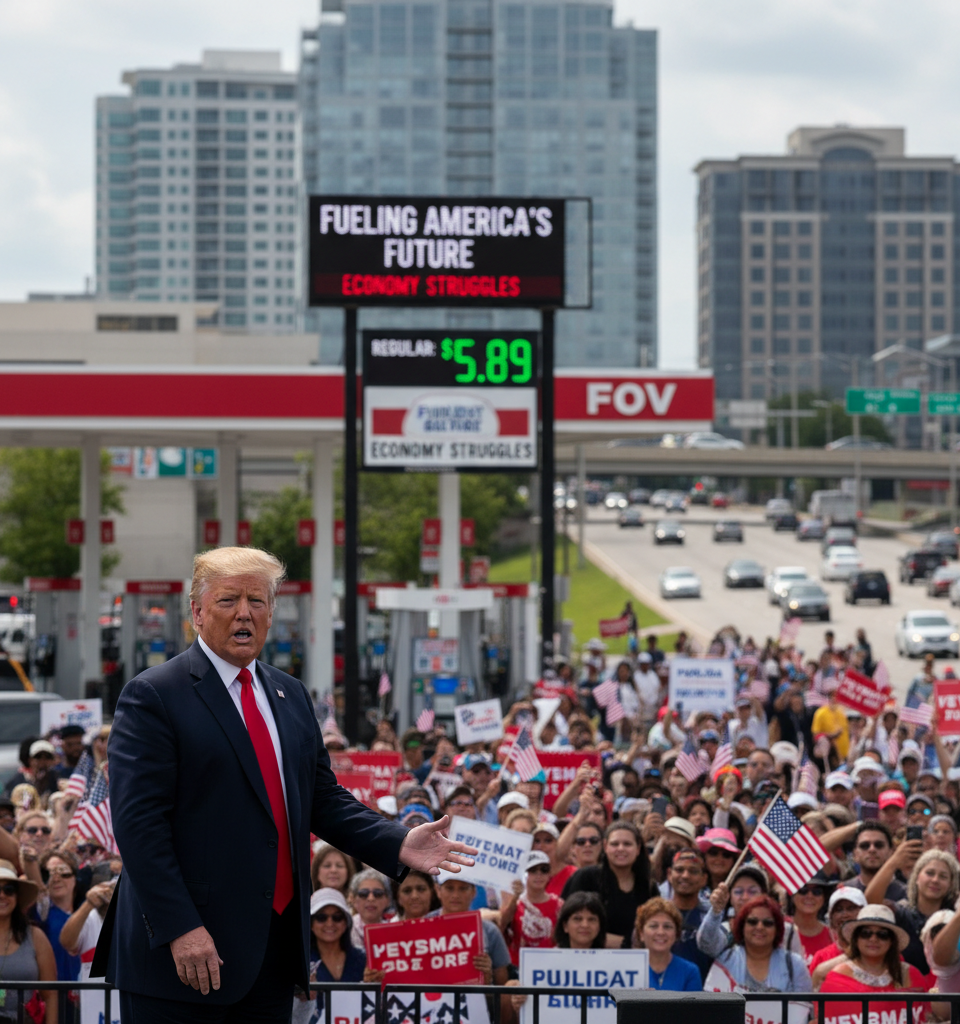
President Donald Trump's recent pronouncements regarding the potential longevity of high gasoline prices – extending possibly past the critical midterm elections – have ignited fresh concerns within the Republican Party, spotlighting a strategic vulnerability. Speaking on Sunday, the former president's mixed messages on the duration of inflationary pressures, particularly at the pump, have prompted a re-evaluation among GOP strategists grappling with an electorate increasingly sensitive to economic discomfort. The acknowledgment that a key economic pain point might not abate before November's contests poses a significant challenge for a party aiming to capitalize on dissatisfaction with the current administration's handling of the economy.
This development comes at a precarious time for the Republican Party, which has largely framed the upcoming midterms as a referendum on President Biden's economic policies, including soaring inflation and energy costs. Historically, consumer sentiment, heavily influenced by disposable income and daily expenses like fuel, has been a potent predictor of electoral outcomes. The average price of a gallon of regular gasoline, which recently soared to a national average of $3.50, up from roughly $2.50 a year prior, directly impacts household budgets and transportation costs for businesses. Trump's deviation from a more optimistic outlook often presented by his party on immediate economic relief signals a tacit recognition of the deep-seated nature of these inflationary pressures and the difficulty in offering quick solutions.
Trump’s comments on Sunday stood in contrast to more optimistic timelines previously floated by some Republican figures, illustrating a potential schism within the party's messaging strategy. While some GOP leaders have blamed the Biden administration’s energy policies for the price hikes, predicting a swift turnaround with a change in leadership, Trump's more guarded assessment implies a longer struggle. This divergence highlights an internal struggle over how best to address voter anxieties without over-promising or appearing out of touch with economic realities. For many Americans, gas prices are a highly visible and frequently encountered economic indicator, and sustained high costs could fuel discontent.
Economically, prolonged high energy prices ripple through various sectors. Transportation costs for goods increase, leading to higher prices for consumers across the board – from groceries to manufactured goods. Businesses reliant on fuel, such as trucking and logistics companies, face compressed profit margins, potentially leading to price increases or reduced services. Small businesses, in particular, are vulnerable to consistent increases in overheads, which can stifle growth and job creation. The overall impact could dampen consumer spending, a crucial driver of economic growth, further complicating the economic landscape leading into the midterms.
Industry analysts and economic experts largely concur that global factors, including geopolitical instability and supply chain disruptions, play a significant role in current energy prices, alongside domestic policies. Dr. Evelyn Reed, an energy economist at the University of Chicago, noted, "While domestic policy can influence supply and demand, the global crude oil market, heavily impacted by events like the conflict in Ukraine and OPEC+ decisions, holds substantial sway. Expecting a rapid drop in prices without significant shifts in these global dynamics is unrealistic." Her assessment aligns with the apprehension reflected in Trump's recent statements, suggesting that domestic political rhetoric often oversimplifies complex international market forces.
The implications for the upcoming elections are substantial. If gas prices remain elevated, or even continue to climb, Democrats will likely face an uphill battle, but a GOP strategy solely focused on blaming the White House may also falter if no immediate relief appears on the horizon. Voters may become increasingly frustrated with both parties if tangible solutions to economic hardships are not presented or implemented. The Republican Party might need to pivot from simply criticizing current policies to offering concrete, actionable plans for energy independence and economic stability that resonate with a financially stressed electorate, rather than solely relying on the hope of price drops.
Looking ahead, market watchers will be closely monitoring global oil production, specifically decisions by OPEC+ regarding output quotas, and the evolving geopolitical situation in Eastern Europe. Domestically, the Biden administration's responses to inflation, including any potential releases from strategic petroleum reserves or shifts in energy policy, will be under intense scrutiny. For the GOP, the challenge will be to craft a compelling economic narrative that acknowledges the complexities of the current situation while offering a credible path forward, rather than allowing Trump's more pessimistic assessment to undermine their message of impending economic relief.
Ultimately, the political fallout from persistent high gas prices could be a defining factor in the November elections. Both parties are now under pressure to demonstrate their understanding of Americans' economic struggles and propose effective solutions, ensuring that the issue remains at the forefront of the political discourse until voting day.