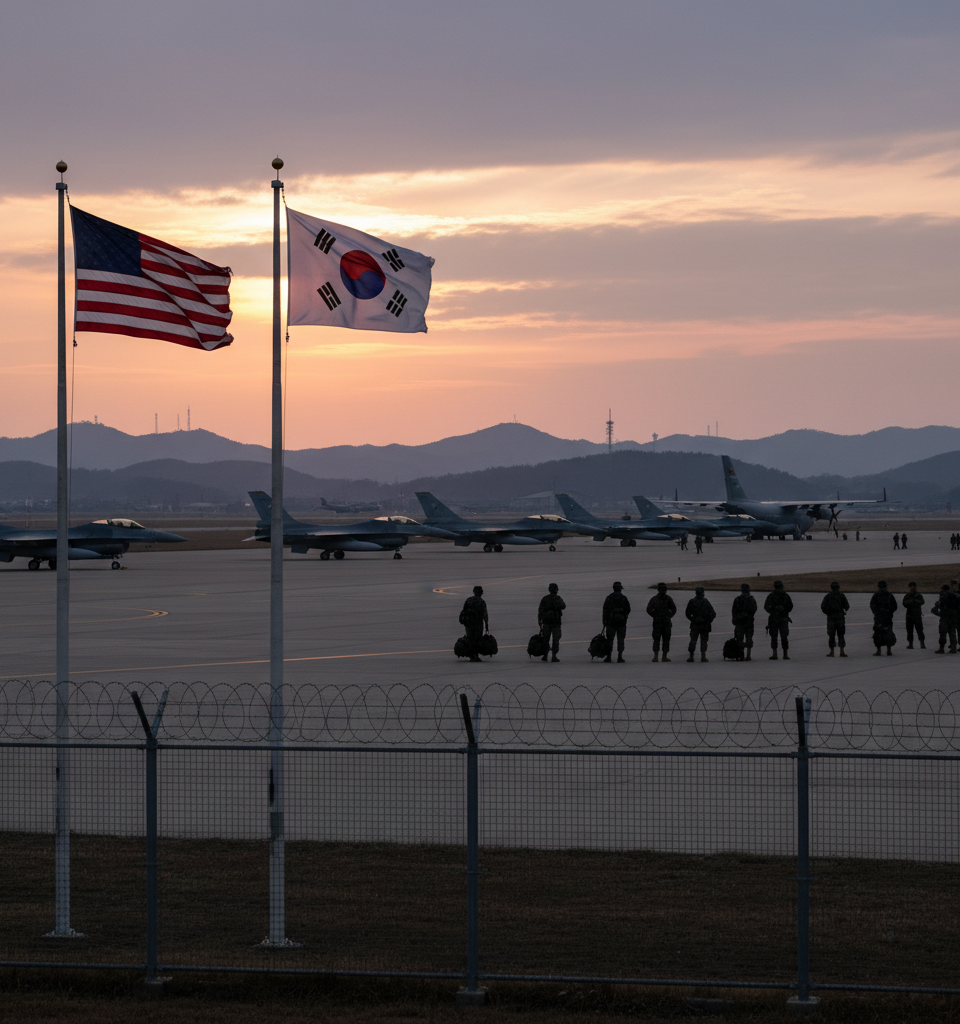
The strategic implications of military alliance shifts extend beyond defense, directly influencing global supply chains and investment confidence in key Asian markets. Businesses operating with or in South Korea must now factor potential regional instability and altered security guarantees into their risk assessments, particularly regarding long-term capital allocation and talent mobility. The decision's reverberations could reshape trade agreements and investor sentiment, demanding close monitoring of diplomatic resolutions and defense posture changes.
President Donald Trump's recent directive to scale back joint military exercises with South Korea has ignited widespread concern among defense analysts and allied nations, prompting a reassessment of regional security dynamics. The move comes amidst broader questions regarding the United States' long-standing commitment to its international alliances and its approach to security partnerships in the Indo-Pacific.
Context and Background
For decades, these joint exercises have been a cornerstone of the U.S.-South Korea alliance, designed to maintain readiness, deter aggression from North Korea, and ensure interoperability between the two militaries. They represent a tangible manifestation of the mutual defense treaty signed in 1953, serving as a critical element of regional stability. Previous administrations have consistently upheld the importance of these drills, viewing them as essential for regional security and the protection of South Korea.
Key Details of the Directive
The presidential order instructs the Pentagon to reduce the scale and frequency of these joint military drills, though specific details regarding the exact extent of the cutbacks remain under review. While the administration has suggested the move is intended to reduce tensions on the Korean Peninsula and potentially encourage further diplomatic engagement with North Korea, critics argue it risks undermining military readiness and sending a message of diminished commitment to allies.
Industry and Market Impact
The prospect of altered military exercises introduces a new layer of uncertainty for industries with significant investments or operations in South Korea and the broader East Asian region. Defense contractors, technology companies reliant on stable supply chains, and manufacturing sectors could face shifts in perceived risk. Any perceived weakening of the U.S. security umbrella could prompt a re-evaluation of long-term investment strategies, potentially affecting foreign direct investment flows into South Korea and neighboring economies.
Expert Perspectives and Concerns
Defense analysts and geopolitical strategists have voiced considerable concern. Many experts argue that reducing these exercises, even with diplomatic intentions, could be misinterpreted by adversaries, potentially emboldening aggressive actions. They emphasize that such drills are not merely symbolic but crucial for maintaining operational proficiency and integrated command structures. Allied nations, particularly those in the region, are reportedly observing the situation closely, anxious about the precedent this move might set for other U.S. security commitments. Critics suggest the decision could inadvertently weaken deterrence and create a vacuum that other powers might seek to fill, leading to greater instability.
What's Next: Future Implications
The long-term implications of this directive are still unfolding. The coming months will likely see intense diplomatic activity as U.S. officials work to reassure allies while simultaneously engaging North Korea. The U.S. State Department and Department of Defense are expected to provide further clarification on the scope of the scaled-back exercises and the administration's strategy for maintaining regional security. The international community will be watching closely to see how this decision impacts the delicate balance of power on the Korean Peninsula and the broader Indo-Pacific, with potential ramifications for global security architecture and economic stability in the region.