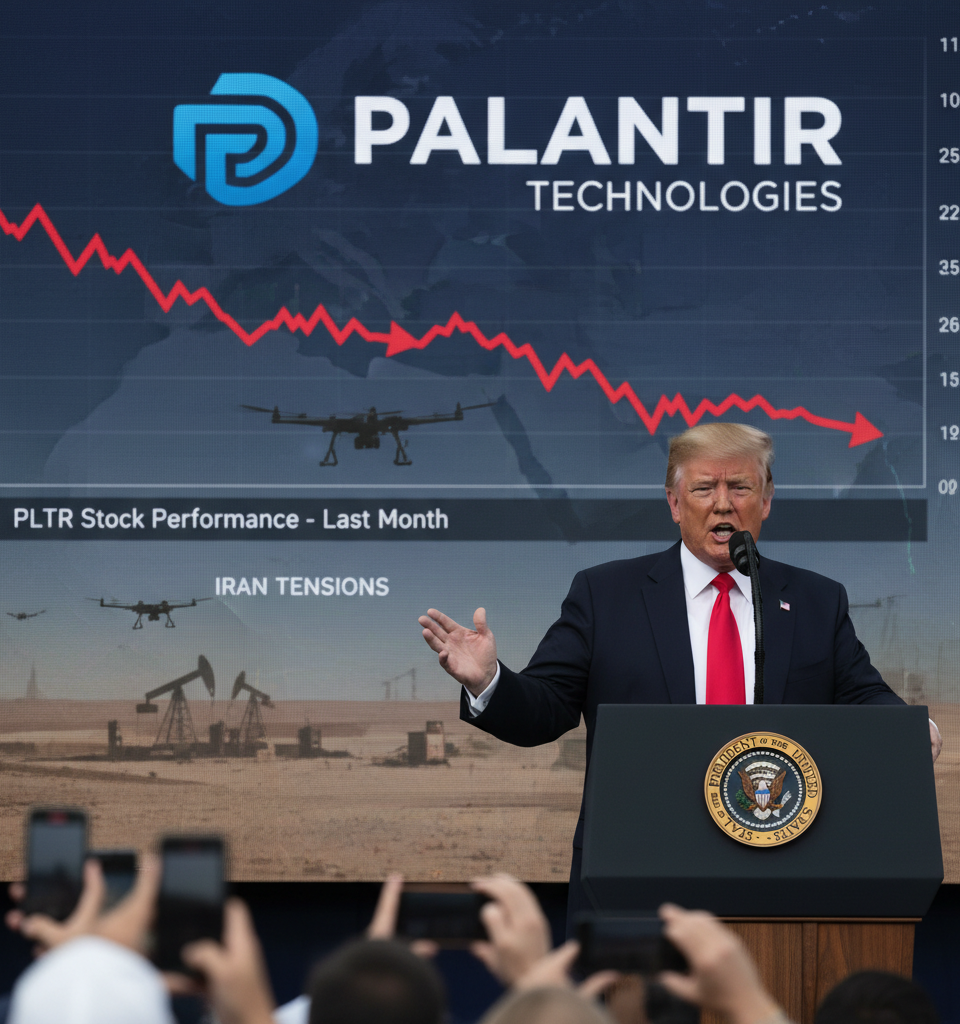
Former President Donald Trump publicly lauded data analytics giant Palantir Technologies this week, a surprising endorsement that coincided with the company's stock (PLTR) experiencing its sharpest weekly decline in over a year. This confluence of events has thrust Palantir into the spotlight, particularly given ongoing reports that its controversial Maven artificial intelligence platform is actively deployed in U.S. military operations concerning Iran, a region currently grappling with heightened geopolitical instability.
Contextualizing the Convergence of Politics and Technology
Trump's remarks, delivered during an unrelated public appearance, underscore the deeply intertwined nature of national security, powerful technology firms, and political rhetoric. Palantir, co-founded by influential Silicon Valley figure Peter Thiel, has long been a subject of both admiration and scrutiny due to its opaque government contracts and the sensitive nature of its data aggregation and analysis capabilities. The former President's commendation further politicizes a company already enmeshed in classified intelligence operations, potentially influencing public perception and investor sentiment at a critical juncture.
Key Details: Stock Performance and Military Deployment
Palantir's stock, which had enjoyed a significant rally earlier in the year, plummeted approximately 15% this week, marking its worst performance since late 2022. This downturn wiped out billions in market capitalization, prompting concerns among investors despite a generally bullish tech market trend. The decline occurred concurrently with intensifying reports emerging from intelligence circles and defense contractors, suggesting Palantir's Project Maven—an AI initiative designed to interpret drone footage and reconnaissance data—is being utilized by U.S. forces monitoring Iranian activities and managing regional security challenges. While specific details of its deployment remain classified, its reported use highlights the company's critical role in contemporary warfare tactics.
Broader Market and Industry Repercussions
The dual narrative of political endorsement and stock volatility for a key defense contractor sends ripples across the broader technology and defense sectors. Investors are keenly watching how geopolitical developments, particularly those involving advanced AI technologies, can directly impact corporate valuations. For the burgeoning AI industry, Palantir's situation serves as a stark reminder of the ethical and reputational risks associated with military applications, potentially influencing how other AI firms navigate defense contracts and public relations. Furthermore, the episode casts a spotlight on the often-hidden infrastructure of modern warfare and the private entities that power it.
Expert Perspectives on Palantir's Trajectory
Financial analysts offer varied interpretations of Palantir's recent performance. "The stock's rally was perhaps overextended, and a correction was due regardless of external factors," noted Sarah Chen, a senior analyst at TechInvest Research. "However, the geopolitical overlay, coupled with a prominent political figure's comments, undoubtedly adds a layer of complexity and potential volatility." Defense industry experts, like Dr. Miles Kincaid from the Center for Strategic and International Studies, emphasize the increased demand for Palantir-like capabilities in zones of conflict. "AI platforms that can rapidly process vast amounts of intelligence are no longer a luxury but a necessity for modern militaries attempting to maintain situational awareness and execute precision operations in complex environments like the Middle East," Kincaid stated.
The Road Ahead: Geopolitics, AI, and Investor Confidence
The immediate future for Palantir appears tethered to both market dynamics and the shifting sands of international relations. Investors will be closely scrutinizing the company's next earnings report for clarity on its financial health and guidance amidst these pressures. From a geopolitical standpoint, any further escalation of tensions in the Middle East could conceivably increase demand for Palantir's military applications, yet simultaneously amplify calls for greater transparency and ethical oversight of AI in warfare. The ongoing interplay between highly classified military contracts, public stock performance, and the pronouncements of influential political figures will undoubtedly continue to define Palantir's narrative in the months to come, shaping not just its own trajectory but also the broader discussion around the intersection of technology and national security.