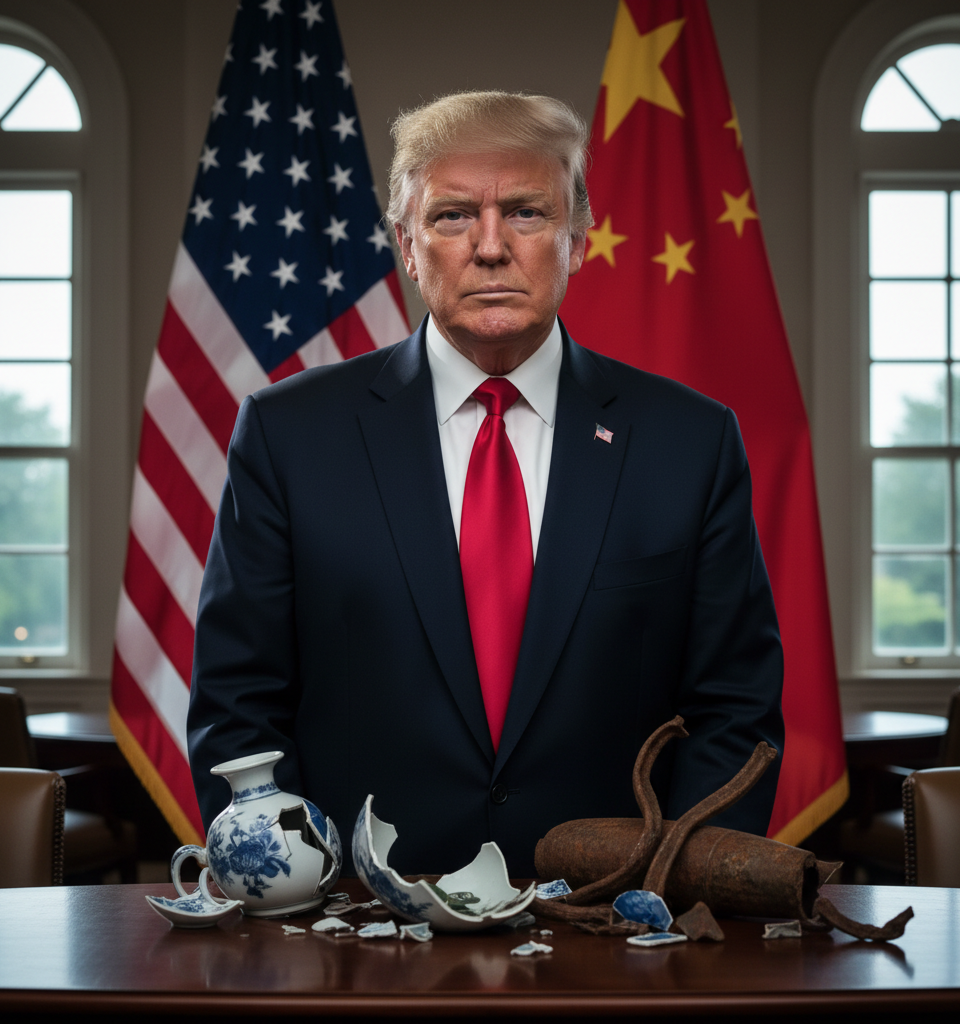
Washington D.C. – A looming shadow of economic coercion cast by former President Donald Trump's potential return to the White House threatens to destabilize the carefully constructed — albeit fragile — détente between the United States and China. Proposed plans for tariffs of 60% or more on all Chinese imports, coupled with a 10% universal tariff on all goods, are poised to trigger a new and potentially far more destructive trade war. This aggressive posture has emerged as Beijing, in a thinly veiled critique of global conflicts, particularly the ongoing war in Ukraine, cautioned against a world reverting to 'the law of the jungle,' emphasizing the need for multilateralism and economic cooperation.
Context of a Cautious Rapprochement
The current US-China relationship, while still fraught with strategic competition, has seen a period of cautious rapprochement since late 2023. Key meetings between President Biden and President Xi Jinping, including their discussions at the APEC summit in San Francisco, had initiated dialogues on critical issues ranging from climate change to military communication. These engagements were a deliberate attempt to thaw relations after years of escalating trade disputes, technological rivalry, and geopolitical tensions that had seen bilateral trade reach a 15-year low of approximately $600 billion in 2023. The prospect of Trump's return and his 'America First' protectionist agenda, however, threatens to unravel these diplomatic fragile gains, pushing the two economic superpowers towards a direct and costly confrontation.
The Economic Ramifications of a 60% Tariff
The economic consequences of such a broad tariff hike would be profound and far-reaching. A 60% tariff on Chinese goods, which amounted to over $427 billion in 2023, would effectively price many Chinese imports out of the US market. This would significantly disrupt global supply chains, forcing American businesses to seek alternative (and often more expensive) suppliers. The average US consumer, too, would face higher prices on a vast array of goods, from electronics to clothing, potentially fueling inflation. American companies heavily reliant on Chinese manufacturing or raw materials would face increased operational costs, eroding profit margins and potentially leading to job losses or reduced investment. Economists at the Peterson Institute for International Economics estimate that such a measure could cost the average American household thousands of dollars annually.
Industry and Market Impact
Industries most vulnerable to these tariffs include electronics, textiles, machinery, and consumer goods. Major US retailers and manufacturers like Apple, Walmart, and Nike, deeply integrated into Chinese supply chains, would face immense pressure to reconfigure their sourcing strategies, a process that is both time-consuming and expensive. The agricultural sector, which has previously borne the brunt of retaliatory tariffs from China, would likely suffer again. Beyond direct trade, the global financial markets would react with extreme volatility. Investor confidence would plummet amidst uncertainty, potentially triggering sell-offs and stifling foreign direct investment, not just in the US and China, but globally. The World Trade Organization (WTO) framework, already under strain, would be further undermined by such unilateral actions.
Expert Analysis on Geopolitical Stability
Geopolitical analysts are sounding alarms about the potential for escalating tensions beyond the economic realm. Dr. Evelyn Goh, an expert in US-China relations, notes that "a full-blown trade war designed to decouple the two economies entirely could remove any remaining guardrails for managing other strategic disagreements, such as Taiwan or the South China Sea." Other experts highlight that China's warning about reverting to 'the law of the jungle' underscores Beijing's increasing concern over global stability and its preference for established international norms. The US-China bilateral relationship, representing nearly 40% of the world's GDP, is a critical pillar of global order; its disruption could have cascading effects on emerging economies and international security.
China's Potential Responses
China's response to such aggressive tariffs would likely be multifaceted. Retaliatory tariffs on key American exports, such as agricultural products (e.g., soybeans, pork), aircraft, and automobiles, would be almost certain. Beyond direct trade measures, Beijing could employ non-tariff barriers, increase regulatory scrutiny on US businesses operating in China, or even strategically devalue its currency to offset tariff impacts. Financial leverage, including its vast holdings of US Treasury bonds, could also be considered, though this would carry significant risks for China's own economy. These actions would create a tit-for-tat dynamic reminiscent of the earlier trade war, but on a far grander and more damaging scale.
The Road Ahead: Navigating a Precarious Future
The path forward hinges significantly on the outcome of the upcoming US presidential election. Should former President Trump be re-elected, the proposed tariffs would likely be among his administration's first economic priorities, setting the stage for an unprecedented confrontation. Even without direct tariffs, the rhetoric itself could foster an environment of economic nationalism and protectionism globally, discouraging international cooperation. Businesses are already beginning to scenario-plan for such an eventuality, exploring diversification strategies and risk mitigation. The international community, meanwhile, watches with bated breath, recognizing that the stability of the global economy and the future of multilateralism hang precariously in the balance as the world’s two largest economies brace for potentially turbulent times.
The discussions around these proposed tariffs underscore the fundamental tension between a desire for economic self-reliance and the interconnected reality of global trade. The implications extend beyond balance sheets, touching upon global governance, peace, and the very structure of the international order that has largely prevailed since World War II.