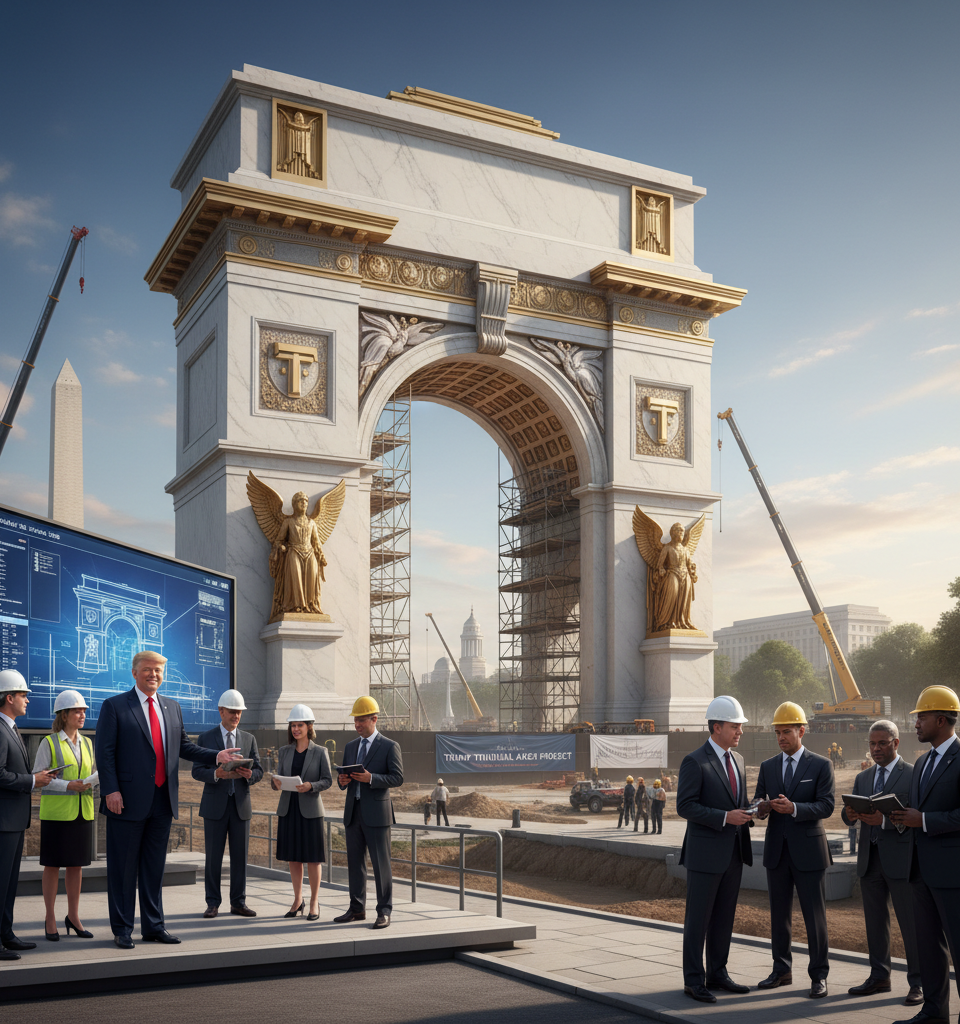
Washington D.C. — The Commission of Fine Arts (CFA), an influential advisory body with strong ties to the Trump administration, has provisionally approved the contentious proposal for a monumental triumphal arch. The decision, reached last Tuesday in a closely watched hearing, marks a significant step forward for a project that has drawn both fervent support and fierce criticism. While the preliminary nod satisfies a crucial procedural requirement, its passage is contingent upon substantial design modifications, as articulated by the commission's Vice Chairman who suggested axing planned statuary atop the structure and other aesthetic alterations before any definitive vote.
Contextualizing a Controversial Monument
This architectural undertaking is more than just a grand edifice; it's a potent symbol steeped in political and cultural debate. The proposal, a brainchild of the previous presidential administration, seeks to erect a prominent landmark in the nation's capital, ostensibly to commemorate American exceptionalism and national achievement. Historically, triumphal arches have been erected to celebrate military victories or significant civic events, dating back to ancient Rome. Critics argue that the timing and design of this particular arch, perceived by many as an attempt to enshrine a specific political legacy, deviate from traditional memorial objectives and risk politicizing the capital's public spaces. This project has been a recurring point of contention since its initial conceptualization, highlighting the ongoing ideological clashes over public art and historical representation in Washington D.C.
Key Details and Design Dilemmas
The preliminary approval was not without significant challenges and debate. During the proceedings, Commission Vice Chairman John L. Smith voiced strong reservations regarding specific design elements. "While the spirit of the project holds merit, the current rendition, particularly the proposed statuary, feels anachronistic and overly ornate for a modern commemorative structure," Smith stated, advocating for a streamlined, less embellished design. Sources indicate that the original design called for elaborate statuary, possibly depicting allegorical figures or historical personalities, perched atop the arch — a feature Smith and other nuanced critics believe detracts from the contemporary aesthetic and monumental simplicity. The overall budget for such a grand project remains under wraps, but preliminary estimates by independent architectural analysts suggest a cost well into the hundreds of millions of dollars, potentially exceeding $300 million, depending on material choices and final dimensions. Funding mechanisms, whether through public appropriations or private donations, are also areas of ongoing deliberation and potential public scrutiny.
Impact on Urban Planning and Public Art
The potential construction of such a large-scale monument in Washington D.C. carries significant implications for urban planning, traffic flow, and the broader landscape of public art. Planners are grappling with questions of site selection, necessary infrastructure adjustments, and how the arch would integrate with existing federal buildings and national memorials. Public art advocates express concern that a politically charged monument could set a precedent for future projects, potentially leading to a fragmentation of national aesthetic consensus. Conversely, proponents argue that bold, new architectural statements are vital for a evolving capital, reflecting contemporary aspirations and providing new tourist attractions which could boost local economy by an estimated 5-10% in tourist revenue for the immediate vicinity upon completion.
Expert Perspectives on Design and Legacy
Architectural historians and urban development experts offer varied perspectives. Dr. Eleanor Vance, a professor of urban studies at Georgetown University, commented, "The Commission's decision to approve with caveats is a diplomatic maneuver. It acknowledges the political impetus while attempting to steer the project towards better design principles." She added, "Removing figures might make the arch more timeless, less tied to a specific individual or administration, thereby increasing its chances of being accepted by a broader public in the long term." Others, however, see any approval, even conditional, as a capitulation to executive overreach, arguing that public space should reflect communal values rather than presidential decree.
The Road Ahead: Revisions and Final Review
The project now enters a critical phase of revision and re-evaluation. The design team, in collaboration with the Commission of Fine Arts, will undertake significant modifications based on the feedback received. This iterative process is expected to involve multiple rounds of design submissions and reviews. The Vice Chairman's suggestions, particularly the removal of the statuary, are anticipated to be central to these revisions. A final vote by the full Commission of Fine Arts is scheduled for late next quarter, contingent on satisfactory amendments. Public hearings and further stakeholder engagement are also expected to precede the final decision, ensuring a continued dialogue on this high-profile and deeply symbolic undertaking.
Broader Implications for National Symbolism
The ultimate fate of the triumphal arch project will undoubtedly have lasting implications for how national symbolism is conceived and executed in the United States. Its completion, or even its rejection following revisions, will stand as a testament to the ongoing tension between political legacy, artistic integrity, and public consensus in shaping the nation's capital. The debate surrounding this arch reflects a broader American discourse on history, patriotism, and the very meaning of collective memory in a diverse and often divided society. The careful navigation of these complex considerations will determine whether the arch eventually stands as a unifying monument or a perpetual reminder of partisan division.