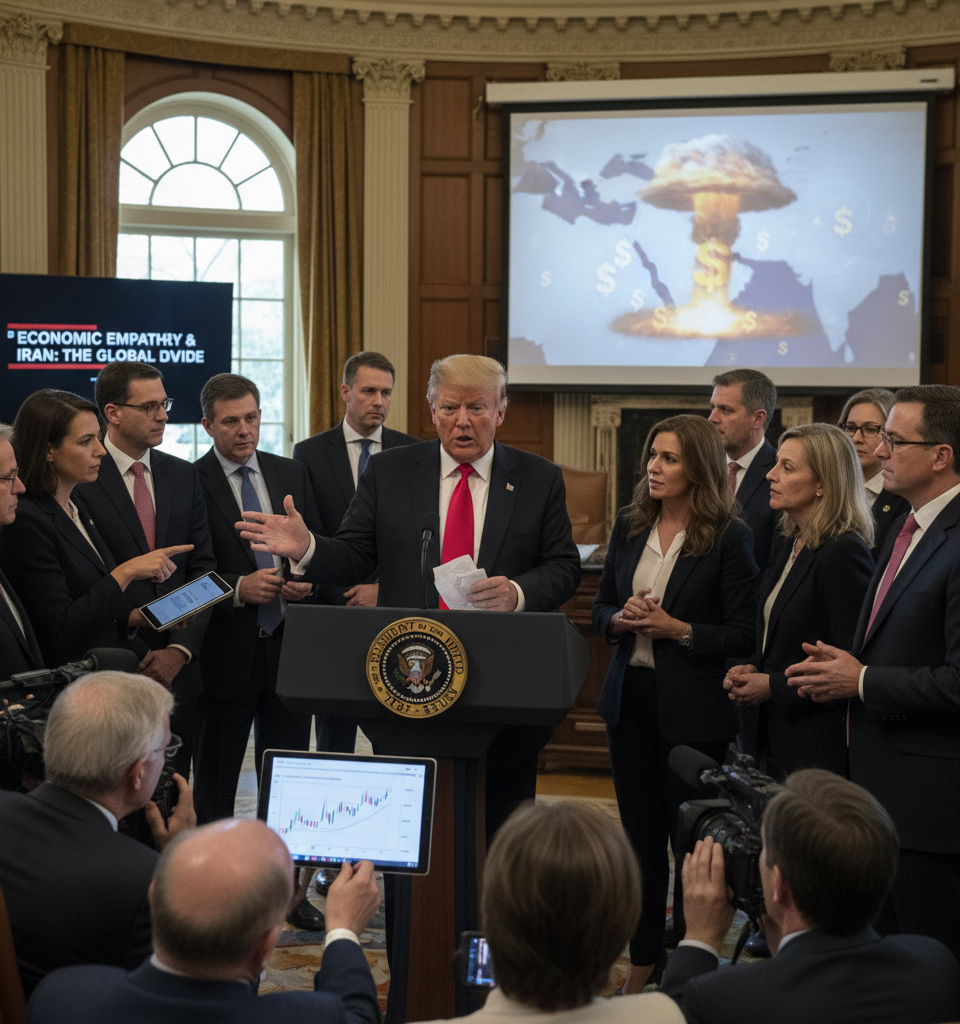
President Donald Trump's recent statements regarding economic realities, described by some as a "truth bomb," have reignited long-standing criticisms about his perceived detachment from the financial experiences of average Americans. These remarks, coming amidst heightened geopolitical tensions with Iran, have amplified concerns that the President, a self-proclaimed billionaire, may not fully grasp the economic strain his foreign policy decisions could impose on the general populace.
Context of the Controversy
This isn't the first time President Trump's privileged background has been juxtaposed against the daily struggles of many Americans. Throughout his presidency, commentary regarding his personal wealth, his business dealings, and his administration's economic policies have frequently led to discussions about economic inequality and opportunity. The current controversy emerges at a volatile juncture, with the US-Iran relationship teetering on the brink, raising alarms about potential military conflicts, trade disruptions, and their subsequent economic ripple effects domestically and globally. Previous administrations have also faced similar scrutiny regarding their leaders' understanding of economic impact, but Trump's unvarnished communication style often accentuates such perceived gaps.
Key Remarks and Public Reaction
The specific remarks in question, while not directly quoted here, generally convey a perspective that critics interpret as downplaying the financial anxieties of working-class families. For instance, discussions around rising energy prices, which could inevitably result from Middle East instability, were reportedly met with an attitude that suggested a capacity for Americans to absorb such costs without significant hardship. Public reaction has been swift, with social media platforms abuzz with comparisons pitting the average American household income, which was approximately $69,392 in 2022, against the President’s estimated multi-billion dollar net worth. Political opponents have seized upon these comments as further evidence of a president who is out of touch, while supporters often defend his candor as a refreshing departure from traditional political rhetoric.
Broader Economic Implications
The perceived disconnect carries significant implications, particularly as the US economy navigates potential headwinds. A prolonged or escalated conflict with Iran could lead to a substantial increase in global oil prices, directly impacting everything from gasoline at the pump to manufacturing and consumer goods. Economists estimate that a $10 per barrel increase in crude oil could translate to an additional $0.25 to $0.30 per gallon for consumers, alongside broader inflationary pressures. Supply chain disruptions, investor uncertainty, and a potential decline in consumer confidence could further dampen economic growth, directly affecting employment rates and household budgets across various income brackets, effects that critics argue the President's commentary fails to adequately acknowledge.
Expert Analysis and Historical Parallels
Economic analysts and political scientists largely agree that public perception of a leader's empathy on economic matters is crucial for maintaining confidence during crises. Dr. Eleanor Vance, a political economy professor at [a prominent university], noted, "Leadership during times of potential conflict requires not just strategic acumen, but also a demonstrable understanding of the sacrifices asked of the populace. A perceived lack of empathy can erode public trust and complicate policy implementation, especially when economic burdens are unequally distributed." This echoes historical instances where leaders, चाहे for better or worse, have been judged on their ability to connect with the financial realities of their constituents during wartime or economic downturns.
What's Next: Political Fallout and Economic Watch
Looking ahead, the political fallout from these remarks is expected to continue impacting public discourse, especially leading into future electoral cycles. Opposing parties are likely to weaponize these perceived missteps, using them to highlight perceived disparities and advocate for policies that ostensibly address the needs of the working and middle class. Economically, financial markets will continue to closely monitor developments in the Middle East, with any direct or indirect impact on oil supplies and trade routes scrutinized intensely.
The administration, meanwhile, faces the challenge of not only navigating complex international relations but also convincing a skeptical public that it is sensitive to the economic well-being of all Americans. Future policy announcements and presidential rhetoric will be under increased pressure to demonstrate this understanding, particularly concerning any measures taken to mitigate potential economic hardships stemming from foreign policy decisions.