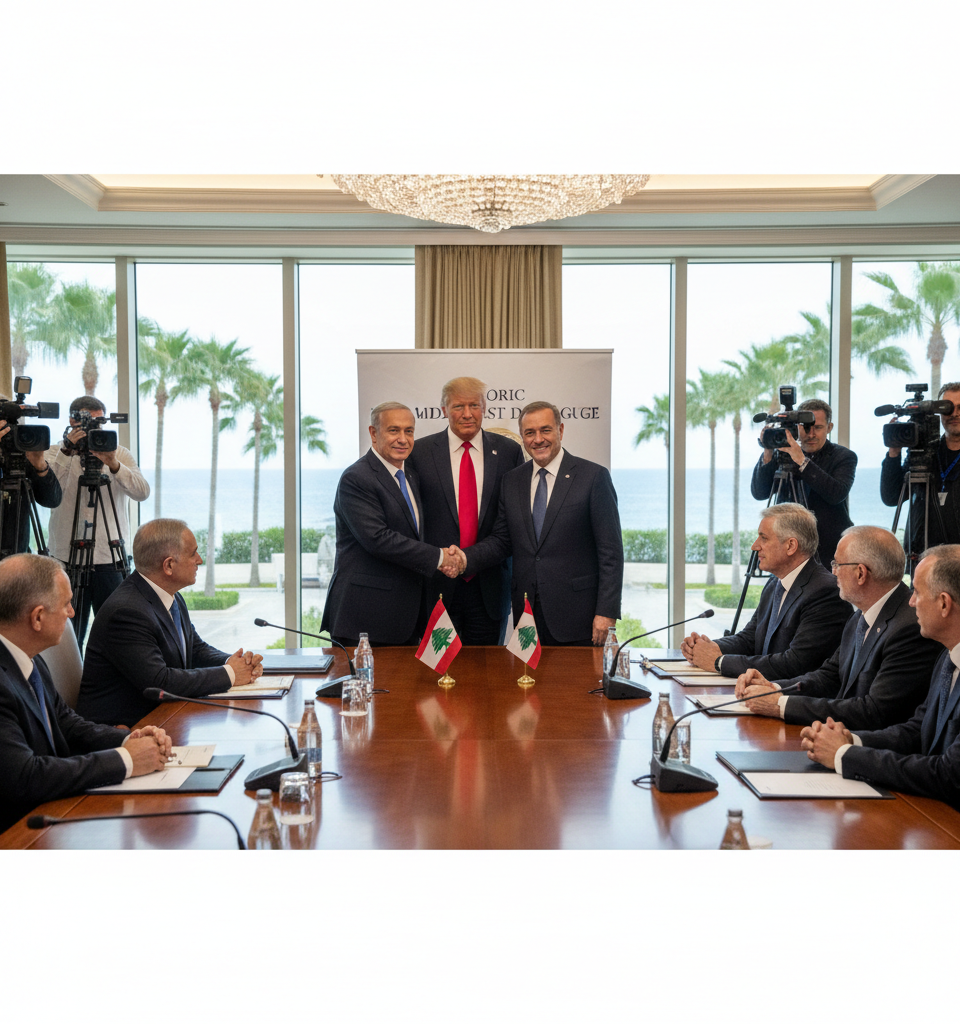
WASHINGTON D.C. – U.S. President Donald Trump has announced that a significant diplomatic stride could soon lead to direct talks between the leaders of Israel and Lebanon. This potential development follows what has been described as the first high-level meeting between the two nations in decades, signaling a possible thaw in frozen relations. President Trump publicly articulated his intention to foster "a little breathing room between Israel and Lebanon," underscoring the delicate nature of the historical animosity and the ambitious scope of current diplomatic efforts.
The prospect of high-level talks, especially between the heads of state or government, represents a momentous shift in the geopolitical landscape of the Middle East. For decades, Israel and Lebanon have been technically in a state of war, with their borders frequently witnessing skirmishes and tensions. Direct dialogue at such an elevated level could potentially lay the groundwork for de-escalation, confidence-building measures, and even future negotiations on contentious issues that have long eluded resolution.
Decades of Distance and Recent Progress
The most recent high-level encounter, while details regarding its participants and exact location remain undisclosed in the President's statement, marks a critical departure from the established protocol of indirect communication or engagement solely through third-party mediators. Such a meeting in itself is a testament to persistent diplomatic endeavors, likely spearheaded or significantly supported by the United States. The rapprochement, even if nascent, carries substantial weight given the complex web of political, military, and sectarian dynamics that characterize the two nations' interactions.
Lebanon continues to grapple with profound internal political and economic crises, while Israel maintains a vigilant defense posture on its northern border. Any initiative that promises to reduce the risk of conflict would be overwhelmingly welcomed by populations in both countries, who have endured decades of instability and the constant threat of renewed hostilities. The very act of coming to the same table – even for an initial high-level meeting – suggests an acknowledgement, by both sides, of the strategic imperative to explore avenues for a more stable coexistence.
Regional Impact and International Stakes
The potential for direct talks between Israeli and Lebanese leaders carries significant implications for regional stability. The broader Middle East is already a crucible of complex challenges, including ongoing conflicts, sectarian rivalries, and external interventions. A substantial reduction in tensions between two historically adversarial states could have a positive cascading effect, potentially encouraging other regional actors to pursue diplomatic solutions to their own protracted disputes. It also underscores the continued, albeit intricate, role of the United States as a mediator and facilitator in the region.
From an international perspective, the success of such an initiative would bolster the credibility of diplomatic engagement over military confrontation. It serves as a reminder that even the most entrenched conflicts can potentially be addressed through persistent high-level dialogue. The international community, which has long invested in efforts to stabilize the Middle East, would undoubtedly view progress on the Israel-Lebanon front as a welcome and essential step towards broader peace. The economic ramifications of reduced tensions, while not immediately quantifiable, could also be significant, potentially unlocking new opportunities for trade and development in a region that desperately needs it.
The Path Ahead: Hurdles and Hopes
The path to direct leader-level talks, however, is fraught with challenges. Both Israeli and Lebanese domestic politics are complex, with various factions holding diverse and often opposing views on relations with the other side. Any agreement or even the appearance of significant concessions could be met with considerable internal resistance. Furthermore, the presence of non-state actors, particularly Hezbollah in Lebanon, adds another layer of complexity, as their influence inevitably shapes the Lebanese government's foreign policy considerations.
Despite these formidable obstacles, President Trump's optimistic announcement signals a robust commitment from the U.S. administration to leverage this newfound diplomatic momentum. The immediate next steps would likely involve the logistics and agenda-setting for the proposed leader talks, which would require careful negotiation through intermediaries. The focus, as indicated by President Trump, is on creating "breathing room," suggesting an incremental approach focused on de-escalation and preliminary trust-building rather than an immediate comprehensive peace agreement. The world will be watching closely to see if this diplomatic overture can translate into tangible progress towards a more peaceful future for the region.