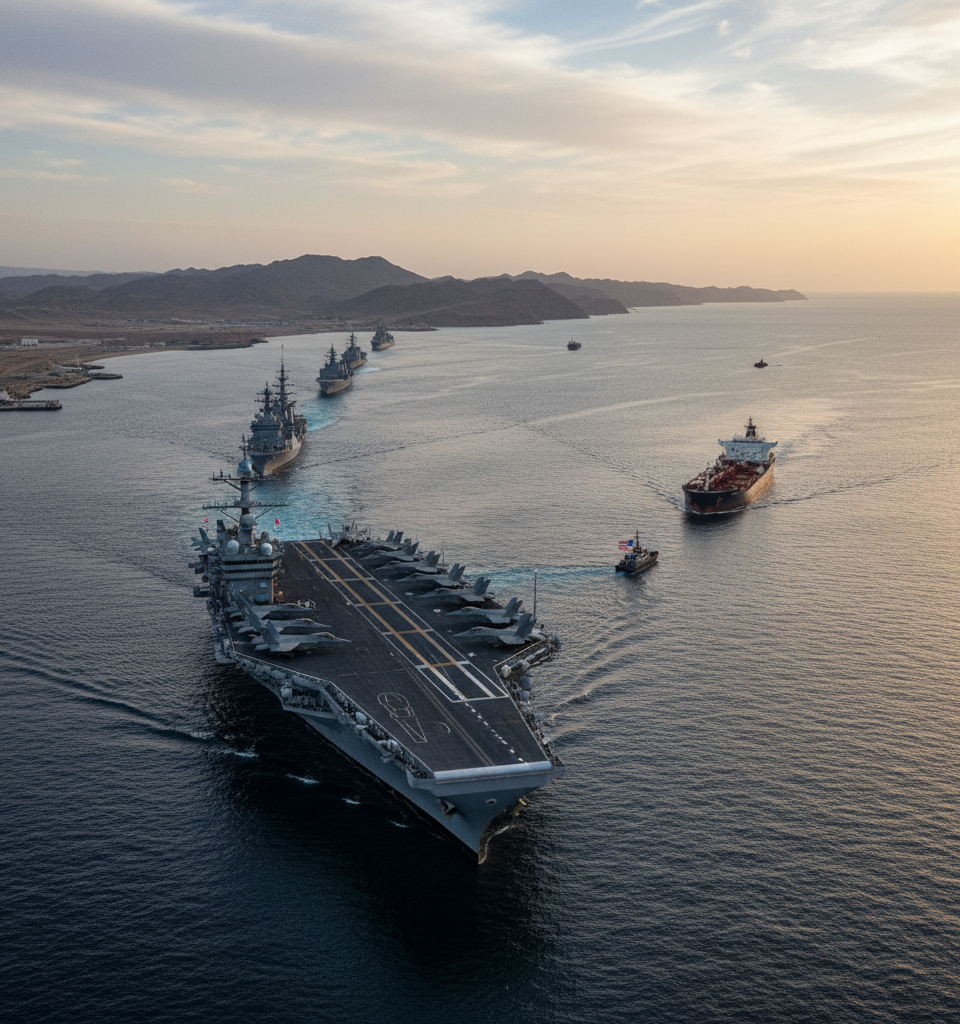
WASHINGTON D.C. – Former President Donald Trump has stated that the United States is prepared to impose a blockade on the Strait of Hormuz if diplomatic efforts to achieve peace with Iran fail. The proposed blockade, according to Trump, would be designed to counteract Iran's perceived ability to control the vital shipping lane and profit from its activity, even as international trade routes face disruption.
This declaration arrives amidst escalating tensions in the Middle East and concerns over the security of global energy supplies. The Strait of Hormuz, a narrow waterway between the Persian Gulf and the Arabian Sea, is a critical chokepoint through which approximately one-fifth of the world's total oil consumption passes daily. Any disruption to this passage carries profound implications for global energy markets, international trade, and geopolitical stability. Trump's statement underscores the precarious state of U.S.-Iran relations and the potential for military and economic escalation if diplomatic solutions remain elusive.
Geopolitical Stakes and Economic Repercussions
The strategic importance of the Strait of Hormuz cannot be overstated. Its closure or significant disruption would send shockwaves through the global economy, directly impacting oil prices, shipping costs, and the stability of numerous national economies. Trump's rationale behind the potential blockade is to specifically target Iran's economic leverage over the strait. He argues that by preventing Iran from policing and financially benefiting from the waterway, the U.S. would neutralize a key advantage Tehran holds, especially in scenarios where other nations are adversely affected by its closure or threats of closure.
Historically, Iran has on several occasions threatened to close the Strait of Hormuz in response to international sanctions or military pressures, leading to significant unease in global markets. The potential U.S. blockade, as articulated by Trump, represents a significant escalation of such an approach, shifting the onus of disruption from Iran's potential closure to a U.S.-imposed halt. The legality and practical implications of such a blockade under international law would undoubtedly become a contentious issue, drawing widespread condemnation from various nations and potentially leading to a complex legal and diplomatic quagmire.
Broader Implications for Global Trade and Energy Security
Beyond immediate oil prices, a blockade of the Strait of Hormuz would have cascading effects across various sectors. Shipping companies would be forced to seek alternative, longer, and more expensive routes, increasing transportation costs for a wide array of goods. This would inevitably lead to supply chain disruptions, inflationary pressures, and reduced economic growth worldwide. Countries heavily reliant on Middle Eastern oil, particularly in Asia, would face severe energy security challenges, potentially forcing them to diversify their energy sources and supply routes at an accelerated pace.
Moreover, the measure could intensify the militarization of the region, drawing in other global powers with vested interests in the free flow of trade and energy. Naval assets from multiple countries are already present in the region to safeguard maritime commerce, and a U.S. blockade could precipitate direct confrontations or an increased risk of miscalculation. The environmental impact of a prolonged naval presence and potential conflicts in such a vital maritime ecosystem also raises considerable concerns.
The Path Forward: Diplomacy or Demarkation?
The conditional nature of Trump's statement — contingent on the failure of peace talks — highlights the critical juncture at which U.S.-Iran relations stand. The global community remains hopeful for a diplomatic resolution, though the specifics of the ongoing peace negotiations remain largely undisclosed. The former President's tough stance suggests a lack of appetite for anything less than a comprehensive settlement that addresses U.S. security concerns and regional stability.
Should peace talks indeed collapse, the international community would face a stark choice between endorsing or condemning a U.S.-led blockade. The ramifications of such an action would reverberate for years, impacting not only the geopolitical landscape of the Middle East but also the foundational principles of international maritime law and global economic interdependence. The immediate future hinges on the success or failure of these crucial diplomatic endeavors, with the shadow of a potential blockade looming large over the Strait of Hormuz.