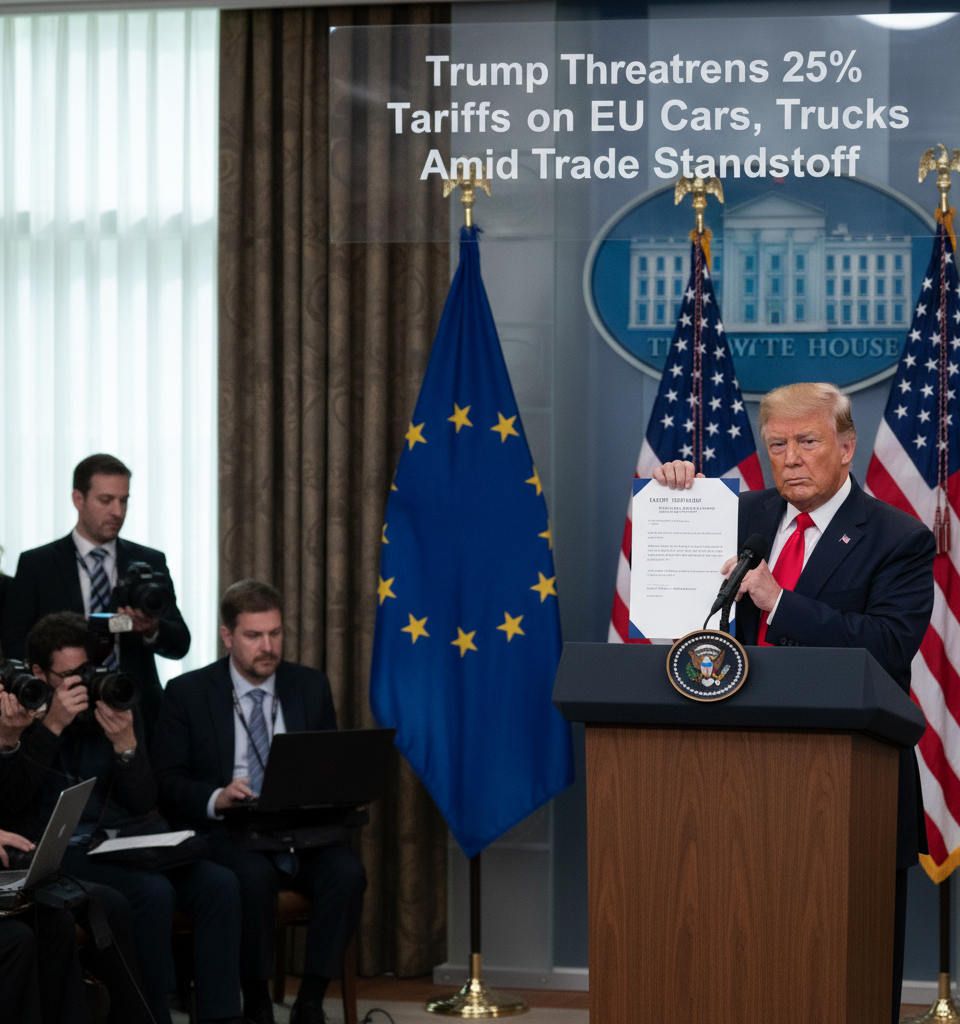
Washington D.C. – The United States is poised to levy a substantial 25% tariff on automobiles and trucks imported from the European Union, a move announced by the U.S. President this week. Citing the EU's alleged failure to comply with a trade agreement forged last summer, the directive underscores a deepening rift in economic relations between the two long-standing allies and signals a potential new era of protectionist policies impacting the global auto industry.
Background to Transatlantic Tensions
This latest development is the culmination of simmering trade disputes that have characterized much of the current U.S. administration's tenure. While initial threats of auto tariffs were temporarily suspended following a truce in July of last year, during which both sides agreed to work towards resolving trade imbalances, the President now contends that the EU has not upheld its end of the bargain. The U.S. has long expressed concerns over what it perceives as unfair trade practices and high tariffs imposed by the EU on American goods, particularly agricultural products. The proposed auto tariffs would represent a significant escalation from existing duties and reflect a broader strategy of using economic leverage to compel trade concessions.
Specifics of the Proposed Tariffs
Under the newly announced measure, all passenger vehicles, SUVs, and commercial trucks manufactured in the European Union and imported into the United States would be subject to an additional 25% duty. This tariff would be applied on top of existing import fees. The immediate trigger, according to the White House, is the EU's alleged lack of progress in opening its markets to U.S. goods, particularly in the agricultural sector, and what is described as ongoing non-compliance with the general spirit of the July 2018 agreement. While specific details of the non-compliance were not enumerated publicly, the administration's stance suggests a perceived reluctance from the EU to significantly reduce its own import barriers.
Industry and Market Implications
The immediate fallout for the automotive industry would be profound. S. annually, would face significantly increased costs.
These costs would likely be passed on to American consumers, leading to higher car prices and potentially reduced sales. Industry estimates suggest that a 25% tariff could add thousands of dollars to the price of an imported European luxury vehicle. S.
There are also concerns about retaliatory tariffs from the EU, which could target American goods across various sectors, exacerbating an already tense global trade environment.
Expert Analysis and Economic Outlook
Economists and trade analysts are largely critical of the proposed tariffs, warning of negative consequences for both the U.S. and global economies. Dr. Evelyn Reed, a leading trade policy expert at the National Economic Institute, commented, “These tariffs are effectively a tax on American consumers and businesses. While purportedly aimed at leveling the playing field, they risk isolating the U.S. economically and inviting a damaging cycle of retaliation that ultimately harms global growth. The automotive sector, a critical pillar of manufacturing, is particularly vulnerable to such disruptions and the knock-on effects could be far-reaching.” Many analysts predict a decrease in auto sales, potential job losses within the dealerships and related service sectors, and a general dampening of economic sentiment if these tariffs are implemented.
European Response and Future Steps
European leaders have consistently rejected the premise that their trade policies are unfair and have signaled a readiness to retaliate with tariffs on U.S. goods if the automotive duties are imposed. Officials in Brussels have stated that the EU remains committed to addressing trade imbalances through dialogue but will defend its economic interests vigorously. The European Commission has already prepared a provisional list of U.S. products that could be targeted for reciprocal tariffs, potentially affecting sectors from agricultural products to industrial machinery. The coming days will likely see intense diplomatic efforts to avert the implementation of these tariffs, but the current rhetoric suggests little room for immediate compromise.
Potential for De-escalation or Intensification
The implementation of these tariffs next week, if it proceeds as stated, will mark a critical juncture in U.S.-EU trade relations. The prospect of an escalating trade war looms large, with potential implications for global economic stability. While a last-minute reversal or delay remains a possibility, driven by industry pressure or renewed negotiations, the current trajectory points towards a significant hardening of trade policies. The long-term impact will depend on the duration of these tariffs, the extent of EU retaliation, and the willingness of both sides to return to the negotiating table. Businesses and consumers alike are bracing for potential economic turbulence and significant market adjustments in the wake of this pivotal trade decision.