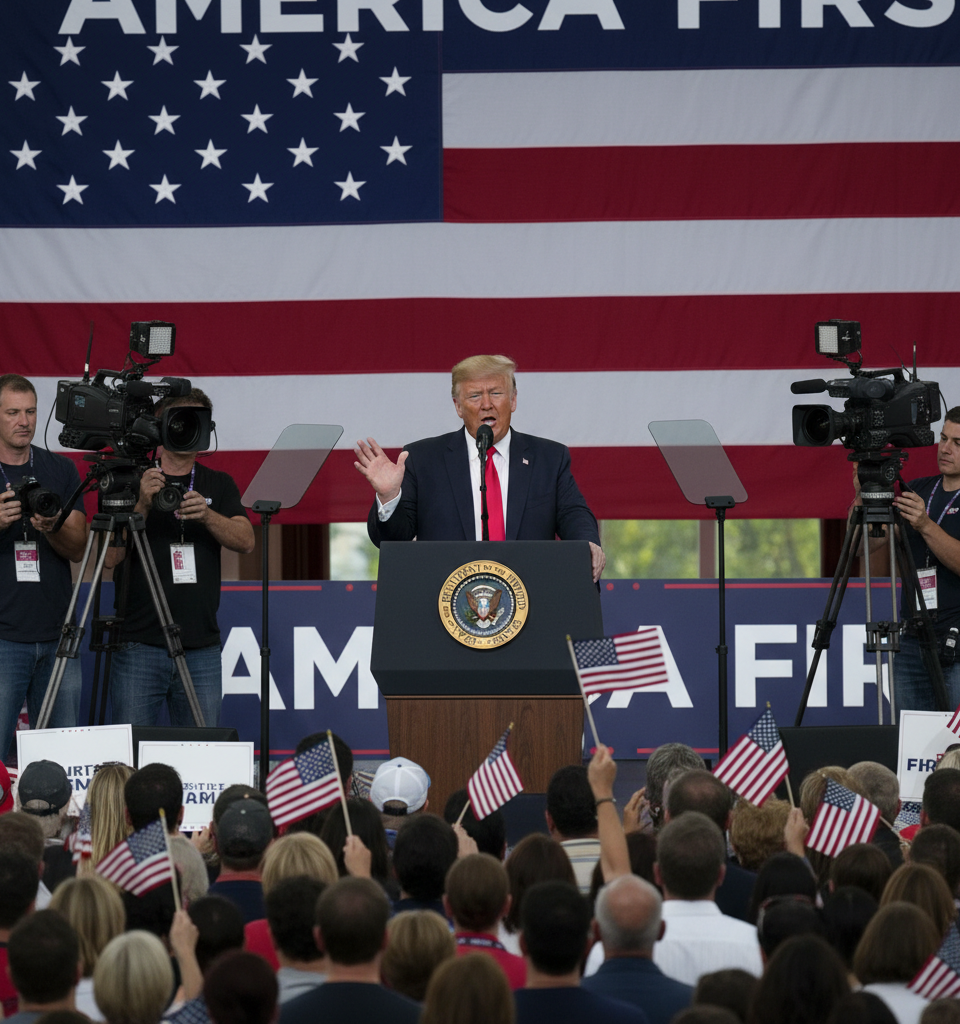
Former President Donald Trump has declared his intention to impose a punitive 50% tariff on all goods imported into the United States from any country found to be supplying military weapons to Iran. The pronouncement, made recently, signals a potentially drastic escalation in U.S. foreign policy toward the Islamic Republic and its international partners, should Trump return to the White House. This aggressive economic maneuver aims to disrupt Iran's military capabilities by targeting its supply chains and imposing severe economic consequences on any nation aiding its defense industry.
This declaration is not an isolated incident but rather a continuation, and potentially an intensification, of Trump's previous 'maximum pressure' campaign against Iran during his first term. That strategy involved withdrawing from the Joint Comprehensive Plan of Action (JCPOA) – the 2015 nuclear deal – and reimposing stringent sanctions on Iran's oil exports, banking sector, and other key industries. The proposed 50% tariffs represent a significant escalation, targeting not only Iran directly but also its global suppliers, effectively creating a secondary ring of economic pressure. The move underscores a desire to isolate Iran further and deter its geopolitical influence, particularly concerning its support for proxy groups and its nuclear program ambitions.
The specifics of how such tariffs would be implemented, including the criteria for identifying nations as suppliers and the process for verification, remain largely unarticulated. However, the sheer magnitude of a 50% tariff is designed to be a potent deterrent. For perspective, the average U.S. tariff rate on imported goods is typically around 2%, with some sectors like agriculture and textiles facing higher rates. A 50% levy would effectively price many goods out of the U.S. market, creating significant economic disruption for affected countries. Key nations often cited as potential suppliers of military technology or components to Iran include China and Russia, though definitive proof of direct military arms sales can be elusive. The economic fallout for any major trading partner of the U.S. found in violation could be immense, potentially disrupting billions of dollars in trade.
The reverberations of such a policy would be felt across global industries and markets. Companies relying on free trade routes and stable supply chains would face unprecedented uncertainty. Sectors such as manufacturing, technology, and energy, particularly those with complex international supply networks, would be highly vulnerable. Furthermore, the measure could trigger retaliatory tariffs from affected nations, sparking broader trade wars that damage global economic growth. It also sets a precedent for the U.S. to use tariffs as a highly aggressive foreign policy tool, potentially alienating allies who may have differing views on engagement with Iran.
Experts and foreign policy analysts are largely viewing this threat with serious apprehension. Dr. Elara Vance, a senior fellow at the Council on Foreign Relations, notes, "While the intention to curb Iran's military ambitions is understandable, a 50% blanket tariff is an blunt instrument. It risks fracturing alliances, punishing innocent industries, and potentially pushing Iran closer to its adversaries, rather than compelling it towards negotiations. The economic disruption could far outweigh the strategic benefits." Others point out the practical difficulties of enforcement, arguing that such a policy could lead to increased covert arms trading and black-market activities, making tracking even more challenging.
Looking ahead, the implementation of these tariffs hinges on a potential Trump presidency and the specifics of its foreign policy agenda. Should Trump win the 2024 election, nations currently engaging in trade with Iran, or those with dual-use technology industries, would face intense scrutiny. The U.S. intelligence community would likely be tasked with identifying and monitoring potential arms suppliers. This policy would undoubtedly be a central feature of any renewed 'America First' approach, prioritizing unilateral action and economic leverage over multilateral diplomacy. The international community would be watching closely, with many nations likely to express strong reservations about the unilateral imposition of such severe trade penalties, setting the stage for significant geopolitical friction and economic volatility.
The future implications extend beyond immediate economic impacts. Such a confrontational stance could further destabilize the Middle East, potentially accelerating an arms race or intensifying existing regional conflicts. It also raises questions about the future of international trade norms and the role of the World Trade Organization (WTO) in arbitrating disputes arising from politically motivated tariffs. The prospect of a global trade landscape shaped by punitive tariffs based on foreign policy objectives represents a significant departure from established norms and could usher in an era of heightened economic nationalism and geopolitical realignments.
Ultimately, Trump's threat of 50% tariffs on nations arming Iran is a bold and potentially transformative policy proposal. While aimed at containing Iran, its wider economic and geopolitical ramifications could reshape alliances, disrupt global trade, and set new precedents for international relations, demanding careful consideration from policymakers and business leaders worldwide.