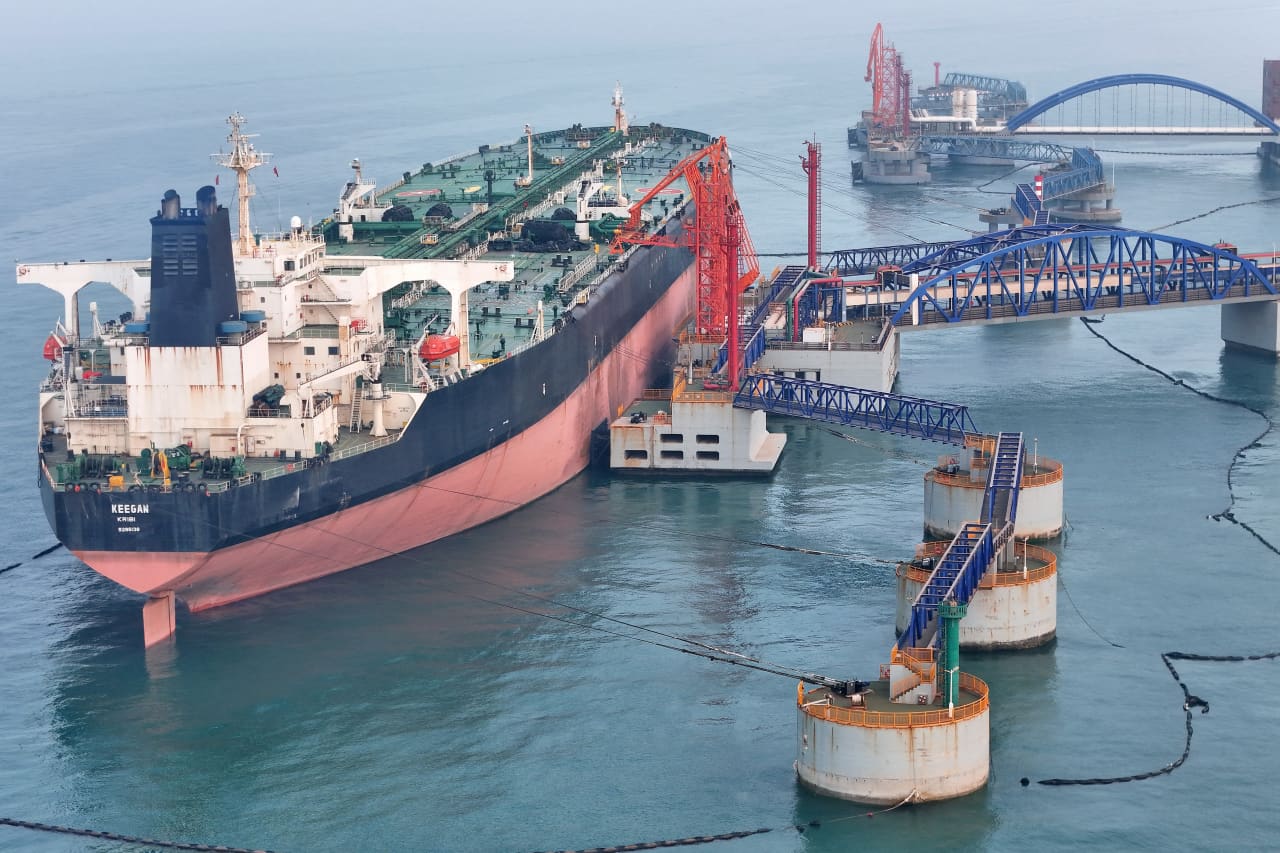
President Donald Trump has issued a provocative challenge to international allies, urging them to independently deploy naval assets to secure the Strait of Hormuz. This unexpected directive, delivered amid heightened regional tensions, signals a potential shift in the burden of protecting the world's most critical oil transit chokepoint. The move is widely interpreted as an attempt to reduce the United States' primary role in safeguarding the strait, particularly benefiting nations heavily reliant on Middle Eastern oil imports.
Historical Context and Strategic Importance
The Strait of Hormuz, a narrow waterway connecting the Persian Gulf to the Arabian Sea, is an unparalleled artery of global energy commerce. Approximately one-fifth of the world's total petroleum liquids consumption, or about 21 million barrels per day (bpd), passed through the Strait in 2022, according to the U.S. Energy Information Administration (EIA). Key exporters include Saudi Arabia, Iran, Iraq, Kuwait, Qatar, and the UAE, while major importers include China, India, Japan, South Korea, and various European nations. Any disruption in this chokepoint has immediate and severe ramifications for global oil prices, energy security, and international trade. The U.S. Fifth Fleet, based in Bahrain, has historically played a significant role in ensuring the strait's navigability, a responsibility the Trump administration now appears keen to decentralize.
Key Players and Economic Stakes
Trump's message explicitly targets nations he perceives as direct beneficiaries of the strait's unimpeded flow. "Why are WE protecting the shipping lanes for other countries (many rich) for zero compensation," Trump tweeted, adding, "All of these countries should be protecting their OWN ships on what has always been a dangerous journey." While not explicitly named, key Asian economies—especially China and Japan—which import a substantial portion of their crude oil from the Middle East, are clearly in his crosshairs. For instance, over 80% of Japan's crude oil imports transit the Strait of Hormuz, and for China, the figure is nearly 50% of its total oil imports. The economic implications for these nations, should the strait be compromised, are staggering, potentially leading to supply shocks, price hikes, and severe industrial slowdowns.
Global Energy Market Implications
The prospect of a fragmented or uncoordinated security presence in the Strait of Hormuz sends ripples of uncertainty through global energy markets. Oil prices, already susceptible to geopolitical volatility, could see significant spikes if international navies fail to establish a robust and unified presence. Shipping insurance premiums for vessels transiting the Gulf have already surged since recent attacks on tankers, adding to the cost of crude. Analysts warn that increased instability could also deter investment in regional oil and gas projects, further tightening future supply. The call for individual nations to take responsibility could lead to a patchwork of differing rules of engagement and capabilities, potentially increasing, rather than decreasing, the risk of miscalculation or incident.
Expert Commentary on Strategic Repercussions
International relations experts and energy analysts are grappling with the ramifications of Trump's directive. Dr. Emily Thorne, a senior fellow at the Center for Global Policy, noted, "This isn't merely a cost-sharing proposal; it's a fundamental challenge to the post-World War II security architecture in the Gulf. It asks allies to step up their military presence in a highly volatile region, potentially without the full backing or coordination of the U.S." Others suggest it could empower regional powers with naval capabilities, or conversely, create a power vacuum. Robin Mills, CEO of Qamar Energy, commented, "The risk here is less about a full closure of the Strait, and more about persistent, low-level harassment that makes shipping prohibitively expensive and disruptive, effectively reducing flows without a full blockade."
The Path Forward: Diplomacy, Alliances, and Risks
In response to heightened tensions, the United States has already proposed a multilateral maritime security initiative in the Gulf, dubbed 'Operation Sentinel,' though its initial reception among allies has been mixed. Trump's latest remarks underscore a growing chasm between U.S. expectations and allied willingness to unilaterally commit significant military resources. The coming months will likely see intense diplomatic negotiations as nations weigh the economic imperative of securing their oil supply against the political and military costs of a more direct role. The outcome could lead to a more diffused, multilateral approach to maritime security, or, if consensus fails, a more precarious and unpredictably secured Strait of Hormuz, with profound implications for global energy stability and international alliances. The stakes are exceedingly high, shaping not only oil markets but the very fabric of global trade and diplomatic relations.