Global manufacturers and distributors face considerable uncertainty regarding supply chains and market access as the US-China trade landscape shifts. Decisions made during high-level talks could determine the viability of international expansion strategies and the cost structures for importing and exporting goods. This directly impacts how businesses plan their long-term growth and competitiveness across continents.
Trump-Xi Summit Eyes Auto Industry Tariffs
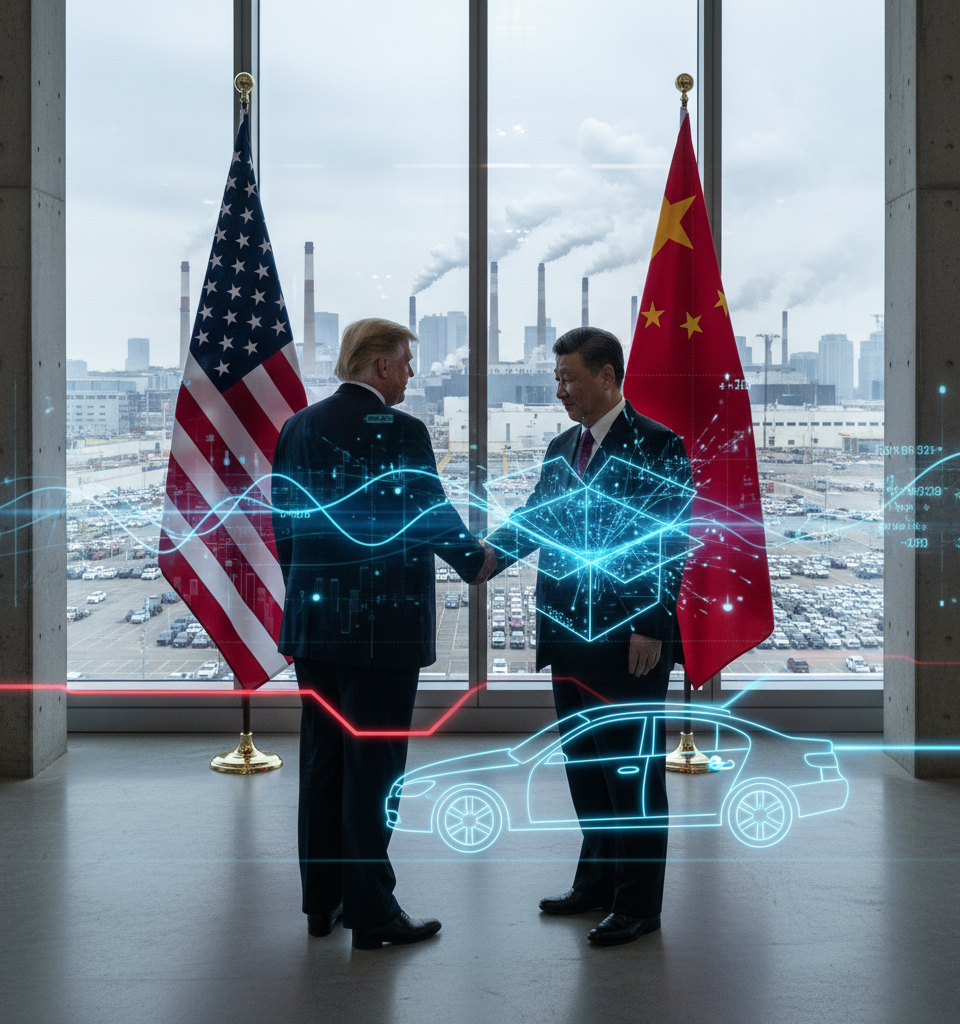
Donald Trump and Xi Jinping are holding a critical summit that places the future of the American auto industry squarely in the spotlight. This meeting occurs amid escalating calls from US automakers and Congressional leaders to uphold stringent restrictions on Chinese-made vehicles and their manufacturers. The discussions are anticipated to tackle the complex trade dynamics that have seen a significant push to limit Chinese automotive market penetration in the United States.
Pressure from US Industry and Lawmakers
The American automotive sector has voiced considerable concern regarding potential competition from Chinese electric vehicles (EVs) and other automobiles. Industry leaders and bipartisan groups of lawmakers are actively advocating for policies that would prevent a surge of Chinese imports, citing national security, economic protection, and fair competition concerns. This unified front underscores the perceived threat that Chinese automotive expansion could pose to domestic manufacturing jobs and the stability of the US auto market.
The 'Pandora's Box' Scenario
Analysts are describing the potential influx of Chinese automakers into the US market as a "Pandora's Box," suggesting that once opened, it could unleash unforeseen and potentially disruptive consequences. The primary concern is that Chinese companies, often supported by significant state subsidies, could undercut American manufacturers on price, threatening their market share and long-term viability. This competitive pressure could extend beyond finished vehicles to include critical components and raw materials for EV batteries, impacting the entire supply chain.
Broader Economic Implications
The discussions between Trump and Xi are not isolated to the auto sector but reflect a broader tension in US-China trade relations. The automotive industry, however, serves as a crucial barometer for these relations due to its economic significance and strategic importance. Any decisions made regarding tariffs, import quotas, or regulatory hurdles for Chinese vehicles could set precedents for other industries and impact global trade flows.
Potential for Escalation or De-escalation
Depending on the outcome of the meeting, there could be either an escalation of trade tensions or a move toward de-escalation in certain sectors. A failure to address US concerns could lead to increased tariffs or new non-tariff barriers designed to protect the American auto industry. Conversely, a diplomatic breakthrough could involve commitments from China regarding market access or intellectual property, potentially alleviating some of the current pressures.
Looking Ahead: A Pivotal Moment for Global Auto Trade
The summit is viewed as a pivotal moment for the global automotive trade landscape. The resolutions, or lack thereof, from the Trump-Xi meeting will likely dictate the competitive environment for years to come. US automakers will be closely watching for assurances that their domestic market remains protected, while Chinese manufacturers will be assessing their opportunities for international expansion. The path forward for these critical industries hinges significantly on the dialogue currently underway.