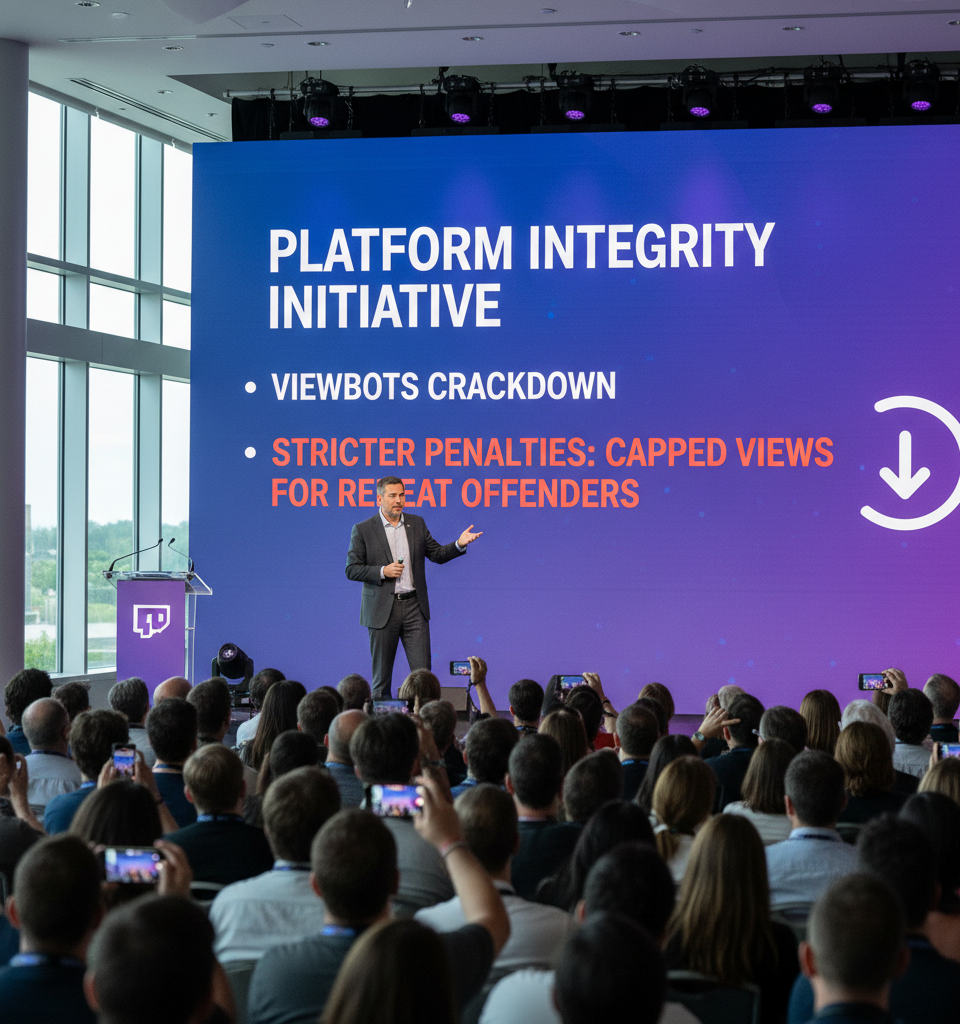
Twitch, the preeminent livestreaming platform, has announced a significant escalation in its ongoing battle against viewbotting, introducing a new penalty system designed to penalize repeat offenders with direct limitations on their stream's visibility. The initiative, confirmed by CEO Dan Clancy this week, marks a decisive pivot from previous warning-based approaches, signaling a more aggressive stance to foster an authentic and competitive streaming environment.
Viewbotting, the illicit use of automated accounts or services to artificially inflate a stream's concurrent viewer count, has long plagued the platform, undermining legitimate content creators and distorting metrics critical for advertising revenue and overall organic growth. This new policy directly addresses a persistent and often frustrating issue for the platform's millions of streamers, from aspiring novices to established partners. The new measures come as Twitch seeks to reinforce its commitment to fair play and data integrity amidst increasing competition in the live content space.
Under the updated policy, streamers identified as repeat viewbotting offenders will face severe consequences, culminating in the imposition of 'caps' on their views. While specific thresholds and durations for these caps have not yet been fully detailed, Clancy indicated that these limitations would directly impact how many legitimate viewers a stream could attract, regardless of its actual popularity. This represents a stark departure from prior penalties, which typically involved temporary bans, demonetization, or permanent account suspensions only after multiple, severe violations. The core objective is to disincentivize viewbotting by making it economically unviable and by preventing offenders from regaining meaningful traction on the platform.
The broader livestreaming ecosystem is expected to react positively to Twitch's more stringent stance. Viewbotting not only deceives advertisers, who base campaign decisions on viewership numbers, but also demoralizes genuine streamers whose efforts are overshadowed by fraudulent metrics. Industry analysts have frequently pointed out that inflated viewer counts artificially elevate certain channels, hindering the organic discovery and growth of legitimate creators. This move could therefore help re-level the playing field, fostering a healthier and more transparent market for content creation and advertising spend, which is projected to reach over $1.5 billion in influencer marketing spend on live platforms by 2025.
Experts in digital platform integrity commend Twitch's proactive measures. Dr. Emily Carter, a researcher specializing in online communities and digital fraud at the University of California, Berkeley, noted, "Directly penalizing viewership potential is a clever and potentially effective deterrent. It hits viewbotters where it hurts most: their perceived influence and economic viability. This is a crucial step towards maintaining trust in the platform's metrics, which is vital for both advertisers and content creators." She added that consistent enforcement would be key to the policy's long-term success.
Looking ahead, Twitch is likely to refine the specifics of its view-capping policy, possibly introducing a tiered system based on the severity and frequency of infractions. The community will keenly watch for details regarding the duration of these caps, the appeal process for mistakenly flagged accounts, and how Twitch plans to improve its detection algorithms to catch sophisticated bot networks. This initiative is part of an ongoing effort by Twitch to enhance platform integrity, which also includes recent updates to its hate speech policies and moderation tools. The company's success will ultimately be measured by a noticeable reduction in viewbotting incidents and a subsequent increase in confidence among its user base and commercial partners.
The ramifications of such a policy extend beyond individual streamers. Should Twitch successfully curb viewbotting, it could set a new industry standard for platform accountability, potentially influencing how other live content applications and social media giants tackle similar issues of artificial engagement. This move underscores a growing trend among major digital platforms to prioritize authenticity over raw, unverified numbers, reflecting a maturing digital ecosystem that demands greater transparency and fairness for all participants.