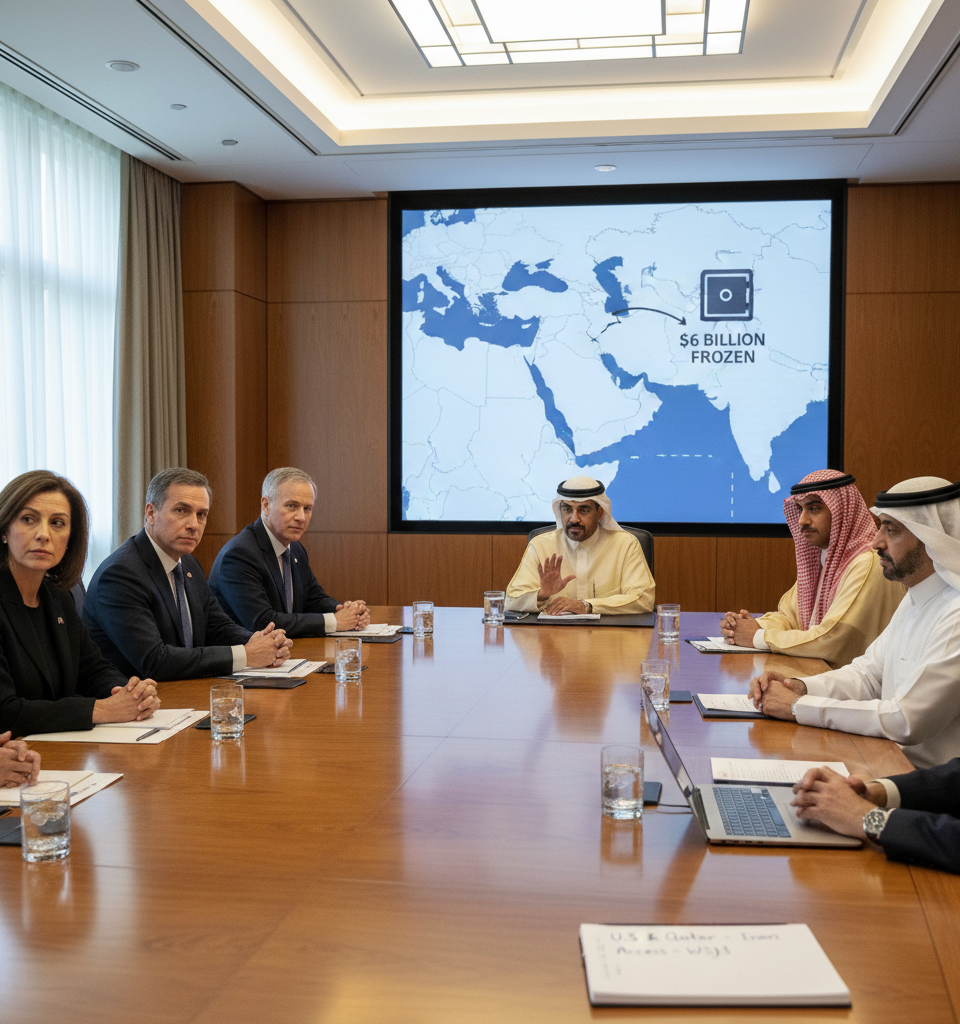
The United States and Qatar are currently engaged in discussions regarding a plan that would facilitate Iran's access to $6 billion in previously frozen funds, according to a recent report by The Wall Street Journal. While the precise details of the proposed mechanism remain under wraps, this development underscores the complex financial and diplomatic maneuvering surrounding Iranian assets held abroad.
This initiative comes amidst persistent international efforts to navigate a contentious relationship with Iran, marked by sanctions and geopolitical tensions. The $6 billion in question represents a significant sum, and its potential release or controlled access could have broader implications for regional stability and the future of international sanctions regimes. Qatar, a key mediator in various regional disputes, is reportedly playing a pivotal role in these sensitive financial negotiations.
Historically, the issue of frozen Iranian assets has been a recurring point of contention. These funds are often held in accounts in various countries, subject to international sanctions primarily imposed by the U.S. and its allies. The conditions under which such funds might be accessed, even for humanitarian purposes, are typically subject to stringent oversight and international agreements. This report suggests a renewed push to find a workable solution for a specific portion of these funds.
The potential unlocking of these funds, even under strict conditions, could represent a shift in the diplomatic landscape. Financial transactions involving Iran are heavily scrutinized, and any mechanism allowing access to these billions would likely involve guarantees and monitoring to ensure compliance with a range of international regulations, particularly those related to terrorism financing and weapons proliferation. The involvement of Qatar suggests a preference for a mediated, carefully orchestrated approach rather than a unilateral release.
From an industry perspective, major financial institutions and international banks will be closely watching the outcome of these discussions. Any new mechanism for processing humanitarian transactions or other permitted transfers involving Iran could set precedents for how other frozen assets are handled globally. It also highlights the strategic importance of Gulf states like Qatar in facilitating complex financial diplomacy when direct engagement between adversarial nations is limited.
While specific expert opinions on this particular reported plan were not detailed in the original report, analysts generally acknowledge that such negotiations are fraught with political risk. Balancing humanitarian concerns with national security interests and maintaining a united front on sanctions enforcement are critical considerations. The structure of any deal would need to assuage fears that the funds could be diverted for uses contrary to international norms.
Looking ahead, the success of these discussions between the U.S. and Qatar in devising an acceptable framework will be a significant test of diplomatic ingenuity. If a plan is agreed upon, the implementation phase will be crucial, with international bodies likely playing a role in monitoring the use of the funds. The current talks could pave the way for future engagements on other frozen assets or broader diplomatic reconciliations, but the immediate focus remains on this reported $6 billion. The outcomes of these delicate negotiations are expected to unfold in the coming months, offering a potential pathway for limited financial interaction with Iran under specific terms.