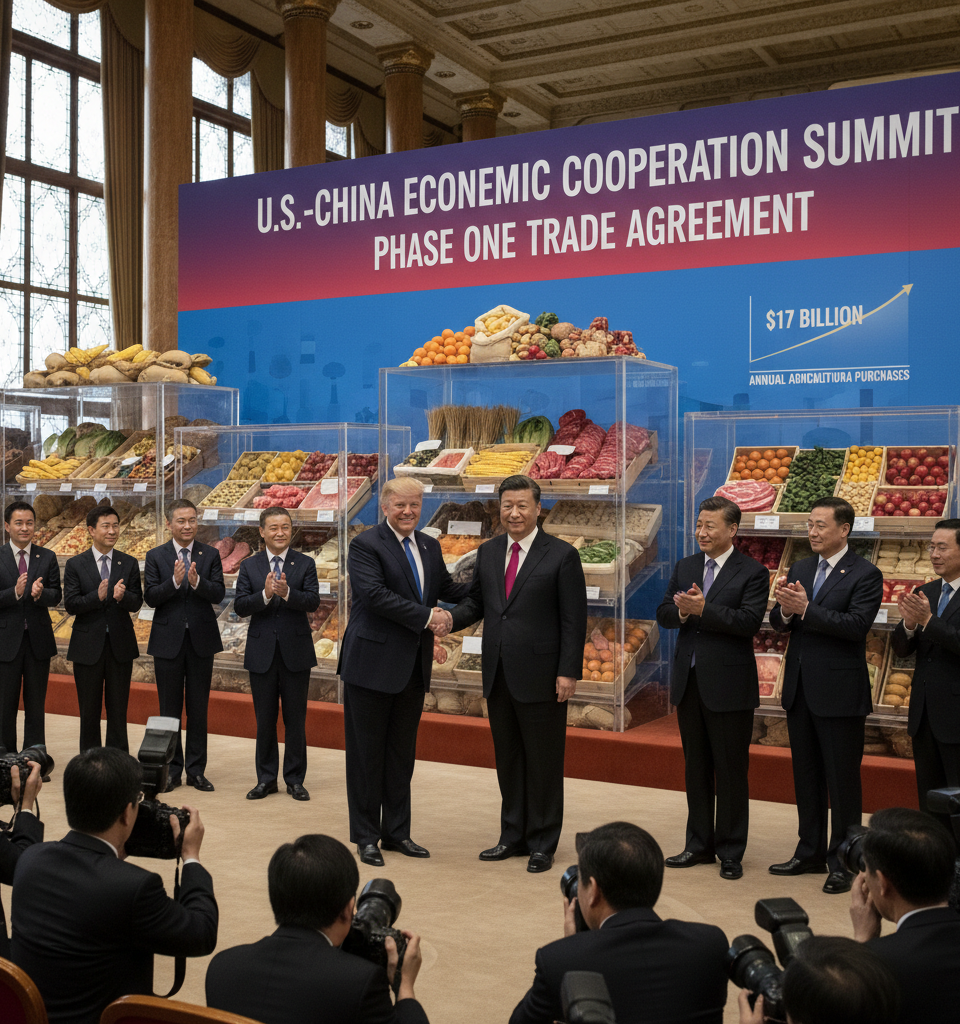
The United States government announced today that China has committed to an annual purchase volume of $17 billion in American agricultural goods. This landmark agreement, detailed in a fact sheet released by the White House following President Donald Trump's recent two-day summit in Beijing, signals a palpable effort to address long-standing trade imbalances and foster a more equitable economic partnership between the world's two largest economies. The commitment encompasses a wide array of agricultural products, from soybeans and pork to grains and poultry, offering a crucial boost to the American farming sector.
Context and Background
This agricultural commitment emerges from a period of intense trade negotiations and, at times, strained relations between Washington and Beijing. For years, U.S. administrations have pressed China to open its markets further and increase purchases of American goods, particularly agricultural commodities, citing a substantial trade deficit. The agricultural sector, often caught in the crosscurrents of geopolitical tensions, stands to benefit significantly from this formalized purchasing agreement, potentially alleviating some of the financial pressures faced by American farmers due to previous trade disruptions. This agreement also comes at a time when both nations are navigating complex global economic dynamics, including supply chain reconfigurations and inflationary pressures.
Key Details of the Agreement
The White House fact sheet explicitly outlines the $17 billion annual target, framing it as a concrete outcome of the recent high-level dialogue between President Trump and Chinese leadership. While specific timelines for the full implementation of these purchases were not immediately detailed, the announcement underscores a clear intent from Beijing to substantially increase its import volumes from the U.S. agricultural sector. This figure represents a significant uptick from previous purchase levels and is expected to provide much-needed stability and predictability for American producers. Farmers, particularly those in the soybean belt, have frequently voiced concerns over market access and demand fluctuations, making this commitment a pivotal moment for regional economies.
Industry and Market Impact
The immediate impact on agricultural markets is expected to be positive. Futures prices for various commodities, particularly soybeans and corn, are likely to see upward pressure as traders react to the prospect of increased demand from China. The U.S. agricultural export sector, which supports millions of jobs, stands to gain substantially. Beyond direct sales, the agreement could also encourage greater long-term investment in agricultural infrastructure and production efficiency within the U.S., anticipating sustained demand. However, analysts caution that the real-world impact will depend on the consistent execution of these purchase agreements, and avoiding future trade disputes will be paramount to realizing the full potential of this commitment.
Expert Perspective
Economists and trade analysts have largely welcomed the announcement, albeit with a degree of cautious optimism. Dr. Emily Chen, a senior trade economist at the Global Economic Institute, remarked, "While the $17 billion figure is substantial and a positive development, the true measure of success will be in the sustained compliance and execution over multiple years. Past agreements have sometimes faced implementation challenges." Others point out that while a significant step, this commitment does not fully resolve all underlying trade tensions but rather represents a focused effort on a critical sector. The underlying structural issues of market access, intellectual property rights, and industrial subsidies still demand attention, even as this agricultural deal progresses.
What's Next
Moving forward, market participants and policymakers will closely monitor the actual pace and volume of Chinese agricultural purchases. The U.S. Department of Agriculture is expected to release regular updates on export progress, providing transparency on the implementation of this commitment. Future diplomatic engagements between the two nations are likely to build on this agricultural agreement, potentially exploring similar commitments in other sectors. The long-term stability of this agreement will hinge on the broader geopolitical climate and the willingness of both Washington and Beijing to prioritize economic cooperation over contention, paving the way for a more balanced and predictable trade relationship.