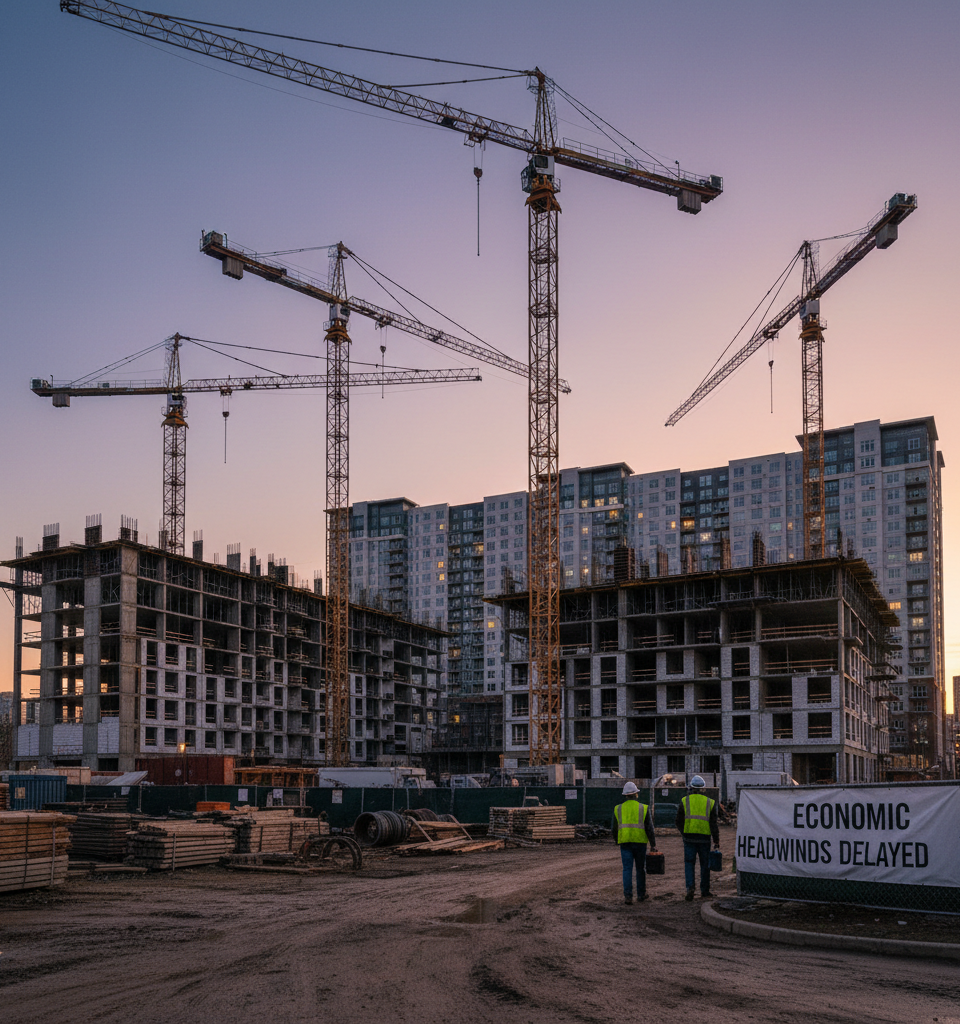
The U.S. multifamily housing market witnessed a precipitous decline in new construction starts during the first quarter, with groundbreaking activity falling to levels not seen since 2009. According to recent data from industry authorities Apartments.com and CoStar, roughly 55,000 apartment units commenced construction across the nation from January through March. This sharp reduction underscores mounting pressures on developers, including elevated interest rates, tighter lending conditions, and persistent inflation in material and labor costs, collectively stifling the pipeline of new housing supply.
Historical Context and Economic Drivers
This dramatic drop represents a significant reversal from the boom years that characterized much of the post-financial crisis era, particularly the surge in multifamily development between 2015 and 2022. The last time quarterly starts were this low, the country was grappling with the aftermath of the Great Recession. The current downturn is primarily driven by macroeconomic factors. The Federal Reserve's aggressive interest rate hikes, aimed at curbing inflation, have made financing new construction substantially more expensive and riskier. Borrowing costs have escalated, making it challenging for developers to secure favorable loans and achieve project viability, particularly for large-scale developments that rely heavily on debt financing.
Key Data and Market Specifics
The 55,000 units that broke ground in Q1 represent a substantial decrease compared to previous periods. For context, quarterly averages over the past five years have often exceeded 100,000 units, with some peak quarters seeing well over 150,000 starts. This deceleration is not uniform across all markets but is notably pronounced in regions that experienced rapid growth and significant development activity in recent years. Developers are also contending with rising construction costs; while some material prices have stabilized, labor shortages and increased wages continue to inflate overall project expenses. Furthermore, a perceived oversupply in certain luxury segments, particularly in sunbelt markets that saw a flurry of new construction, has made lenders more cautious about financing new projects.
Broader Industry and Housing Market Impact
The ramifications of this slowdown extend across the entire housing ecosystem. A reduction in new supply, if sustained, could exacerbate housing shortages in many metropolitan areas, potentially driving up rents in the long term. While some markets are currently experiencing a temporary period of softer rent growth due to a wave of recently completed projects, the longer-term pipeline suggests less forthcoming inventory. This could disproportionately affect lower- and middle-income renters, as a lack of new supply historically puts upward pressure on prices across all segments. Building material manufacturers, construction firms, and related service providers are also feeling the pinch, facing leaner order books and reduced project volumes.
Expert Analysis and Perspectives
Industry analysts and economists view this trend with a mix of concern and expectation. "The current slowdown in apartment starts is a direct consequence of the Federal Reserve's monetary policy and stricter underwriting standards," stated Dr. Sarah Chen, a senior economist specializing in real estate. "Developers are simply waiting for more favorable economic conditions, particularly lower interest rates, before committing to new projects. We're seeing a 'wait and see' approach dominate the market." Others point to the supply-demand imbalance, suggesting that while the immediate pipeline is shrinking, underlying demographic trends still indicate a long-term need for more housing. The current dip, some argue, might lead to an even more acute shortage in two to three years.
Future Implications and Outlook
The immediate future for apartment construction appears challenging. Experts anticipate that groundbreaking activity will likely remain subdued through the remainder of the year and potentially into early next year, contingent on interest rate movements and overall economic stability. A sustained period of lower interest rates, coupled with easing inflation and more predictable economic growth, would be necessary to re-ignite developer confidence. Developers are now prioritizing projects with strong pre-leasing commitments or those in markets with exceptionally high demand and limited existing supply. Policy interventions aimed at streamlining permitting processes and offering financial incentives for affordable housing could also play a role in mitigating the impact of the downturn, but widespread recovery is largely tied to broader economic trends.